

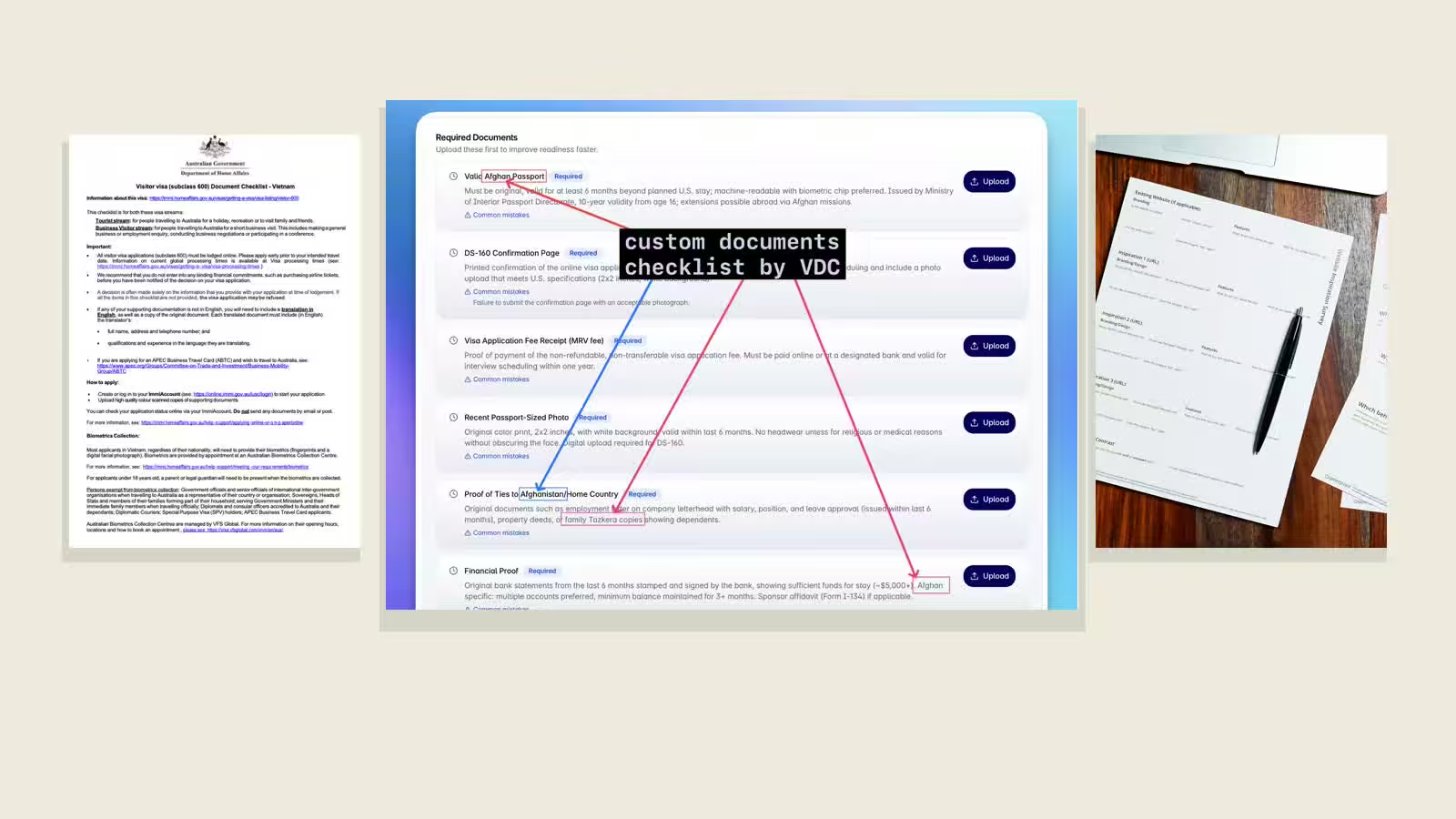

If you are searching for documents required for visa applications, start with the shortest accurate answer: most short-stay visa files need a valid passport, the correct application form, a compliant photo, proof of funds, proof of trip purpose and accommodation, and evidence that you will leave at the end of the visit. The part that changes by country is how each government tests those basics.
As of April 15, 2026, the official route pages still diverge in ways that matter. The UK Standard Visitor page says you must apply online before travel, can apply no earlier than 3 months before departure, and the standard 6-month visitor visa costs GBP 135. The European Commission says Schengen applications must be filed at least 15 days before travel and no earlier than 6 months out, with a fee of EUR 90 for adults. Travel.State.gov puts the U.S. non-petition visitor-visa fee at USD 185. Canada starts a visitor visa at CAN$100, with a CAD $85 biometrics fee for an individual applicant. Australia's current subclass 600 checklist says visitor applications must be lodged online, with high-quality colour scans and compliant translations. If you want to turn those rules into a route-specific preflight, start with Vidicy's checklist pages for US visas, UK visas, Schengen visas, Canada visas, or Australia visas.
If your question is narrower and you only care about short-stay holiday or family-visit files, use the dedicated Documents Required for Tourist Visa guide. It strips out student, work, and long-stay routes and compares the current tourist rules for the UK, Schengen, Canada, the U.S., and Australia side by side. If your route is the Republic of Korea, use the newer documents required for Korean visa because that workflow starts with the K-ETA vs C-3-9 decision before the embassy document pack even begins. If your route is India, switch to Documents Needed for Indian Visa in 2026, because the first split is e-Visa vs regular paper visa vs the limited Visa on Arrival path.
| Route | Core official document signal | Current fee/timing fact | Best next step |
|---|---|---|---|
| US visitor visa | The embassy may ask for proof of trip purpose, intent to depart, and ability to pay. | USD 185 non-petition visitor-visa fee. | US visa checklist |
| UK Standard Visitor | UKVI asks for travel dates, stay address, trip cost, income, sponsor details, and certified translations where needed. | Apply no earlier than 3 months before travel; standard decision usually 3 weeks. | UK visa checklist |
| Schengen short-stay visa | Passport, visa form, ICAO photo, medical insurance, funds, accommodation, return-intent proof, and fingerprints. | Apply 15 days to 6 months before travel; adults pay EUR 90. | Schengen visa checklist |
| Canada visitor visa | The reason for travel determines the document list, but identity, itinerary, funds, and travel history stay central. | Visitor visa from CAN$100; biometrics CAD $85 for one person. | Canada visa checklist |
| Australia subclass 600 | Online lodgement, colour scans, identity pages, funds, employment, and travel or host evidence. | Apply early; current charges route through the live Home Affairs estimator. | Australia visa checklist |
At a glance
- Use this guide to identify the core document buckets every short-stay file needs before you switch to a country-specific checklist.
- The universal core is passport, application form, photo or biometrics, funds, itinerary or accommodation proof, and return-home evidence.
- The details that change fastest by route are fees, timing windows, sponsor rules, and how officers weigh funds and ties.
- Once you choose the destination, move to the route-specific checklist and supporting-document guides before you upload anything.
Key takeaways
Use this guide to verify the route, evidence, and next action before you finalize the file. A complete visa file proves identity, purpose, funds, travel plan, residence ties, and route-specific eligibility; the exact mix changes by country and visa type.
Table of Contents
- Documents required for visa applications: the universal checklist
- How the required documents change by destination
- Which documents actually prove funds, purpose, and return intent
- Common document mistakes that weaken a visa file
- Official application walkthrough videos
- Official sources
- FAQ
- Conclusion
Documents required for visa applications: the universal checklist
Across the official sources reviewed for this article, five document groups show up again and again.
1. Identity documents
This usually means:
- a valid passport or other accepted travel document
- the page showing your name, date of birth, nationality, and passport number
- older visa pages, stamps, or markings if the route asks for travel history
Canada's visitor-visa application page is unusually specific here. It asks for a clear, colour copy of the valid passport or travel document you will use to travel to Canada, including the page showing your birth date and country of origin plus any pages with stamps, visas, or markings. Australia's subclass 600 checklist similarly asks for the passport identity page and each page with a visa label or entry or exit stamp.
2. The application form and appointment steps
Most routes have a core form that anchors the whole file:
- US: the DS-160 for nonimmigrant visas
- UK: the online Standard Visitor application
- Schengen: the Schengen visa application form
- Canada: the online visitor-visa application flow with route-specific document prompts
- Australia: subclass 600 lodged through ImmiAccount
3. Photo and biometrics evidence
Every route still has identity-capture rules that can slow or weaken a submission:
- a compliant passport-style or digital photo
- fingerprint collection or biometrics where required
- special rules for children or family applications
4. Purpose, itinerary, and accommodation
Governments want documents that explain:
- what you will do during the trip
- how long you will stay
- where you will stay
- who is inviting or hosting you, if anyone
That can take the form of flight details, hotel bookings, conference registration, a host letter, or a structured travel plan. The right version depends on the route. A business-visitor file and a family-visit file do not use the same evidence even if both are short stays.
If the weak point is the travel proof specifically, use this flight itinerary for visa guide to separate route-by-route itinerary rules from the dummy-ticket advice that dominates search results before you buy or upload anything.
5. Funds, sponsor support, and return-home ties
This usually means some combination of:
- recent bank statements
- salary or employment proof
- sponsor documents if someone else is paying
- evidence that you have work, study, family, business, or property ties back home
According to the current UKVI supporting-documents guide, a genuine visitor should be able to show that they can support themselves, pay for the return or onward journey, and leave the UK at the end of the visit. Travel.State.gov uses almost the same logic for B1/B2 visitor cases: purpose, intent to depart, and ability to pay.
How the required documents change by destination
The official rules change by destination in ways that affect what you should upload.
US visitor visas: DS-160 first, invitation letter second
For a U.S. B1/B2 or combined B1/B2 case, the official structure is clear:
- complete the DS-160 online
- print and keep the DS-160 barcode page
- schedule the embassy or consulate interview
- pay the visa application processing fee
Travel.State.gov says the DS-160 is the online nonimmigrant visa application for temporary travel to the United States, and that consular officers use the information entered on it together with the personal interview to determine eligibility. The same visitor-visa page says additional requested documents may include evidence of:
- the purpose of your trip
- your intent to depart the United States after your trip
- your ability to pay all costs of the trip
One line from Travel.State.gov is especially useful for applicants who over-focus on sponsor letters: a letter of invitation or Affidavit of Support is not needed to apply for a visitor visa.
For practical prep, pair the route-level US visa checklist with How to Fill DS-160 and the B1/B2 interview questions guide.
UK Standard Visitor: more document inputs, fewer myths
The current UK Standard Visitor page is one of the most explicit official pages for document planning. It says you must apply online before travel, that the earliest you can apply is 3 months before travel, and that the standard visitor visa fee is GBP 135 for a visit of up to 6 months.
UKVI also lists the information you need to provide in the online application, including:
- planned travel dates
- where you will stay
- how much you think the trip will cost
- your current home address
- your yearly income if you have one
- details of criminal, civil, or immigration offences
Depending on your circumstances, UKVI may also ask for:
- 10 years of travel history
- your employer's address and telephone number
- the name and address of anyone paying for your trip
- details of family members in the UK
- a TB certificate if you are visiting for more than 6 months
The supporting-documents guide, updated on 25 February 2026, adds two important working rules: use digital images of original documents wherever possible, and provide full verified translations for anything not in English or Welsh.
If the UK route is your main focus, use the narrower Documents Required for UK Visitor Visa, the documents required for UK visitor visa, and the invitation letter for UK visa guide. If the UK route is for study rather than a short visit, switch to Documents Required for Student Visa UK (2026). The CAS, maintenance window, ATAS, TB, and sponsor-consent rules make the Student route a different evidence pack.
Schengen short-stay visas: insurance and fingerprints are baseline, not extras
The European Commission's current Schengen visa overview says you must submit the application at least 15 days before your intended journey and no earlier than 6 months beforehand. It also lists the baseline document categories clearly:
- a valid passport
- a visa application form
- a photo in compliance with ICAO standards
- medical insurance covering emergency care, hospitalisation, and repatriation
- supporting documents for purpose of stay, financial means, accommodation, and intention to return home
- fingerprints collected when you submit the application
The same page says adult applicants pay EUR 90, while children aged 6 to 12 pay EUR 45. The normal processing time is 15 days, but it can stretch to 45 days if more examination or additional documents are needed.
That explains why Schengen files often need the most disciplined date-checking. The passport, insurance, itinerary, hotel or host evidence, and proof of funds all need to tell the same story. If one date drifts, the whole submission can look unreliable.
Use the route-specific Schengen visa checklist, the Schengen visa application guide, and the Schengen visa travel insurance guide together rather than treating insurance as a last-minute add-on.
Canada visitor visas: the reason for travel changes the document list
Canada's visitor-visa application flow makes one thing explicit: the reason you're traveling to Canada determines the way you apply and the documents you need to submit with your visa application.
For the tourist path, Canada.ca says applicants should gather:
- a clear, colour copy of the valid passport or travel document
- travel history evidence such as previous visas, stamps, or old passports
- itinerary documents such as flight details, accommodation proof, or event registration
- bank account statements with at least 6 months of account details, including balances
For business visitors, Canada.ca adds a business invitation letter and says an employer letter should be dated no earlier than 3 months before you apply. The main visitor-visa page also says the visa starts from CAN$100. The biometrics page says the biometrics fee is CAD $85 for an individual applicant and CAD $170 maximum for a family applying at the same time.
If you are building that file now, the best supporting reads are the Canada visitor visa checklist, the Canada visitor visa checklist, and the Canada Visitor Visa Checklist guide. If your Canada route is family sponsorship rather than a short visit, switch to Documents Required for Spouse Visa Canada. That checklist uses the permanent-residence sponsorship forms, relationship evidence, police certificates, and fee rules that do not appear in normal visitor files.
Australia subclass 600: online-only flow, colour scans, and translation discipline
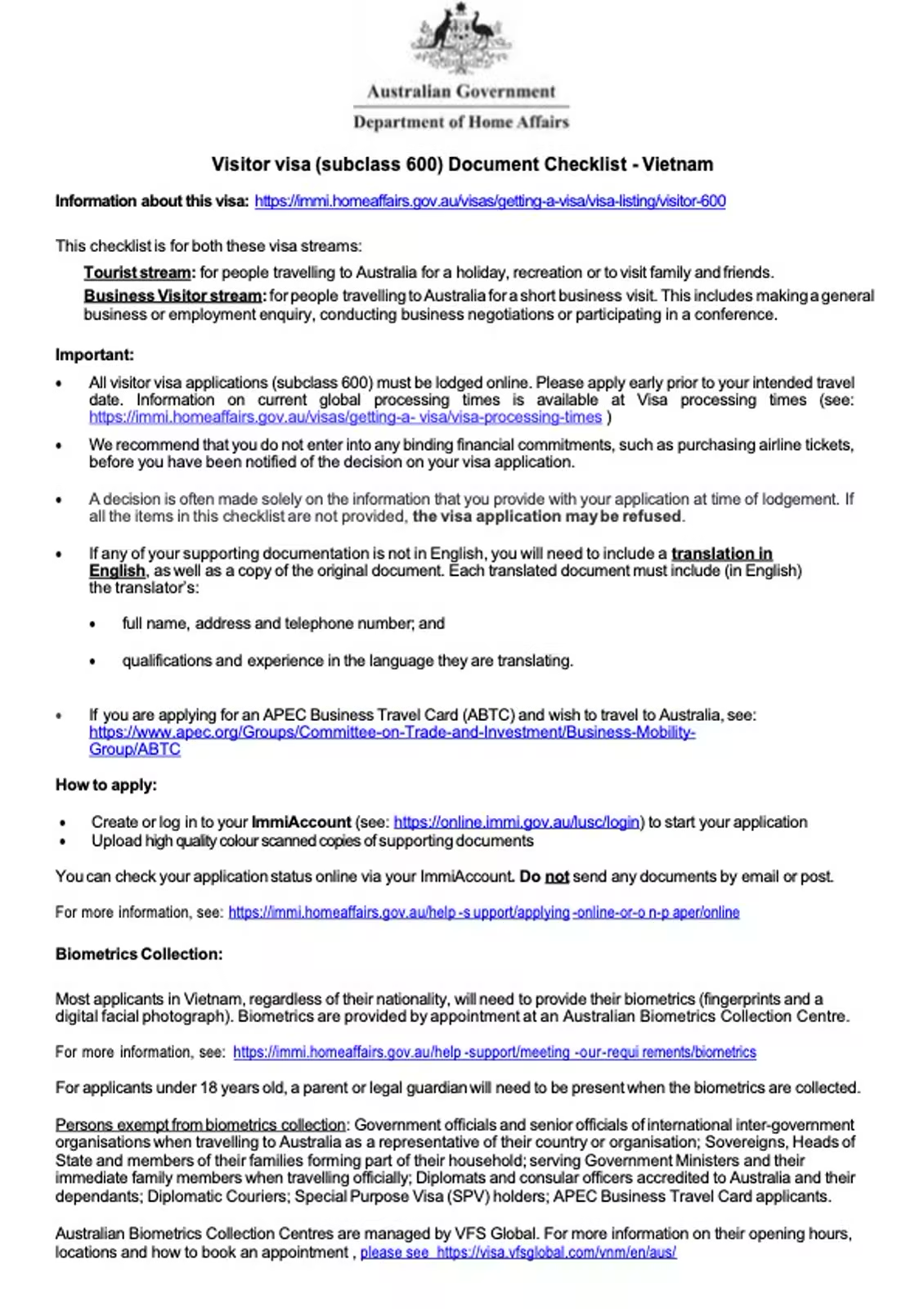
Australia's current subclass 600 checklist from the Australian Consulate-General in Ho Chi Minh City is one of the strongest practical sources for a visitor file because it spells out the document pack in checklist language. It says:
- all visitor visa applications must be lodged online
- high-quality colour scanned copies of supporting documents should be uploaded
- a decision is often made solely on the documents provided at lodgement
- if supporting documents are not in English, you need the original plus an English translation that includes the translator's full name, address, telephone number, qualifications, and experience
For identity, the checklist asks for:
- the passport identity page
- each page with a visa label or entry or exit stamp
- one passport-size photograph less than six months old
For finances and employment, it asks for recent bank statements, recent credit-card statements showing available balance, income or asset evidence, and employment details including salary plus an employer letter approving leave for the period of travel.
For tourist-stream host visits, it adds:
- relationship evidence
- a letter of invitation
- the host's funds and income if the host pays
- the host's passport identity page or other ID
If you are building an Australian visitor file, the best companion pieces are the Australia visitor visa checklist and the invitation letter for Australian tourist visa guide. If your Australian route is a migration case for a spouse or partner instead, use Documents Required for Spouse Visa Australia because the partner-visa pack uses sponsorship, relationship, police, and health evidence that do not appear in a normal visitor file.
Which documents actually prove funds, purpose, and return intent
Applicants often ask for a list of visa application documents, but the better question is what each document is supposed to prove. That is how officers read the file.
| What you need to prove | Stronger documents | Weaker or incomplete substitutes |
|---|---|---|
| Identity | Valid passport, matching bio page, prior visa pages where relevant | A cropped passport image with missing number or expiry date |
| Purpose of trip | Itinerary, conference registration, host letter, event booking, route-specific invitation | A vague one-line explanation with no dates or destination logic |
| Accommodation | Hotel confirmation, tenancy or address proof from host, realistic stay plan | A generic hotel booking with dates that do not match the application |
| Funds | Recent bank statements, payslips, tax proof, sponsor bank evidence | Old balance letters, unexplained lump-sum deposits, screenshots with missing names |
| Return-home ties | Employment letter, school enrolment, business registration, family ties, property records | Bare claims like "I will return after the trip" with no supporting proof |
This is the part where many "documents required for visa application" articles stay too generic. They tell readers what to upload, but not what the document is supposed to prove. The distinction matters because two applicants can submit the same bank-statement PDF and get very different results depending on whether the money trail actually matches the story in the form.
If the bank-statement part of your file is the piece you are least confident about, use Bank Statement for Visa: What Officers Check. It breaks down what current official sources say across the UK, Canada, Australia, Schengen, and U.S. visitor routes.
If you want the stronger version of that review, read How to Prepare Visa Application Documents and then How to Catch the Hidden Document Errors That Reject Visa Applications.
Common document mistakes that weaken a visa file
The most common refusal-prone patterns across the official routes reviewed for this article are:
- Treating the checklist as a packing list instead of an evidence system. A passport, bank statement, and invitation letter can all exist and still fail to prove the right story together.
- Using the wrong sponsor logic for the route. Travel.State.gov says invitation letters are not needed for U.S. visitor visas, while UKVI and Australia often do care about sponsor support details when a host is involved.
- Submitting old or thin financial proof. Canada's visitor guidance asks for 6 months of account details. UKVI wants enough evidence to show you can support yourself and pay the onward journey.
- Ignoring translations. UKVI and the Australian subclass 600 checklist both require full, verifiable translations when documents are not in the official language accepted by the route.
- Forgetting route-specific hard requirements. Schengen insurance and fingerprints are not optional extras. They are baseline parts of the file.
- Letting dates drift across documents. Insurance, itinerary, leave letters, host letters, and the application form must agree.
UKVI's supporting-documents guide also includes a useful caution that many applicants never see: there is a section specifically called Documents you should not use as evidence. That is a reminder that more PDFs do not automatically mean a stronger file.
For an end-to-end check before you submit, open how Vidicy works, then run the case through sign up once your route-specific documents are assembled.
Official application walkthrough videos
Official videos are not substitutes for the written rules, but they can help you understand the upload flow and the order governments expect.
UKVI publishes a dedicated visitor-visa walkthrough in its support-video collection:
The Australian Embassy in Timor-Leste's visas and migration page links to the Department of Home Affairs' ImmiAccount video, which is useful when you are organizing uploads and status checks for subclass 600 cases:
Related guides
If you're building the rest of the application pack, these companion guides help:
- Documents Required for Tourist Visa (2026 Guide)
- Documents Required for Student Visa in 2026
- Bank Statement for Visa: What Officers Check
- Visa photo requirements (2026): size, pixels, background
- Travel Visa Checker: What to Verify Before You Submit
Official sources
- U.S. Department of State visitor visa page: https://travel.state.gov/content/travel/en/us-visas/tourism-visit/visitor.html
- U.S. Department of State DS-160 page: https://travel.state.gov/content/travel/en/us-visas/visa-information-resources/forms/ds-160-online-nonimmigrant-visa-application.html
- U.S. Department of State visa fees page: https://travel.state.gov/content/travel/en/us-visas/visa-information-resources/fees/fees-visa-services.html
- UK Standard Visitor application page: https://www.gov.uk/standard-visitor/apply-standard-visitor-visa
- UKVI supporting-documents guide: https://www.gov.uk/government/publications/visitor-visa-guide-to-supporting-documents/guide-to-supporting-documents-visiting-the-uk
- European Commission Schengen visa overview: https://home-affairs.ec.europa.eu/policies/schengen/visa-policy/applying-schengen-visa_en
- Canada visitor-visa application page: https://www.canada.ca/en/immigration-refugees-citizenship/services/visit-canada/apply-visitor-visa.html
- Canada visitor-visa overview page: https://www.canada.ca/en/immigration-refugees-citizenship/services/visit-canada/visitor-visa.html
- Canada biometrics page: https://www.canada.ca/en/immigration-refugees-citizenship/campaigns/biometrics/how-to-give-biometrics.html/1000
- Australian Consulate-General Ho Chi Minh City subclass 600 checklist PDF: https://hcmc.consulate.gov.au/files/hchi/VISITOR%20visa%20checklist-EN-Updated%2010012024.pdf
- Australian Embassy Timor-Leste visas and migration page: https://timorleste.embassy.gov.au/dili/Visas_and_Migration.html
FAQ
What documents are required for almost every visa application?
Most short-stay applications need a valid passport, the correct visa form, a compliant photo, documents showing the purpose of the trip, proof of funding, and evidence that you will leave at the end of the visit. The exact mix changes by route, but those categories appear across the official US, UK, Schengen, Canada, and Australia pages.
Do I need bank statements for a visitor visa?
Usually yes. Bank statements help officers test whether you can realistically support the trip. Canada.ca asks for at least 6 months of account details for visitor cases, while UKVI and Australian visitor guidance both expect financial evidence that matches the rest of the story.
Is an invitation letter mandatory for every visa route?
No. Travel.State.gov says a letter of invitation or Affidavit of Support is not needed to apply for a U.S. visitor visa. In contrast, UK and Australia files often use host or sponsor letters when someone is paying for accommodation or travel. The rule depends on the route, not on blog convention.
How early should I start collecting visa documents?
Start earlier than the formal application window. The UK lets you apply 3 months before travel, while Schengen accepts applications 15 days to 6 months before departure. Even where the window is later, you usually need time to fix bank-trail gaps, translation issues, or sponsor inconsistencies before you file.
Do translated documents need certified translations?
Often yes. UKVI says documents not in English or Welsh need a full translation that can be independently verified, with the translator's name, signature, date, and contact details. Australia's subclass 600 checklist also asks for the original document plus an English translation with the translator's identity and qualifications.
What extra documents do families or minors need?
Family and child cases almost always need more evidence than solo adult cases. Canada mentions travel-authorisation letters and custody or adoption papers for some minors. The Australian checklist adds parental-consent and guardian-ID rules for applicants under 18. UKVI also asks for parental or guardian evidence for children.
Conclusion
The safest way to think about documents required for visa applications is not "what files do I need to upload?" but "what facts does each government need me to prove?" The core categories stay familiar: passport, form, photo, funds, purpose, accommodation, and return-home ties. The route-specific rules are where real submission risk appears.
If you are still building the pack, start with the route checklist that matches your destination. If the documents already exist but you want to pressure-test them for hidden gaps, mismatched dates, or weak sponsor logic, open how Vidicy works and then move to sign up when the file is ready for a structured review.