


If you need a flight itinerary for visa applications, the shortest accurate answer is this: it is the travel-plan document that shows your intended route, travel dates, and traveller name. For many routes, it does not have to be a fully paid ticket. NetherlandsWorldwide says a Schengen applicant can show a reservation or another document with travel plans and does not need a paid travel ticket. The U.S. Department of State says do not make final travel plans or buy tickets until you have a visa. Canada asks for itinerary evidence such as flight details, proof of accommodation, or event registration, while Australia's Department of Home Affairs says you should outline your plans and may want to include an itinerary.
That matters because most ranking pages on this keyword are ticket-reseller pages, not official-source guides. Governments usually care less about a magic booking reference and more about whether your itinerary, accommodation, funds, leave letter, insurance, and host documents all tell the same story. If you want the full evidence pack first, start with How to Prepare Visa Application Documents or the route checklists for Documents Required for UK Visitor Visa (2026 Checklist), Schengen Visa Checklist: Documents You Need in 2026, Canada Visitor Visa Checklist for 2026, Australia Visitor Visa Checklist for 2026, and US Visa Checklist for 2026: Documents + Interview.
At a glance
- A visa flight itinerary usually shows route, dates, and traveller name; it is often not the same as a paid ticket.
- For many routes, a reservation or structured travel plan is enough if it matches the rest of the file.
- The itinerary matters only when it lines up with accommodation, funds, leave approval, and trip purpose.
- For U.S. cases, the State Department explicitly says not to buy final tickets before visa issuance.
| Route | What the official source says | What counts as itinerary proof | Paid ticket required? |
|---|---|---|---|
| UK visitor visa | GOV.UK asks for planned dates, where you will stay, and what the trip will cost. UKVI also lists flight bookings as less useful evidence unless you are transiting. | Dates, stay address, event or host context, and a funding story that matches the form | Usually no. This is an inference from the live UKVI guidance. |
| Schengen visa | NetherlandsWorldwide says you need a reservation in your name for travel to and from the Schengen area, or another document showing travel plans. | Reservation or other travel-plan document | No. The checklist says you do not need a paid travel ticket. |
| Canada visitor visa | Canada.ca says itinerary evidence can include flight details, proof of accommodation, or registration for an event. | One or more of those documents | Not stated as a paid-ticket requirement. |
| Australia visitor visa | Home Affairs says you should outline your reason for travel, include details of your plans, and you may want to include an itinerary. | Itinerary plus return-tie and host evidence where relevant | Not stated as a paid-ticket requirement. |
| U.S. visitor visa | Travel.State.gov says to have a travel itinerary ready for the DS-160 if you have already made travel arrangements, but also says not to buy tickets before visa issuance. | Travel itinerary if already known | No. The State Department tells applicants not to buy final tickets first. |
Table of Contents
- What a flight itinerary for visa applications actually is
- Do you need a paid ticket or just a reservation
- Route-by-route rules: UK, Schengen, Canada, Australia, and the U.S.
- What a good visa flight itinerary should include
- Common mistakes that weaken itinerary evidence
- Official sources
- FAQ
- Conclusion
What a flight itinerary for visa applications actually is
A flight itinerary for visa purposes is the document that shows the travel story behind the rest of the file. In plain terms, it is the route summary that helps an officer see:
- who is travelling
- when the traveller plans to leave and return
- which airports or cities are involved
- whether the dates match accommodation, work leave, and insurance
- whether the trip length makes sense for the stated purpose
In a stronger file, that itinerary is not isolated. It connects directly to the rest of the evidence. A three-day conference should not have a three-week hotel plan. A host letter that says the visitor arrives on 1 June should not sit beside flight details dated 8 June. A leave letter for ten days should not support a twenty-day trip.
One common trap here is the phrase "dummy ticket." That is a seller's term, not an official government term. Official pages talk about travel reservation, flight details, or travel itinerary. That distinction matters because it pushes you back to the real question: what does the embassy or department actually want to learn from this document?
Do you need a paid ticket or just a reservation
The short answer is: usually a reservation or structured travel plan is enough, but you need to follow the exact route rules.
The clearest official wording comes from two sides:
- Schengen: the NetherlandsWorldwide checklist says you need a reservation in your name or another document showing your travel plans, and that you do not need a paid travel ticket.
- United States: the State Department says there is no guarantee you will be issued a visa and tells applicants to not make final travel plans or buy tickets until they have a visa.
The UK is slightly different. GOV.UK does not publish a line saying "never book flights" on the Standard Visitor page. But the live application page asks for travel dates, where you will stay, and how much the trip will cost, while the UKVI supporting-documents guide lists hotel bookings and flight bookings among the documents that are less useful as evidence unless you are transiting. The practical inference is straightforward: for a normal visitor case, a fully paid ticket is rarely the deciding proof.
Canada and Australia also point in the same direction. Canada.ca asks for flight details, proof of accommodation, or event registration as itinerary evidence. Australia's Home Affairs page says to explain your plans and that you may want to include an itinerary. Neither page frames a paid flight ticket as the main test.
So the real decision is not "ticket or no ticket." It is:
- What does the route require as travel proof?
- Can you show those travel dates without locking money into a non-refundable fare?
- Do those dates match the rest of your case?
If the rest of your file is weak, the itinerary cannot rescue it. Pair it with Bank Statement for Visa: What Officers Check, a current employment or study letter where relevant, and a route-specific checklist before you submit.
Route-by-route rules: UK, Schengen, Canada, Australia, and the U.S.
UK: trip details matter more than booked flights
The current GOV.UK Standard Visitor application page says you can apply 3 months before travel, that the standard visitor visa fee is GBP 135, and that you will usually get a decision within 3 weeks after you apply, prove your identity, and provide your documents.
More importantly for itinerary evidence, the live UK application asks for:
- the dates you are planning to travel to the UK
- where you will be staying during your visit
- how much you think your trip will cost
- the name and address of anyone paying for your trip, if relevant
Then the UKVI supporting-documents guide adds the part many applicants never read: flight bookings and hotel bookings are listed as documents that are less useful as evidence. That means the officer is reading beyond the booking itself. They want the travel plan to fit the purpose, the funding, and the return-home story.
Inference from the official pages: for a standard UK visitor file, a flight itinerary is useful as a date anchor, but a prepaid air ticket is not what proves you are a genuine visitor.
If your UK trip is host-funded, pair the itinerary with the invitation letter for UK visa guide. If you want the full route pack, use the documents required for UK visitor visa.
Schengen: reservation yes, paid ticket no
Schengen is the route where official wording is the least ambiguous. The European Commission says you must submit the application at least 15 days before your intended journey and no earlier than 6 months beforehand. It also says the core file must include supporting documents for the purpose of stay, financial means, accommodation, and intention to return home.
Then the NetherlandsWorldwide checklist gives the practical travel-document wording applicants actually need:
- bring a reservation in your name for travel to and from the Schengen area, or another document showing your travel plans
- you do not need a paid travel ticket
That distinction is important because Schengen files often get stronger when the itinerary remains flexible enough to keep matching insurance, hotel or host proof, and the final appointment timing. If your concern is a multi-country route, remember the Commission's rule: apply through the country where you will spend the longest time, or the first country if the stays are equal.
If your file is Schengen-heavy, use the Schengen Visa Checklist: Documents You Need in 2026, the Documents Required for Schengen Visa (2026 Checklist), and the Schengen Visa Travel Insurance Rules for 2026 together.
Canada: itinerary evidence is broader than flights
Canada.ca is useful here because it names itinerary evidence directly. The visitor-visa application page says documents that show how long you plan to stay and what you will do in Canada can include copies of:
- flight details
- proof of accommodation
- registration for an event
The same page also says bank evidence should include at least 6 months of account details, including balances. That tells you how officers likely read the itinerary: not as a standalone ticket, but as part of the wider funding and purpose story.
That is why a Canada visitor file often works better with a simple, believable itinerary and matching bank evidence than with an expensive fare printout. If your trip is tourist-only, use the Canada visitor visa checklist. If family or friends are hosting you, the invitation letter for visitor visa Canada guide should match the same dates and stay address.
Canada's official completeness video is also useful because it focuses on the errors that delay applications rather than template myths:
Australia: plans, return ties, and leave dates matter
Australia's Home Affairs page "Applying for a visitor visa" gives unusually practical wording for itinerary evidence. It tells applicants to:
- outline their reason for travelling to Australia
- include details of their plans while they are there
- include an itinerary if they want to
- show they intend to return home, with documents such as a current payslip and a letter from their employer granting leave from work
That tells you something important: on Australia visitor files, the itinerary is not just a flight plan. It is part of the temporary-intent test. The dates in the itinerary should line up with the leave letter, the host letter if there is one, and the available funds.
If the trip is family-funded or hosted, Home Affairs also tells applicants to include a letter from family or friends inviting them to visit. That makes Australia one of the clearest examples of how itinerary evidence, host evidence, and return-home evidence all have to agree.
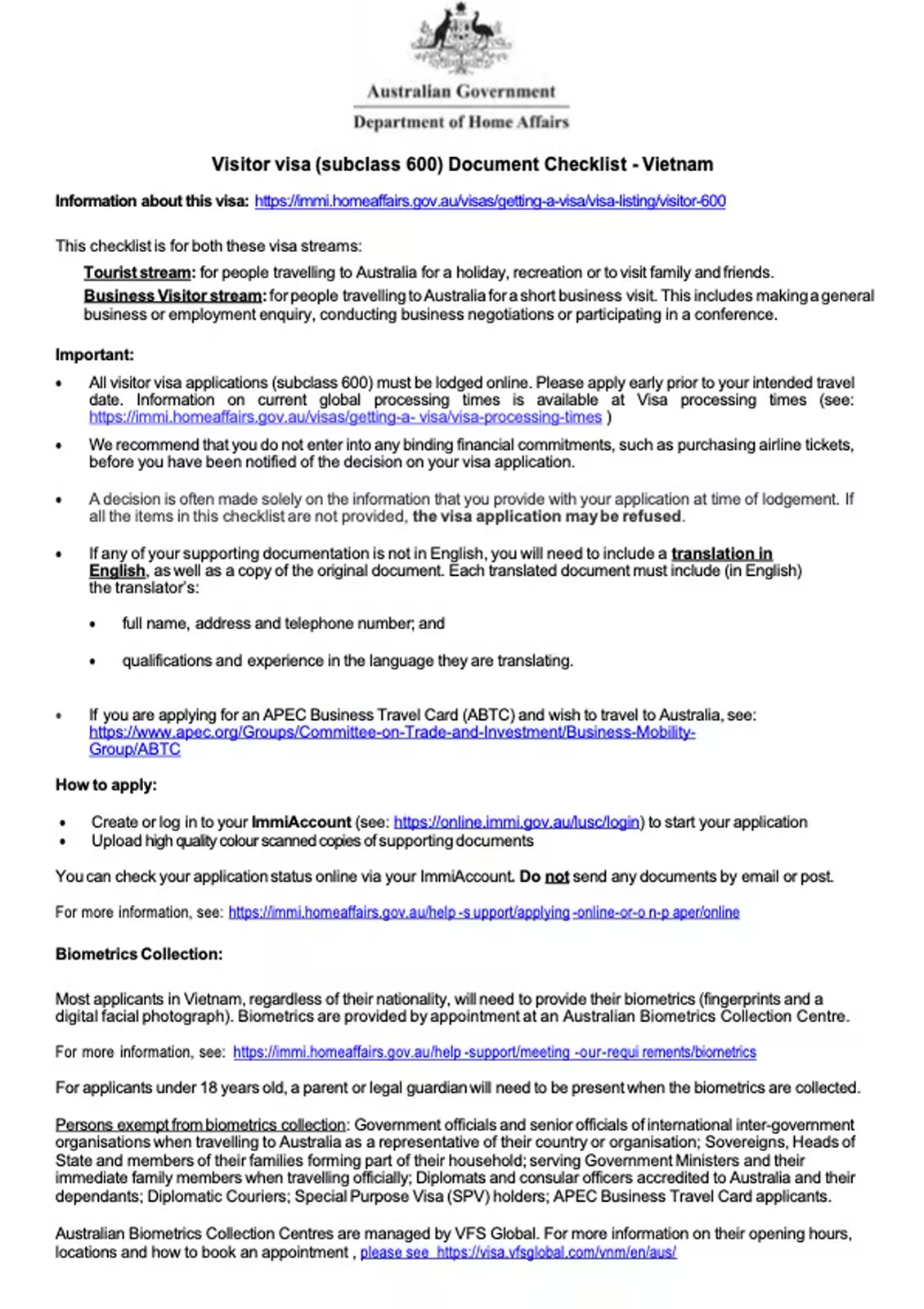
If your application is subclass 600-specific, use the Australia visitor visa checklist before you upload anything.
U.S.: use the itinerary if known, but do not buy tickets first
The U.S. State Department is the clearest route if your fear is "will I be refused because I have not bought the flight yet?"
The DS-160 FAQ says you should have a travel itinerary available if you have already made travel arrangements while you complete the form. That is a useful nuance. It does not say every applicant must prepay flights before they can fill out the DS-160.
The main visitor-visa page then says:
- the B visitor fee is $185
- additional documents may be requested to show the purpose of your trip, your intent to depart, and your ability to pay
- a letter of invitation or Affidavit of Support is not needed
- there is no guarantee you will be issued a visa, so do not make final travel plans or buy tickets until you have a visa
That combination gives the practical rule. For a U.S. visitor case, a travel itinerary can help show what you plan to do, but buying a final non-refundable ticket is not the thing that qualifies you.
If you are still building the full U.S. file, pair this topic with the How to Fill DS-160 guide and the B1/B2 interview guide.
What a good visa flight itinerary should include
A strong itinerary document is short, factual, and easy to cross-check. It should usually include:
- Traveller name exactly as shown in the passport
- Departure and return dates
- Departure and arrival cities or airports
- Airline or route details if known
- Reservation number, if the document has one
- Accommodation or host details that match the same dates
- A short explanation of the trip purpose if the route or the rest of the file would otherwise look vague
If the trip is more complex, such as a multi-country Schengen route or a conference plus personal travel, add one short applicant explanation tying the itinerary to the rest of the pack. This is where a clean cover letter for Schengen visa or country-specific explanation letter can help.
The safest working rule is simple: the itinerary is only as strong as the documents it agrees with.
Common mistakes that weaken itinerary evidence
Most itinerary problems are not technical. They are consistency problems.
| Mistake | Why it hurts | Better move |
|---|---|---|
| Buying a non-refundable ticket too early | A refusal or delay now costs real money | Use a reservation or other route-accepted travel-plan evidence first |
| Leave dates do not cover the trip | The return-home story stops making sense | Match the itinerary to the employer or school letter |
| Hotel or host address is in a different city from the flight plan | The officer has to guess how the trip fits together | Add a clear route summary or correct the dates and cities |
| Sponsor says they cover accommodation only, but the itinerary implies full funding | Financial responsibility becomes unclear | State exactly what the sponsor covers and what the traveller pays |
| Insurance, itinerary, and return flight dates do not match | The file looks careless or unreliable | Recheck every date before submission |
| One-way flight details with no onward or return explanation | It can weaken temporary-intent logic | Add return evidence or explain the onward plan clearly |
This is also why a route-level document review matters. If the itinerary is the weak point in your file, run the full pack through Vidicy's How It Works flow before you submit, then sign up to catch mismatched dates, funds, and host details while you still have time to fix them.
Related guides
If you're reviewing travel-proof documents before submission, these companion guides help:
- Visa Application Documents: How to Prepare Them
- US Visa Checklist for 2026
- How to Fill DS-160: Step-by-Step Guide (2026)
- B1/B2 Visa Interview Questions: Best Answers (2026)
Official sources
- UKVI supporting-documents guide: https://www.gov.uk/government/publications/visitor-visa-guide-to-supporting-documents/guide-to-supporting-documents-visiting-the-uk
- GOV.UK Standard Visitor application page: https://www.gov.uk/standard-visitor/apply-standard-visitor-visa
- European Commission Schengen visa overview: https://home-affairs.ec.europa.eu/policies/schengen/visa-policy/applying-schengen-visa_en
- NetherlandsWorldwide Schengen checklist (travel reservation wording): https://www.netherlandsworldwide.nl/visa-the-netherlands/checklist-schengen-visa-family-member-nl/united-kingdom
- Canada visitor-visa application page: https://www.canada.ca/en/immigration-refugees-citizenship/services/visit-canada/apply-visitor-visa.html
- Canada official completeness video page: https://www.canada.ca/en/immigration-refugees-citizenship/news/video/save-time-send-complete-application.html
- Australia Home Affairs visitor-visa application tips: https://immi.homeaffairs.gov.au/check-twice-submit-once/visitor-visa
- U.S. visitor visa page: https://travel.state.gov/content/travel/en/us-visas/tourism-visit/visitor.html
- U.S. DS-160 FAQ: https://travel.state.gov/content/travel/en/us-visas/visa-information-resources/forms/ds-160-online-nonimmigrant-visa-application/ds-160-faqs.amp.html
- U.S. visa fees page: https://travel.state.gov/content/travel/en/us-visas/visa-information-resources/fees/fees-visa-services.html
- Applying for a UK visitor visa video page: https://www.gov.uk/government/publications/how-to-apply-for-a-uk-visitor-visa-video/how-to-apply-for-a-uk-visitor-visa-video
FAQ
Do I need a paid flight ticket for a visa application?
Usually no, but you need to check the route. The clearest official wording is for Schengen and the U.S.: NetherlandsWorldwide says a paid ticket is not required, and Travel.State.gov tells applicants not to buy tickets until the visa is issued. Other routes focus more on travel dates and trip logic than prepaid airfare.
What should a flight itinerary include for a visa?
At minimum, it should show the traveller's name, travel dates, route, and enough detail to connect the trip to accommodation, host evidence, or event proof. A good itinerary is easy to compare against your leave letter, insurance, bank evidence, and the answers in your application form.
Is a flight itinerary mandatory for a UK visitor visa?
The UK rules focus on planned travel dates, where you will stay, trip cost, and the wider genuine-visitor story. UKVI even lists flight bookings as less useful evidence unless you are transiting. In practice, the itinerary matters, but a prepaid air ticket is usually not the thing that makes the case credible.
Can I use a reservation for a Schengen visa?
Yes. The NetherlandsWorldwide checklist says you can use a reservation in your name or another document showing your travel plans, and that you do not need a paid travel ticket. Just make sure the same dates also match your accommodation, insurance, and funding documents.
What if my travel dates change after I apply?
Update the related documents as early as you can. A changed itinerary can break several other documents at once, including hotel bookings, host letters, insurance dates, and work leave approval. If the change is major, check the consulate or department instructions for whether you should upload updated evidence before a decision.
Conclusion
The safest way to think about a flight itinerary for visa applications is this: it is travel evidence, not a purchase requirement. The strongest document is the one that makes your route, stay length, funding, and return-home plan easy to understand without forcing you into an unnecessary non-refundable booking.
If your itinerary is the part of the case that still feels weak, use Vidicy as a second set of eyes before you submit. Start with How It Works, then create your application once your travel dates, accommodation, funds, and supporting documents all line up.