

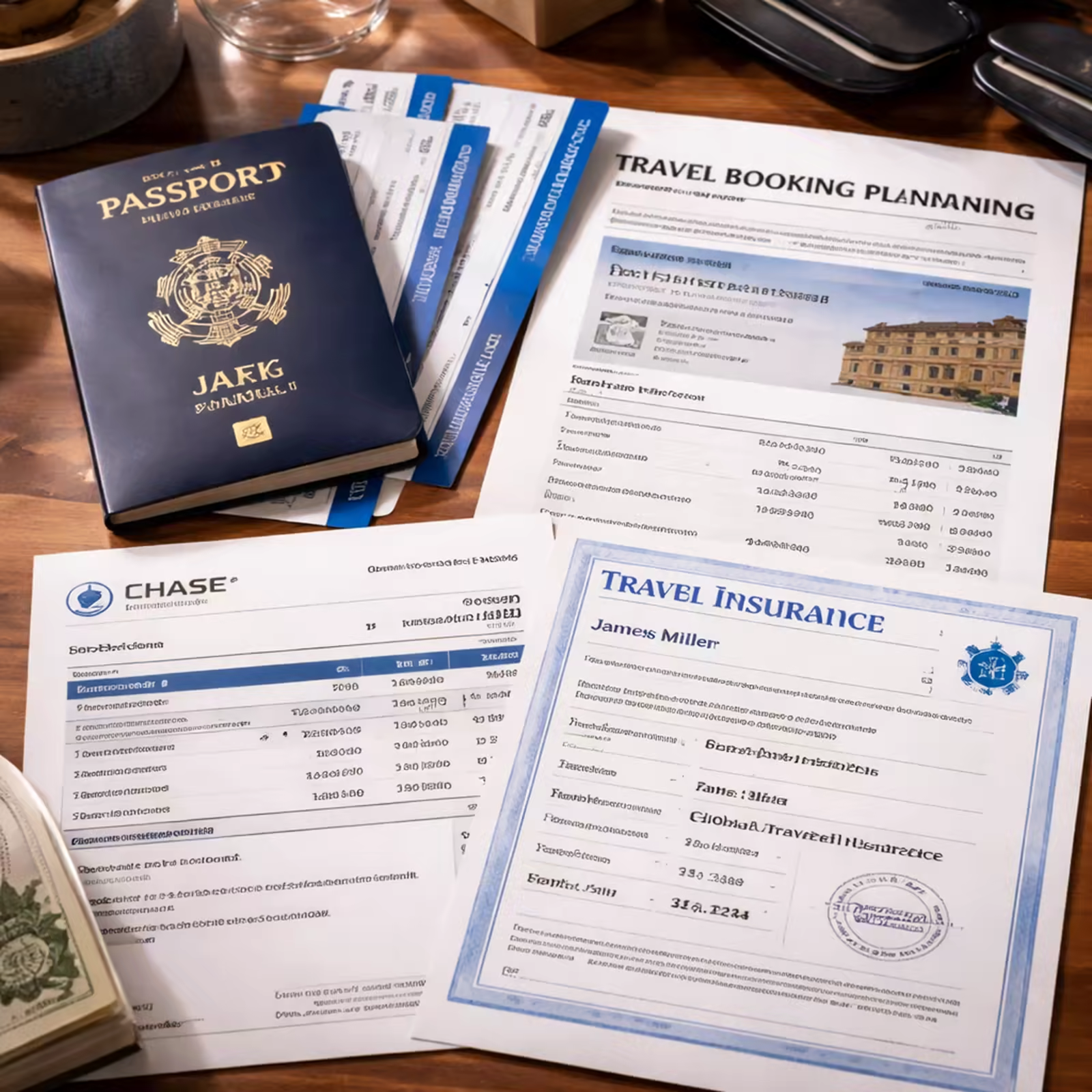

If you need the short answer first, Schengen visa travel insurance must cover at least €30,000 in medical expenses, be valid across all Schengen states, last for the full stay, and cover repatriation plus urgent treatment. That is the baseline on current official consular pages. The part many applicants miss is that some consulates also inspect the certificate wording, not just the policy name. The German mission’s checklist, for example, says the letter must spell out the amount, list your name, and show that no deductible, co-pay, or reimbursement gap applies.
That is why people still get rejected after buying a policy marketed as “Schengen compliant.” The visa officer is checking whether the document you submitted actually proves the right coverage for your trip. This guide turns the official EU, Netherlands, and German rules into a practical checklist you can use before you upload the file. If you are still building the rest of the package, start with Vidicy’s Schengen visa checklist or the broader Schengen visa application guide.
| Requirement | What the official sources say | Why applicants get caught |
|---|---|---|
| Minimum medical cover | At least €30,000 according to NetherlandsWorldwide and the German mission PDF | Some policies say “travel insurance” but never state the Schengen medical limit clearly |
| Territorial validity | Must be valid in all Schengen countries | The policy covers Europe partly, but not the whole Schengen area |
| Duration | Must cover the entire duration of stay | The return date or entry day is left outside the certificate |
| Covered events | Must include emergency medical care, hospital treatment, prescription medicine, and repatriation, including in the event of death, per NetherlandsWorldwide | Applicants assume ordinary health insurance abroad is automatically enough |
| Visa timeline | The European Commission says normal processing is 15 days and can reach 45 days | People buy insurance too late, then need to change dates after filing |
| Application window | The European Commission says you can apply up to 6 months before the trip and should apply at least 15 calendar days before departure | The certificate is rushed or the dates no longer match the itinerary |
Table of Contents
- What Schengen visa travel insurance actually means
- The official requirements every policy must meet
- What consulates inspect on the insurance certificate
- How to choose a compliant policy without overbuying
- Common Schengen insurance mistakes
- Official sources
- FAQ
- Conclusion
What Schengen visa travel insurance actually means
Schengen visa travel insurance is the travel medical policy you submit with a short-stay Schengen application to prove that emergency healthcare costs will be covered during your trip. It is part of the short-stay visa workflow, which the European Commission defines as a visit of up to 90 days in any 180-day period.
That definition matters because this guide is about the short-stay Schengen visa, not a national long-stay visa for study, work, or relocation. If your stay is longer or your route is not a standard short visit, the insurance expectations can shift with the national visa category.
The other useful planning numbers come from the same official EU page:
- you can apply up to 6 months before the trip
- you should apply at least 15 calendar days before departure
- the normal processing time is 15 days
- the review can stretch to 45 days if the consulate asks for more checks
- the standard visa fee is €90 for adults and €45 for children aged 6 to 12
Those numbers matter for insurance because the certificate has to match your travel story. If your appointment slides, your itinerary changes, or your return date moves, a once-valid insurance letter can stop matching the rest of the file. That is exactly the kind of quiet mismatch Vidicy is built to catch before submission. If you want the broader document-review version of that problem, read how to avoid visa rejection due to document mistakes.
The official requirements every policy must meet
The cleanest current requirement list comes from NetherlandsWorldwide, which states that Schengen visa insurance must:
- cover medical expenses up to at least €30,000
- cover costs including hospital admission and treatment, emergency treatment, prescription medicine, and repatriation to your country of origin in the event of death
- be valid in all Schengen countries
- be valid for the entire duration of your stay
Those are the core rules. Everything else is evidence and presentation.
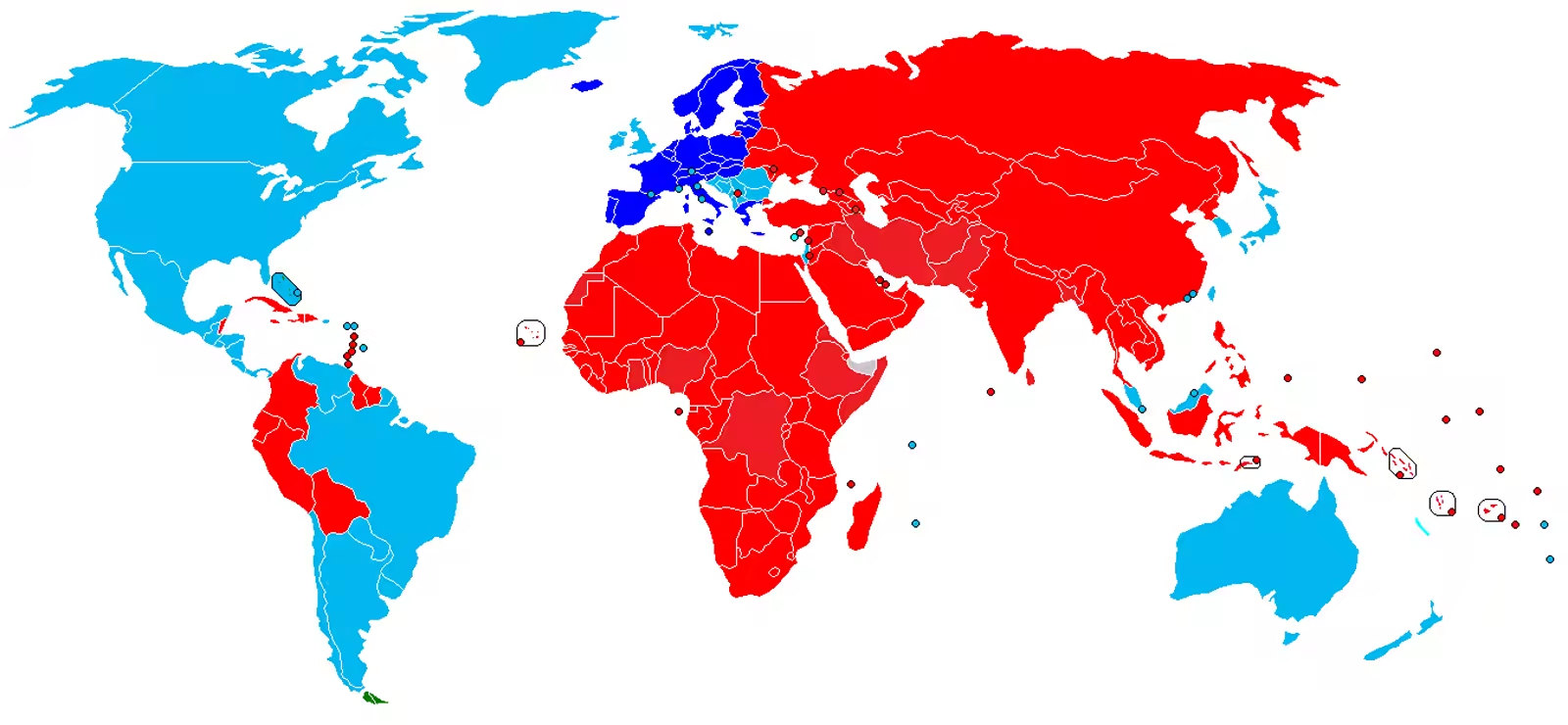
The “all Schengen countries” point is easy to gloss over when you are only planning to land in one country. But the Schengen visa itself is a regional short-stay permit. If your certificate only names France, or only covers “Europe” without clear Schengen validity, you are forcing the officer to guess whether the policy matches the visa.
The duration rule is just as important. If you arrive on June 1 and leave on June 14, your policy needs to cover the whole stay, not only the days you expect to be sightseeing. A one-day mismatch on arrival or departure is still a mismatch.
The official rules also do not endorse one insurer. The German mission’s PDF says it is your responsibility to compare the insurance you choose against the listed Schengen requirements. That is the right way to think about the purchase: you are not buying a brand name, you are buying a certificate that fits the consular checklist.
What consulates inspect on the insurance certificate
This is where many otherwise strong files start to wobble.
The German mission’s medical health insurance PDF adds a layer of detail that helps explain real-world refusals. According to that official checklist, the insurance confirmation must clearly state:
- coverage of at least 30,000 EUR
- validity for all Schengen states
- coverage for medical treatment, hospitalization, medical evacuation, and medical repatriation
- that the amount is spelled out or marked as unlimited
- that no reimbursement, deductible, or co-pay is accepted
- your name as the insured or covered person
- validity for your entire stay in the Schengen zone
The same PDF also says employer confirmation letters are not accepted in place of insurer-issued confirmation. That detail is especially useful if you planned to rely on a corporate travel plan or domestic insurance summary without asking the insurer for a proper certificate.
The NetherlandsWorldwide page adds another nuance for multiple-entry visas. It says that if you apply for a visa with two or more entries, you need to prove insurance for the first trip, and you must sign the statement in the visa application form confirming that you will buy insurance for future trips too.
| Certificate detail | Low-risk version | High-risk version |
|---|---|---|
| Coverage amount | “Emergency medical expenses: €30,000” or higher | “Travel protected” with no amount stated |
| Territory | “Valid in all Schengen states” | “Europe coverage” with unclear borders |
| Duration | Start and end dates cover the entire stay | Dates cover only the outbound leg or exclude the last day |
| Benefits | Mentions treatment, hospitalization, evacuation, repatriation | Only talks about trip cancellation or baggage |
| Issuer | Insurer-issued certificate with your full name | Employer letter or agency confirmation with no insurer wording |
| Cost sharing | Explicitly shows no deductible/co-pay issues where required | Leaves reimbursement or deductible language vague |
That is also why a cheap policy can still work, while an expensive one can still fail. Compliance beats extras. A premium plan with the wrong certificate wording is weaker than a modest plan with the right wording, dates, and territory.
How to choose a compliant policy without overbuying
The safest approach is to choose the policy only after your itinerary, dates, and main destination are stable enough to appear consistently across the visa file.
Here is the practical order that keeps most applicants out of trouble:
- Confirm which consulate you are applying through and review its official checklist.
- Lock your intended entry and exit dates.
- Check whether your policy certificate explicitly lists €30,000 or more, all Schengen states, and the right benefits.
- Make sure your name on the certificate matches the passport exactly.
- Re-check the policy dates against your hotel booking, flight hold, and application form.

The official sources do not set one mandatory premium or one approved company list for all applicants. That means price is not the right first filter. Your real screening questions are:
- Does the certificate show the amount clearly?
- Does it cover the whole Schengen territory?
- Does it cover every day of the stay?
- Does it include emergency care and repatriation?
- Does it satisfy any extra wording the consulate publishes?
If the answer to any of those is unclear, keep shopping.
One more practical point: insurance does not replace the rest of your financial or travel evidence. A compliant policy helps satisfy one visa requirement, but it does not prove you can pay for the trip overall. Pair it with the route-specific proof of funds for Schengen visa guide, the broader proof of funds for a visa application guide, and a cover letter for Schengen visa applications that uses the same dates and funding story.
If you want to see how insurance fits into the larger route, Schengen visa requirements explained for 2026 travelers is the best companion read.
Common Schengen insurance mistakes
Most insurance-related refusals are not about buying “the wrong company.” They come from one of a few predictable document errors.
| Mistake | Why it fails | Safer fix |
|---|---|---|
| Buying a plan that never states the medical limit | The officer cannot confirm the €30,000 rule | Ask for a visa certificate that spells out the amount |
| Using a certificate valid only in one country | Schengen validity is regional, not country-by-country | Confirm the certificate says it covers all Schengen states |
| Leaving a date gap on arrival or departure | The policy no longer covers the entire stay | Match the policy dates to the itinerary before filing |
| Submitting an employer or agency letter instead of insurer-issued proof | The German mission says employer letters are not accepted | Upload the insurer’s certificate with your name on it |
| Assuming ordinary health insurance abroad is enough | It may not mention repatriation, emergency care, or prescription medicine | Get a Schengen-specific certificate from the insurer |
| Ignoring multiple-entry rules | Future trips may not be addressed in the application | Show first-trip cover and sign the required statement for later trips |
| Focusing on luggage or trip-cancellation extras | Those extras do not fix a weak medical certificate | Prioritize the medical-benefit wording first |
The sharpest way to reduce these errors is to review the insurance certificate against the rest of the file, not in isolation. Your dates, hotel booking, flight reservation, and application form all need to tell the same story.
That is also why this topic belongs inside a broader pre-submission review workflow. If your insurance is perfect but your documents still conflict, you have not actually made the file stronger. Vidicy’s how it works page shows how the platform checks those cross-document mismatches before you submit, and when you are ready to run the full review, you can start here.
Official sources
- Applying for a Schengen visa — European Commission
- What kind of insurance do I need when applying for a visa for the Netherlands? — NetherlandsWorldwide
- Medical Health Insurance PDF — German Mission
- Medical Health Insurance overview page — Federal Foreign Office / German Mission
Related guides
If you're building the rest of the application pack, these companion guides help:
- Schengen Visa Checklist: Documents You Need in 2026
- Documents Required for Schengen Visa (2026 Checklist)
- Schengen Visa Photo Requirements (2026): Size, Rules, Examples
FAQ
Is travel insurance mandatory for a Schengen visa?
Yes. Official Schengen visa guidance requires proof of travel medical insurance for short-stay applicants. The policy must meet current consular conditions, not just carry a marketing label that says “Europe” or “travel insured.”
What is the minimum Schengen visa insurance coverage?
The current official minimum on the sources used here is €30,000 in medical expenses. The policy must also cover the full stay, all Schengen countries, and key medical/repatriation events.
Does the policy have to cover every Schengen country?
Yes. NetherlandsWorldwide says the insurance must be valid in all Schengen countries. A certificate that only mentions one country or leaves the territory vague creates an avoidable risk.
What happens if I am applying for a multiple-entry Schengen visa?
NetherlandsWorldwide says you must show insurance for your first trip and confirm in the visa application form that you will buy insurance for future trips too. The multiple-entry visa does not remove the insurance obligation.
Can I use a letter from my employer or normal health insurer?
Not safely unless the insurer itself issues a certificate that matches the consular checklist. The German mission says employer confirmation letters are not accepted as substitute proof.
When should I buy the insurance?
Buy it before lodging the visa application, once your dates are stable enough to appear consistently across the file. The European Commission says you can apply up to 6 months ahead, but at least 15 calendar days before departure.
Does paying more improve my visa chances?
Not by itself. Official rules focus on compliance, territory, dates, and covered medical events. A more expensive plan does not help if the certificate still fails the Schengen checklist.
Conclusion
The simplest way to remember the current Schengen visa travel insurance rules is this: €30,000 minimum, all Schengen states, every day of your stay, and clear proof of emergency medical and repatriation cover. Once you add the consulate-level certificate checks, the task becomes less about buying “premium insurance” and more about submitting the exact evidence the officer expects to see.
If you want to reduce refusal risk before the appointment, review your route with the Schengen visa checklist, then run a final Vidicy review once the insurance certificate, dates, and supporting documents all line up.