

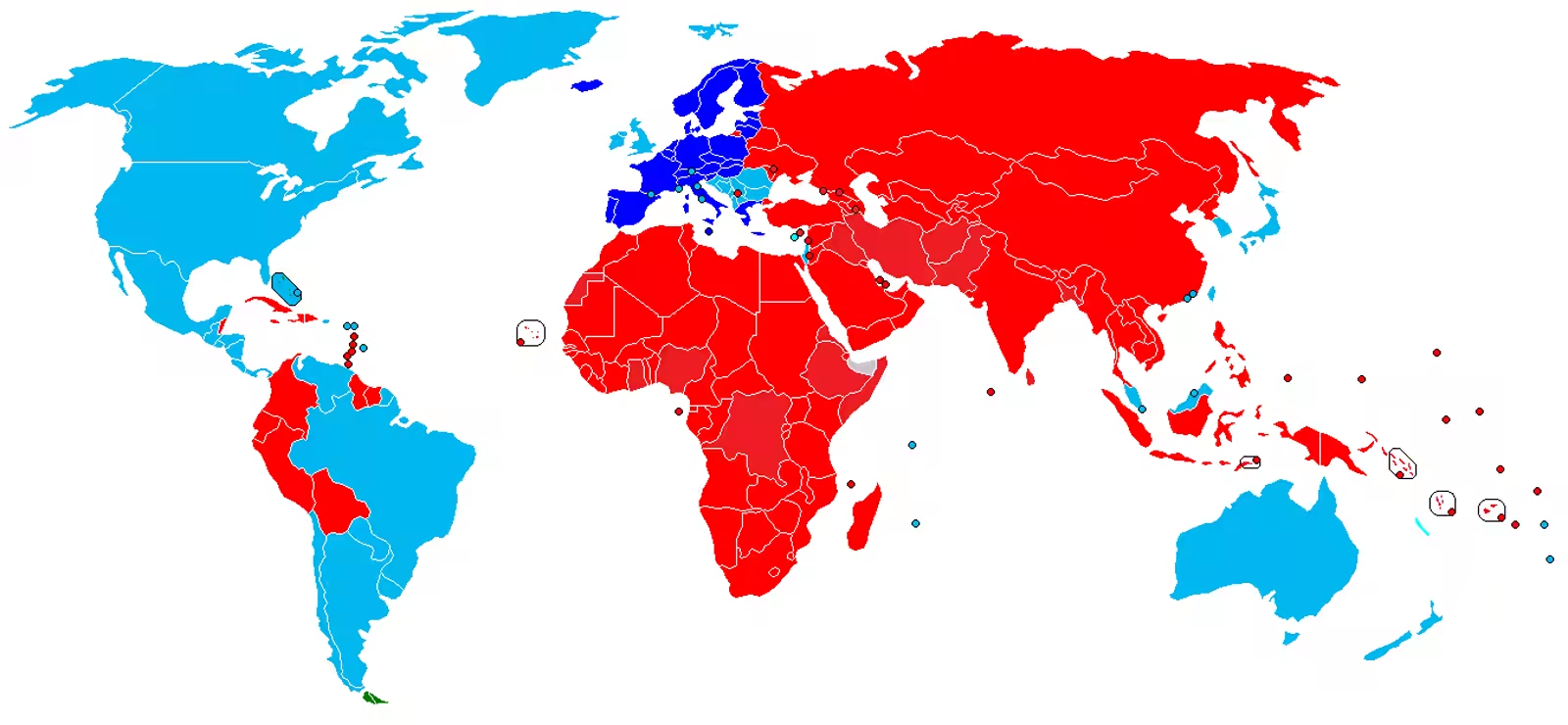

Schengen visa requirements for short visits usually come down to six things: a valid passport, the right application form, a clear travel purpose, proof of accommodation, proof of funds, and travel insurance that meets the Schengen minimum. You also need to apply through the right country and show that your stay is temporary.
This guide is for travelers planning a short visit to the Schengen Area in 2026. It covers the baseline eligibility rules, the documents most consulates expect, common fee and timing benchmarks, and the funding or itinerary gaps that most often weaken an otherwise valid file.
If you want a printable-style checklist you can work through while collecting documents, pair this with the Schengen visa checklist. If your real problem is deciding whether the file is appointment-ready rather than just complete, use the Schengen visa checker guide after this overview.
Schengen visa requirements at a glance
| Requirement | Current official baseline | Why it matters |
|---|---|---|
| Short-stay window | Up to 90 days in any 180-day period | This is the basic Schengen short-stay rule. |
| Visa fee | €90 for adults, €45 for children aged 6 to under 12 | The fee is harmonized across the Schengen system. |
| Travel insurance | At least €30,000 in medical coverage, including repatriation | Insurance is a core eligibility requirement for most short stays. |
| Earliest application point | Up to 6 months before the trip | Applying early gives you time to fix missing evidence. |
| Standard processing time | Usually 15 calendar days, but it can extend to 45 days | Peak seasons and extra checks can slow a file down. |
| Country of application | Apply through the main destination or the first entry country if the stay is evenly split | Filing through the wrong country can derail the application. |
Country-level daily-funds expectations and booking workflows can still differ by consulate or visa centre, but the official baseline above is the right starting point before you open any local checklist.
If Germany is the country you will actually apply through, use this narrower documents required for German visa checklist after this overview so you do not miss the tourist-versus-visitor document split.
Table of Contents
- Eligibility Criteria for a Schengen Visa
- Required Documents and How to Prepare Them
- Step-by-Step Application Process
- Visa Fees, Processing Times, and Quick Comparison Table
- Common Pitfalls and Tips for a Successful Application
- FAQ
- Conclusion
Eligibility Criteria for a Schengen Visa
The first step is to see if you fit the basic Schengen visa requirements. If you are from a nationality that needs a visa and you plan to stay up to 90 days in any 180-day window, you need a short-stay Schengen visa.
If you are from a visa-free nationality, watch ETIAS carefully but do not treat it as live yet. The European Commission’s current ETIAS notice says the system is not yet in operation and is expected to start in the last quarter of 2026. When it does launch, the announced fee is €20, with exemptions for applicants under 18 and over 70. ETIAS does not replace a visa if your nationality already requires one.
For longer stays, you’ll need a national visa issued by the specific country where you intend to stay beyond the short-stay Schengen window.
Key eligibility points:
- Valid passport with at least two blank pages, a remaining validity of three months beyond your planned exit date, and issued within the previous 10 years.
- Proof of travel purpose, tourism, business, study or family visit.
- Financial means to cover the stay under the rules of the country or consulate handling the case.
- Travel insurance covering at least €30,000.
Check the official EU Schengen policy page for the latest updates on who needs a visa versus an ETIAS. EU Schengen visa policy
For the current ETIAS status, use the European Commission’s ETIAS notice rather than third-party countdown pages. European Travel Information and Authorisation System (ETIAS)
Required Documents and How to Prepare Them
Gathering the right paperwork is the most time-consuming part of the Schengen visa process. Miss a core item and your file can be delayed, returned for extra evidence, or refused.
The European Commission’s Schengen application page is the right baseline. Your specific consulate or visa centre may still ask for local forms, appointment printouts, or photocopies in addition to the standard document set.
Core document checklist
- Completed Schengen visa application form.
- Valid passport (issued within the last 10 years, with at least two blank pages).
- Recent passport-size photo that meets the country’s specifications.
- Proof of legal residence in the country where you submit the application, if you are applying outside your country of nationality.
- Travel itinerary and supporting trip details.
- Proof of accommodation, such as hotel bookings or an invitation from a host. If a host in Germany is part of the trip story, this invitation letter for German visa guide shows when a signed letter is enough and when the file should use a
Verpflichtungserklaerung. - Travel medical insurance covering a minimum of €30,000 for the whole trip.
- Proof of financial means, such as recent bank statements, payslips, or sponsor evidence where applicable. If the statement rules are the part you still want to verify line by line, use this proof of funds for Schengen visa guide before you upload the final PDF set.
- Employment letter. See employment letter for a visa application for a practical template.
If the finance layer is the part you are still guessing on, use this route-specific companion guide before you submit: proof of funds for Schengen visa.
Each document should be clearly labeled and organized. The exact order may vary by visa centre, but a clean file makes it easier to prove that the trip is funded, insured, and temporary.
If you want the “why this document matters” version (purpose, accommodation, funds, and return-ties proof), use this companion checklist: Documents Required for Schengen Visa (2026 Checklist).
If you want a personalized checklist before you book the appointment, Vidicy can help organize the embassy-specific items.
For a broader packaging workflow, How to prepare visa application documents: a step-by-step guide is a useful companion read.
You can usually apply up to six months before travel, but not later than 15 calendar days before departure. Local appointment availability can be tighter than the legal window, so book as soon as your core documents are ready.
Once you know your main destination, compare the European Commission baseline against the local checklist shown in the consulate or visa-centre booking flow for your city.

Step-by-Step Application Process
Now that you have the paperwork, it’s time to submit the file. The process is broadly similar across the Schengen system, even though local booking portals and document ordering can differ.
- Book your appointment. Most embassies and visa centres use an online booking system.
- Attend the appointment. Dress smart, bring the original documents, and be ready to answer brief questions about your travel purpose.
- Pay the visa fee. The standard €90 fee is non-refundable.
- Wait for processing. The standard target is 15 calendar days, but a case can take longer if more checks are needed.
When the visa is ready, you’ll receive a notification to collect your passport. Check the visa sticker for correct dates, name spelling and passport number.
The EU’s applying-schengen-visa page also lists the official timelines and required forms. EU Schengen visa application overview
Visa Fees, Processing Times, and Quick Comparison Table
Understanding the cost side of Schengen visa requirements helps you budget accurately. The official short-stay fee is €90 for adults and €45 for children aged 6 to under 12. Children under 6 are generally exempt, and some other categories may qualify for reduced or waived fees under the visa rules.
What changes more often are service-centre charges, courier options, document-translation costs, and travel-insurance premiums.
Processing time is usually 15 calendar days, counted from the day the consulate receives the application, but the official rule allows an extension up to 45 calendar days in individual cases.
Common Pitfalls and Tips for a Successful Application
Even if you follow the checklist, applicants still get rejected when the file is incomplete, inconsistent, or weakly explained.
Pitfall 1: Inconsistent travel purpose
If your itinerary looks like a whirlwind tour with no clear theme, the officer may think you’re trying to hide something. Instead, craft a story that ties each city to a specific activity, museum visits in Paris, business meetings in Berlin, family time in Prague.
Pitfall 2: Weak proof of return
Show a signed leave letter from your employer, a recent payslip and a clear employment letter. Also include property ownership or family ties in your home country.
Pitfall 3: Financial red flags
Large, unexplained deposits in the last month raise suspicion. Provide a brief note explaining any big credit, for example a tax refund or a gift, and match it with supporting documents.
Pitfall 4: Insurance mismatches
The insurance dates must cover the exact travel dates, including the day you land and the day you leave. A one-day gap will cause a denial.
If you want a final consistency check, Vidicy can help flag mismatched dates and missing fields before you submit.
Another tip is to keep a digital copy of every document on your phone. If the visa centre asks for a quick look, you can show it instantly.
For more examples of avoidable paperwork issues, Why visa applications get rejected: the document mistakes that trip people up is a useful companion read.
Official sources
- European Commission: visa policy overview
- European Commission: applying for a Schengen visa
- European Commission: ETIAS notice
- European Commission: Schengen visa fee increased as of 11 June 2024
Related guides
If you're building the rest of the application pack, these companion guides help:
- Schengen Visa Checklist: Documents You Need in 2026
- Documents Required for Schengen Visa (2026 Checklist)
- Schengen Visa Application: Step-by-Step Guide (2026)
FAQ
Do I need a Schengen visa if I have an ETIAS?
No. ETIAS is a separate pre-travel authorization for eligible visa-free travelers, and it is not yet in operation. If your nationality requires a Schengen visa, ETIAS does not replace that visa. If you plan to stay longer than the short-stay limit, you need a national long-stay route instead.
How far in advance should I apply?
You can apply up to six months before your trip, but not later than 15 days before departure. Applying early gives you time to fix any missing documents and handle possible rejections.
Can I apply for a visa at any Schengen embassy?
No. You must apply at the embassy of the country where you will spend the most time. If you have equal days in multiple countries, apply to the embassy of the first entry point.
What if my passport expires during my travel?
The passport must be valid for at least three months beyond your planned exit date and must have been issued within the previous 10 years. If it falls short on either requirement, you need to renew it before applying.
Are visa fees refundable if my application is denied?
Fees are non-refundable. That’s why it’s vital to double-check every document before you submit. A small mistake can cost you the entire fee.
Do children always pay a reduced fee?
Children aged 6-11 pay €45. Those under six travel free. Some categories, like students or family members of EU citizens, may be exempt altogether.
How can I track my application?
When you submit, you receive a reference number. Most VFS centres have an online tracking portal where you can see the status every few days.
Is a document review tool mandatory?
No. A careful manual review can be enough if your checklist, travel dates, and supporting documents all line up. If you want a route-agnostic pre-submit check before you narrow the file down to Schengen-specific issues, use the travel visa checker guide.
Conclusion
Getting a Schengen visa in 2026 means mastering a mix of clear eligibility rules, a thorough document set, and a well-crafted travel story. The official baseline is stable: the short-stay rule is 90 days in any 180-day period, the fee is €90 for adults, insurance must reach at least €30,000, and the standard processing target is 15 calendar days.
Follow the step-by-step process, double-check every line, and use the local consulate checklist for your city before you submit. With careful preparation, you give the officer a file that is easier to assess and easier to trust.
For a fast technical sanity check before submission day, run the Schengen photo checker alongside your document checklist.