

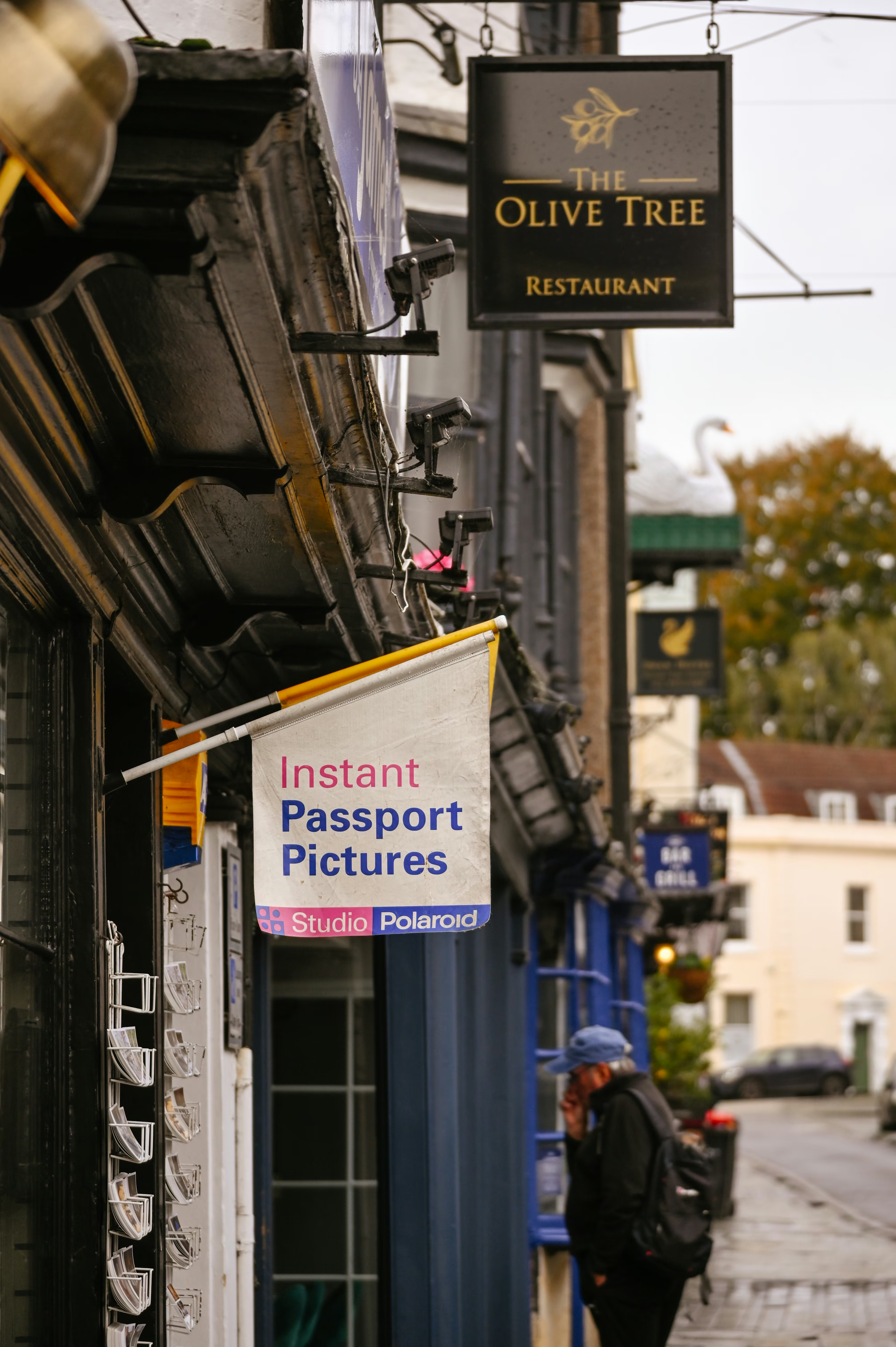

If your Schengen visa photo doesn’t meet ICAO standards, your application can be delayed or you may be asked to resubmit a compliant photo. In practice, that means a recent photo (≤6 months old), plain light-coloured background, neutral expression (mouth closed), and a tight head-and-shoulders crop where your face takes up 70–80% of the photograph — exactly the type of guidance in the ICAO photo guideline PDF linked from the European Commission’s “Applying for a Schengen visa” page.
Official sources: European Commission (apply) and European Commission (ICAO photo guideline PDF).
Below is a practical, embassy-safe checklist, plus common failure cases (shadows, glasses glare, bad crop) and examples you can show a photo studio.
At a glance
- Use a recent photo, generally not older than 6 months.
- Aim for the common 35 × 45 mm Schengen booth format unless your mission says otherwise.
- Keep the crop biometric: face about 70% to 80% of the image, neutral expression, eyes visible.
- Use a plain light background with no shadows, glare, or heavy retouching.
Table of Contents
- Quick spec checklist (save this)
- Schengen visa photo size: what “35×45” really means
- Background, lighting, and framing rules
- Face & expression rules (the fastest rejection reasons)
- Glasses, head coverings, and hair
- Printing vs digital: what to bring to your appointment
- Common mistakes that get Schengen visa photos rejected
- Official sources (use these for your consulate)
- FAQ
- Conclusion
Quick spec checklist (save this)
Use this as your “done is done” checklist before you submit:
- Recency: Photo is no more than 6 months old (ICAO guideline in the European Commission PDF).
- Photo width: 35–40mm (ICAO guideline).
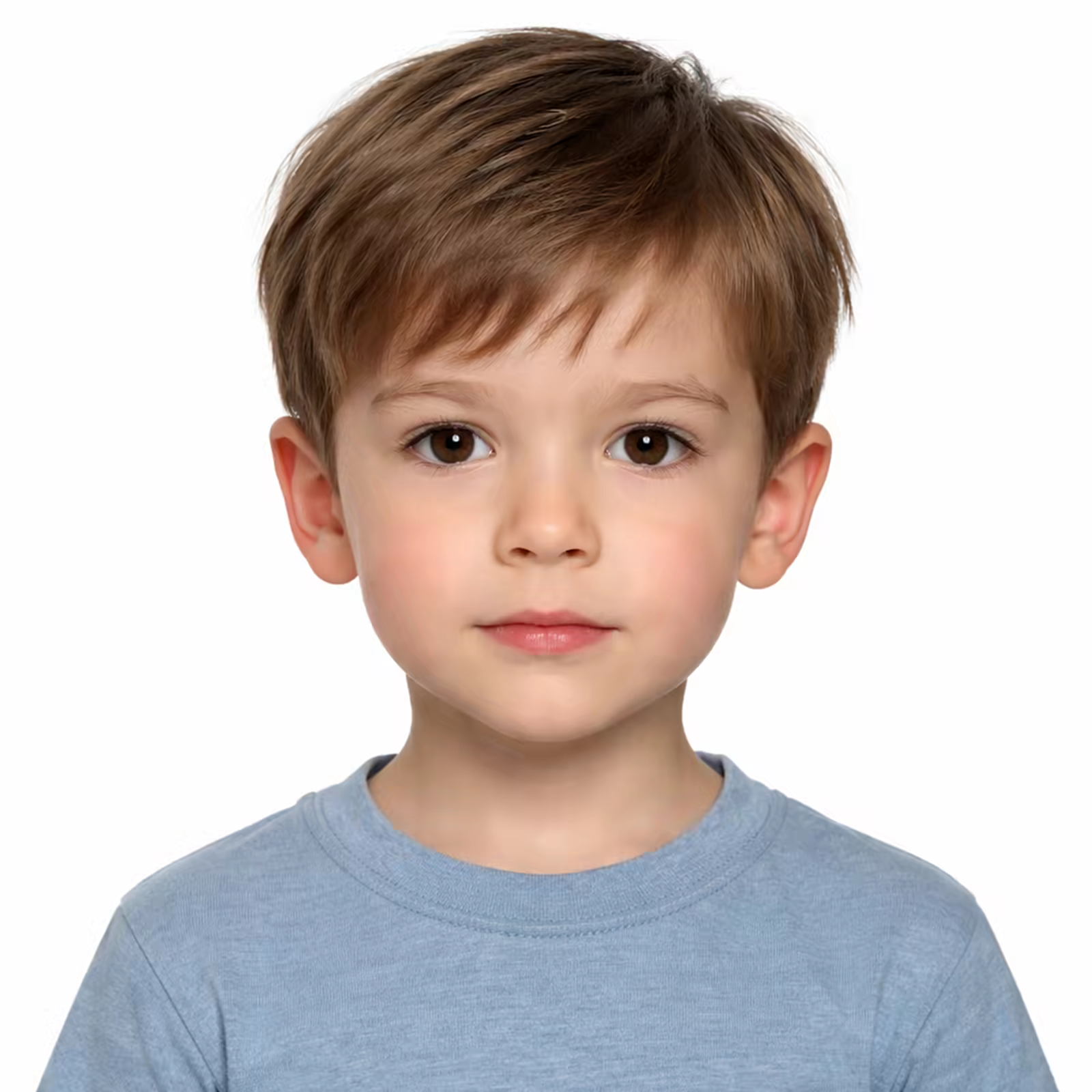
- Crop: Close-up of head and top of shoulders; face occupies 70–80% of the photograph (ICAO guideline).
- Pose: Looking directly at camera; neutral expression, mouth closed (ICAO guideline).
- Eyes: Open and clearly visible; no hair across eyes (ICAO guideline).
- Background: Plain, light-coloured background; uniform lighting; no shadows; no flash reflections; no red-eye (ICAO guideline).
- Quality: Sharp focus, clear, high quality, high-resolution print on photo-quality paper (ICAO guideline).
If you want an extra “safety net,” run a quick pre-check with Vidicy’s Schengen photo tool before your appointment: Schengen visa photo requirements tool.
Schengen visa photo size: what “35×45” really means
Many consulates and visa centres describe the Schengen photo as “passport-size,” but the safer way to think about it is a biometric headshot with strict framing.
The ICAO-based guidance linked from the European Commission describes the photo as:
- Width: 35–40mm (ICAO photo guideline PDF)
- Framing: close-up of head and top of shoulders (ICAO guideline)
- Face size: 70–80% of the photo (ICAO guideline)
That “70–80%” is the part people miss. A photo can be “35×45” and still be rejected if the head is too small (too much background) or too large (cropped hair/ears).
Background, lighting, and framing rules
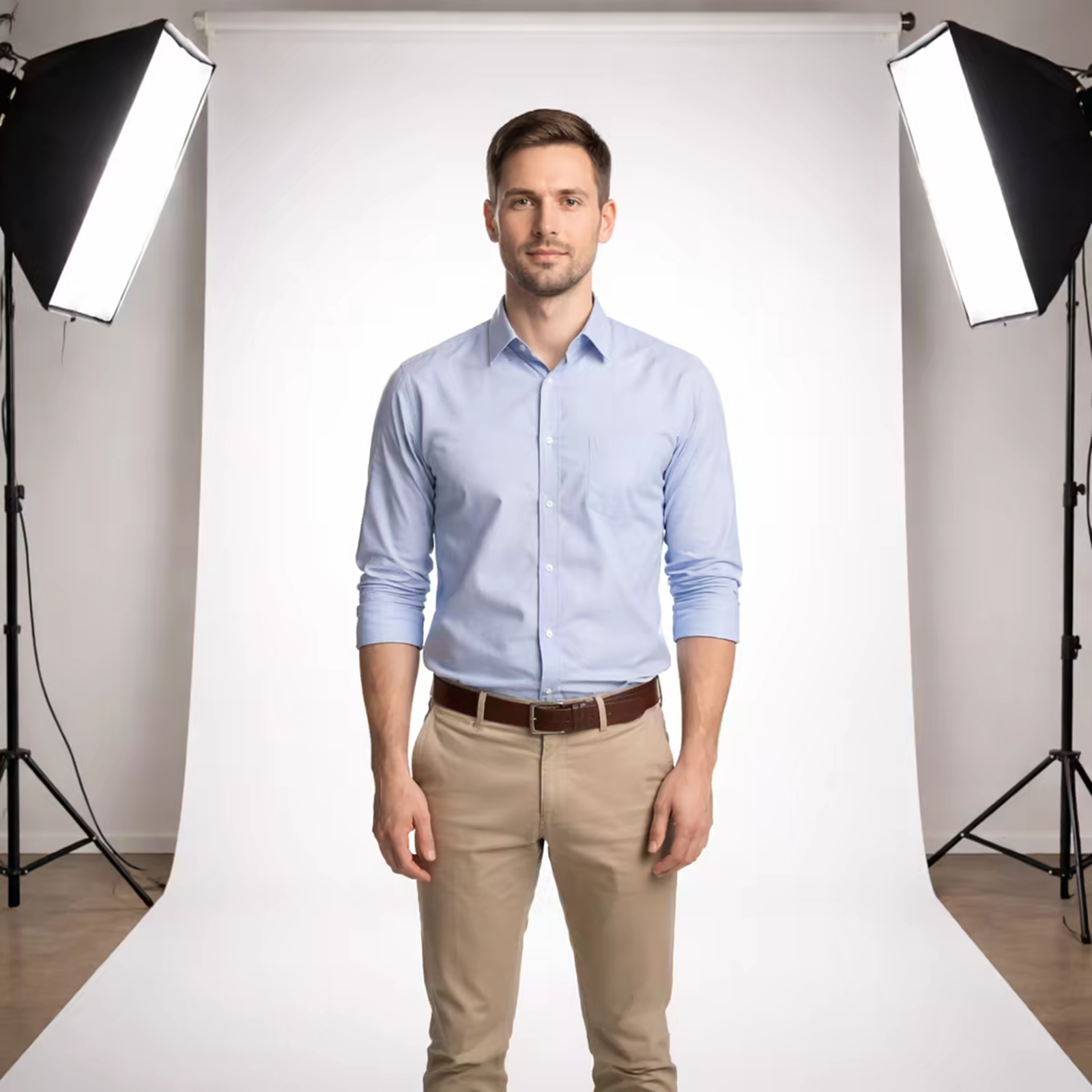
According to the ICAO photograph guideline PDF linked from the European Commission’s Schengen visa application page, your photo should:
- Use a plain, light-coloured background
- Have uniform lighting
- Avoid shadows behind the head and shadows across the face
- Avoid flash reflections and red-eye
Practical tip: if your studio asks “white or grey?” choose the option that keeps your facial edges sharp with no background blending, and prioritize no shadows over “the perfect shade.”
Face & expression rules (the fastest rejection reasons)
Photo rules are mostly about consistent identification.
The ICAO guidance requires:
- Neutral expression
- Mouth closed
- Eyes open and clearly visible
- Face square to camera (not tilted / not “portrait style” over-the-shoulder)
If you’re unsure, treat it like an ID photo: no smile, no head tilt, no artistic lighting.
The embed above is a third‑party explainer; use it only as a visual aid and rely on the official sources below for the “final word.”
Glasses, head coverings, and hair
From the ICAO guideline referenced by the European Commission:
- Glasses: your eyes must be clearly visible; avoid flash reflection; no tinted lenses (and if possible, avoid heavy frames). Frames must not cover any part of your eyes.
- Head coverings: not permitted except for religious reasons — but your facial features from the bottom of the chin to the top of the forehead and both edges of your face must be clearly shown.
- Hair: must not cover your eyes.
If you have any doubt about glare or frames, retake without glasses — it’s cheaper than rescheduling an appointment.
Printing vs digital: what to bring to your appointment
Requirements vary by consulate / visa centre, but the safe default is:
- Bring printed photos that match the biometric spec.
- Keep a digital copy available (some processes may collect a live facial image during biometrics).
As a reminder of how strict timelines can be: the European Commission’s general Schengen visa guidance notes you must apply at least 15 days before travel and no earlier than 6 months beforehand (source).
Common mistakes that get Schengen visa photos rejected
These are the most common “looks fine to me” problems that fail strict checks:
- Old photo (older than 6 months)
- Busy background or anything that isn’t plain/light
- Shadows behind the head or across the face
- Face not centered or the head is too small/large for the frame
- Eyes obscured by hair, glare, tinted lenses, or frames
- Non-neutral expression (smile, mouth open)
- Low-quality print (creases, ink marks, pixelation)
If your goal is “submit once, don’t get called back,” pair the photo check with a document-level review. Start with the Schengen Visa Checklist: Documents You Need in 2026 and Vidicy’s guide to Why Visa Applications Get Rejected: 7 Document Mistakes.
Related guides
If you're building the rest of the application pack, these companion guides help:
- German Visa Photo Requirements (Size, Background, Examples)
- Visa photo requirements (2026): size, pixels, background
- Schengen Visa Checklist: Documents You Need in 2026
- Documents Required for Schengen Visa (2026 Checklist)
Official sources (use these for your consulate)
If your local embassy/consulate/VAC page contradicts a blog post, follow the embassy/consulate/VAC. These are the primary sources used for the rules and numbers above:
- European Commission (Schengen) — Applying for a Schengen visa:
https://home-affairs.ec.europa.eu/policies/schengen/visa-policy/applying-schengen-visa_en - European Commission (ICAO photo guideline PDF) — Photograph quality:
https://home-affairs.ec.europa.eu/document/download/5bb16566-c8c2-4afb-b038-530f488cb72a_en?filename=icao_photograph_guidelines_en.pdf - Example consulate checklist (Spain, Los Angeles) — Schengen visas (example of how consulates phrase photo rules + decision timelines):
https://www.exteriores.gob.es/Consulados/losangeles/en/ServiciosConsulares/Paginas/Consular/Visados-Schengen.aspx
FAQ
What size photo do I need for a Schengen visa?
Your Schengen visa application photo must be ICAO-compliant (official reference). The ICAO guideline PDF describes a photo 35–40mm in width, tightly framed (head + top of shoulders) with the face occupying 70–80% of the image (ICAO guideline PDF).
How recent does the Schengen visa photo need to be?
The ICAO guideline linked from the European Commission requires photos to be no more than 6 months old (ICAO guideline PDF).
Can I wear glasses in my Schengen visa photo?
If you wear glasses, the ICAO guidance requires that your eyes are clearly visible, with no flash reflection, no tinted lenses, and that frames do not cover any part of your eyes (ICAO guideline PDF).
Can I smile in a Schengen visa photo?
No. The ICAO guideline requires a neutral expression with your mouth closed (ICAO guideline PDF).
Do I need printed photos or a digital photo?
Printed photo requirements are set locally. As an example, the Consulate of Spain in Los Angeles says the photo is glued to the application form and must be a recent colour photo on photo paper against a white background (Spain LA consulate example).
How long does a Schengen visa decision take?
The European Commission says the normal processing time is 15 days, and it may extend to 45 days if additional checks or documents are required (source).
Conclusion
Schengen visa photo requirements are strict because they’re tied to biometric identification. If you do three things — keep it recent (≤6 months), use a plain light background with no shadows, and follow ICAO framing and expression rules — you’ll avoid the most common photo rejection outcomes.
When you’re ready to submit, use Vidicy to reduce risk across the whole application, not just the photo: start your review and checklist in minutes at sign up.