

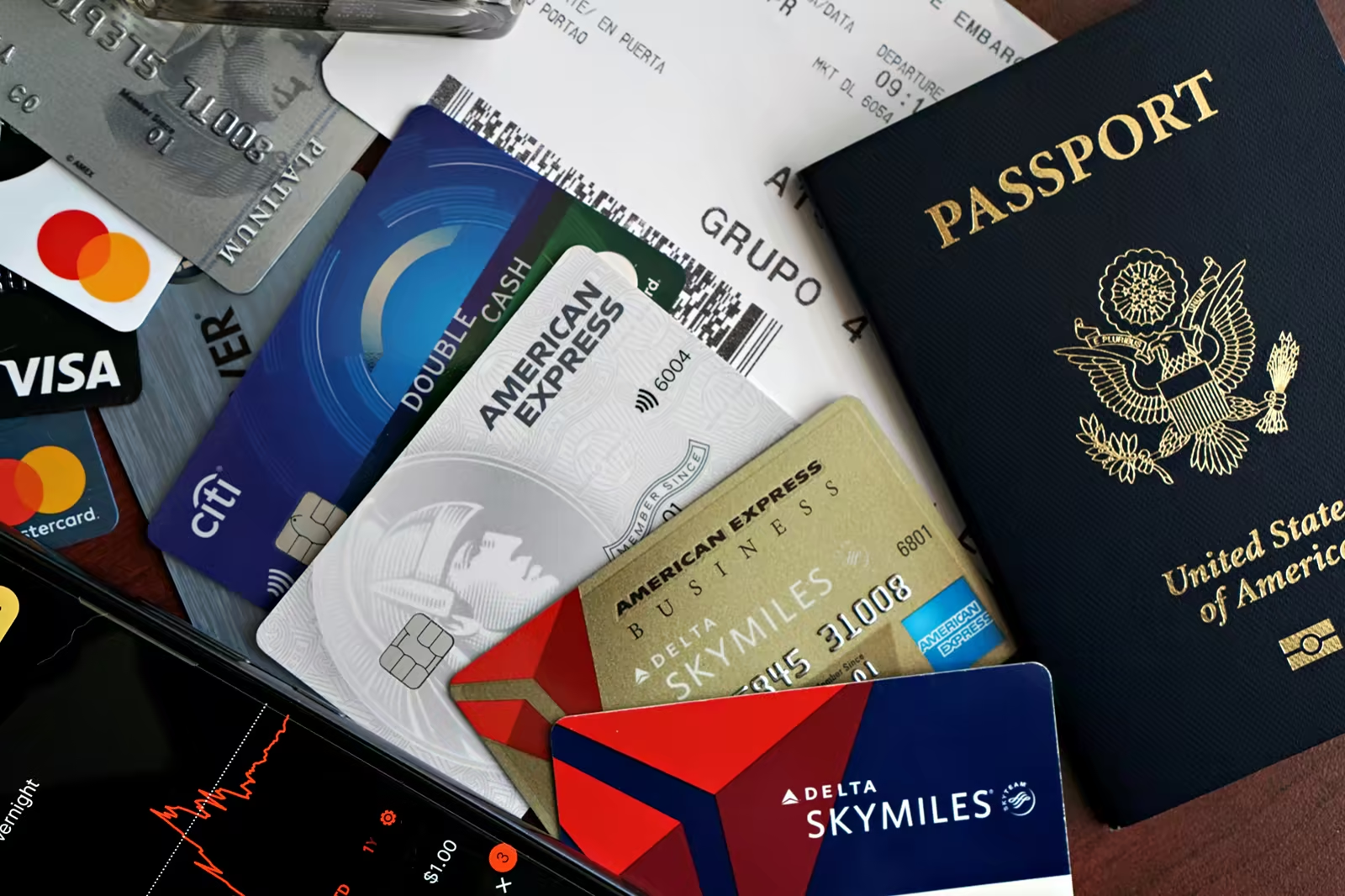

If you are searching for documents required for tourist visa applications, start with the universal rule: a strong file proves identity, trip purpose, money, and reasons to return home. In 2026, the exact upload slots change by country, but the core evidence almost never changes: a valid passport, the correct application form, a compliant photo, itinerary or accommodation proof, financial documents, and evidence that you will leave after a short stay. According to current official pages, a UK Standard Visitor visa now costs GBP 135, an adult Schengen short-stay visa costs EUR 90, Canada’s visitor visa starts from CAN$100, and the U.S. B visitor application fee is $185. Australia’s Department of Home Affairs does not rely on one static tourist checklist, but it says a faster decision depends on a decision-ready file with passport, travel plans, bank evidence, and English translations where needed.
Search results for this keyword are noisy because they blur together tourist, visitor, business, and family-visit rules. If you want the route-level preflight first, start with Vidicy’s UK visa checklist, Schengen visa checklist, Canada visa checklist, US visa checklist, or Australia visa checklist.
| Route | Current official numbers | Documents that matter most |
|---|---|---|
| UK Standard Visitor | GBP 135 fee from 8 April 2026, apply up to 3 months before travel, decision usually within 3 weeks | Passport, trip plan, finances, sponsor evidence if someone else pays, certified translations |
| Schengen short stay | EUR 90 adult fee, apply 15 days to 6 months before travel, normal processing 15 days | Passport, form, ICAO photo, travel medical insurance, funds, accommodation, return-home proof, fingerprints |
| Canada visitor visa | Starts from CAN$100, biometrics CAN$85 or CAN$170 family max, visa may be valid up to 10 years | Passport copy, IMM 5645 for adults where requested, travel history, itinerary, bank statements, biometrics if required |
| U.S. B-2 / B1-B2 | $185 application fee | Passport, DS-160 confirmation page, fee receipt, evidence of purpose, return intent, and ability to pay |
| Australia Visitor 600 | Processing times vary by case and country | Passport page, reason for travel, previous travel, return-home proof, recent bank statements, invitation if visiting family or friends, English translations |
At a glance
- Tourist files are strongest when the passport, itinerary, budget, and return-home story all support the same dates and purpose.
- Most routes still revolve around identity, trip purpose, funds, and temporary intent, even when upload slots differ.
- The most common quality failures are generic itineraries, weak fund trails, and documents copied from the wrong visa category.
- Use this hub to choose the right destination checklist, then switch to the country-specific guide before you upload.
Table of Contents
- Documents required for tourist visa files everywhere
- Tourist visa document checklist by destination
- How to prove funds, itinerary, and return-home ties
- Documents that often carry less weight than applicants expect
- Official sources
- FAQ
- Conclusion
Documents required for tourist visa files everywhere
The cleanest way to think about documents required for tourist visa cases is to break them into six evidence buckets.
1. Identity documents
Every route starts with a valid passport or travel document. Most systems also want the pages that prove who you are and, where relevant, your prior travel history. Canada explicitly asks tourist applicants to upload the passport page showing birth date and country of origin plus pages with stamps, visas or markings.
2. The right application form and appointment record
Some countries hide required documents inside the workflow itself. For the U.S., the non-negotiable document is the DS-160 confirmation page. For Canada, the online flow generates a document list based on whether you are applying as a tourist, business visitor, or family visitor. For the UK, the online application asks for your travel dates, stay address, estimated trip cost, annual income, and sometimes 10 years of travel history. Australia relies heavily on ImmiAccount for submission and follow-up.
3. Photo and biometrics evidence
Short-stay applications often need both. Schengen collects fingerprints when you submit the file unless you are exempt. Canada says most temporary resident applicants need biometrics unless exempt, with no fee for children under 14 and most applicants over 79 exempt from giving them. The U.S. takes digital fingerprints as part of the visa process and may still ask for a printed photo if the online upload fails. If the photo is the part you want to sanity-check before you submit, use Vidicy’s route-specific photo tools for the US or Schengen workflow.
4. Purpose-of-trip evidence
This is where itinerary, hotel records, host letters, and event registrations belong. Canada’s tourist route explicitly lists flight details, proof of accommodation, and event registration as acceptable itinerary proof. Australia tells applicants to outline their travel reason and include details of their plans while in Australia. The UK expects a permitted activity and wants your supporting documents to match the same story.
5. Financial proof
You are not only proving you have money. You are proving the money story is believable. Canada’s visitor page says the bank statement should show the bank name and contact, your name and address, and at least 6 months of account details, including balances. UKVI goes a step further and says financial documents should show you have access to the funds, including bank statements which detail the origin of the funds held. If your fund trail is the weakest part of the file, read the companion proof of funds guide before you upload anything.
6. Return-home evidence
Tourist visas are short-stay routes, so officers want credible reasons you will leave. UKVI says you need to show you will leave the UK at the end of your visit and can cover the costs of the trip and your onward journey. Australia’s Home Affairs page suggests evidence such as a current payslip, leave letter, education enrolment proof, or children’s birth certificates to support the return-home story. In many countries, the strongest supporting piece here is still a clean employment letter for a visa application.
Tourist visa document checklist by destination
The phrase documents required for tourist visa hides very different country rules. Use the route-specific checklist, not a recycled generic template.
UK Standard Visitor
The UK government says the earliest you can apply is 3 months before travel, and once you apply online, prove your identity, and provide your documents, you will usually get a decision within 3 weeks. The official supporting-documents guide updated on 25 February 2026 says you must show you are a genuine visitor by proving:
- you are coming for a permitted activity
- you will leave at the end of the visit
- you can support yourself and any dependants
- you can pay for your return or onward journey
That means a normal UK tourist file usually needs:
- a valid passport for the whole stay
- trip dates, stay address, and estimated travel cost
- bank statements that show the origin of funds
- work, study, or business documents that explain your home-country situation
- sponsor evidence if someone else is paying for travel, maintenance, or accommodation
- certified translations for any document not in English or Welsh
If someone else is supporting the trip, UKVI says you should show what support is being provided, how it is provided, the relationship, and that the sponsor has enough money and is legally in the UK where relevant. For a document-by-document UK breakdown, use Documents Required for UK Visitor Visa.
GOV.UK also publishes an official visitor-visa walkthrough video:
Official UK visitor visa video page
Schengen short-stay tourist visa
The European Commission’s current Schengen guidance is still one of the clearest official tourist-visa checklists on the web. It says you must apply at least 15 days before your intended journey and no earlier than 6 months beforehand. The normal processing time is 15 days, though it can stretch to 45 days if the consulate needs a more detailed examination.
For a normal short-stay tourist file, the Commission lists:
- a valid passport
- a visa application form
- a photo compliant with ICAO standards
- medical insurance covering emergency medical care, hospitalisation, and repatriation
- supporting documents for the purpose of stay
- evidence of financial means and accommodation
- evidence of intention to return home after the stay
- fingerprints when you submit the application, unless exempt
The adult fee is currently EUR 90. The same official page also reminds applicants that a Schengen visa is for a visit of up to 90 days in any 180-day period. If your trip is mainly Europe-focused, do the route-level check with Vidicy’s Schengen checklist and then compare against the full Schengen requirements guide.
Canada visitor visa
Canada is one of the clearest examples of why generic tourist-visa checklists fail. IRCC says the reason you are travelling determines the documents you need to submit. The tourist route asks for:
- a clear colour copy of the valid passport or travel document
- the page with your birth date and country of origin
- pages with stamps, visas, or markings
- Family Information (IMM 5645) for each applicant 18 years or older
- travel history, including previous passports or visas used within the last 10 years
- itinerary evidence such as flight details, accommodation proof, or event registration
- a bank statement showing the bank’s contact details, your name and address, and at least 6 months of account details, including balances
Canada’s visitor visa page says the fee starts from CAN$100, and the same government site says biometrics cost CAN$85 for an individual or CAN$170 for a family applying at the same time. A visitor visa may be valid for up to 10 years, while most visitors are normally allowed to stay in Canada for up to 6 months per visit.
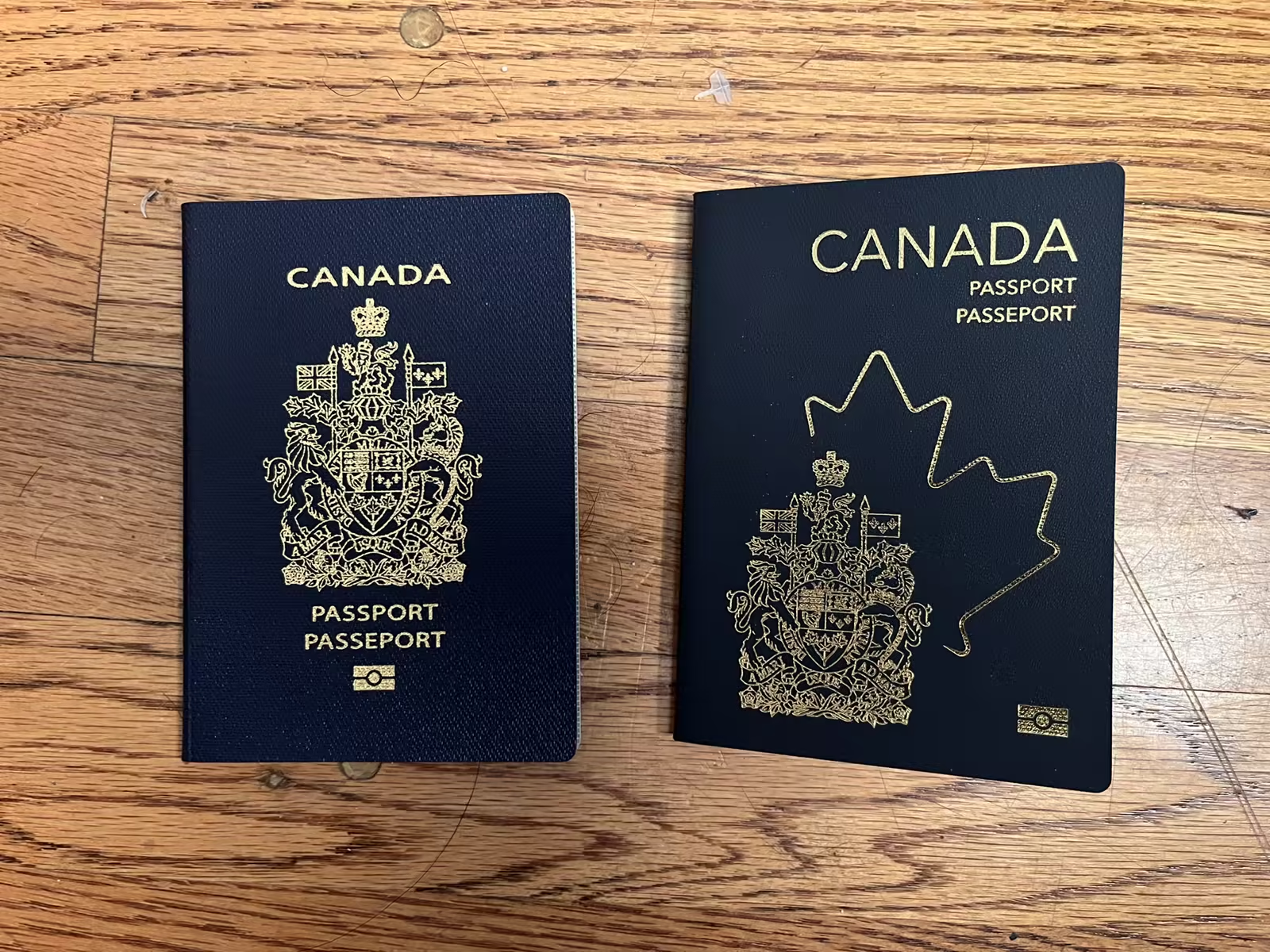
If your case is Canada-specific, the best companion pieces are the route-level Canada checklist, the deeper Canada visitor visa checklist, and the Canada visitor visa checklist.
IRCC’s biometrics explainer is useful if the appointment step is the part you want to double-check:
Official Canada biometrics video page
U.S. B-2 or B1/B2 visitor visa
The Department of State says the standard required documents are:
- a passport valid for travel to the United States, generally for at least 6 months beyond your period of stay
- the DS-160 confirmation page
- the application fee receipt, if you are required to pay it before the interview
The B visitor application fee remains $185. Beyond the required set, State says additional documents may be requested to establish:
- the purpose of your trip
- your intent to depart the United States after the trip
- your ability to pay all costs of the trip
One of the most important official clarifications is this: the Department of State says a letter of invitation or Affidavit of Support is not needed to apply for a visitor visa, and if you choose to bring one, it is not one of the factors used to issue or deny the visa. That is why U.S. tourist files usually perform better when the applicant’s own work, family, and financial ties are stronger than the host-side paperwork.
If your route is the United States, use the route-level US visa checklist and then the more detailed US tourist visa documents guide.
Australia Visitor visa (subclass 600)
Australia’s Department of Home Affairs does not publish one tiny tourist-only checklist page, but its current Check twice, submit once visitor page is unusually practical. It says you get a faster result if your application includes:
- a clear copy of the passport personal-details page
- the exact spelling of your name as it appears in the passport
- the reason for travelling to Australia and your plans while there
- as much previous travel history detail as possible
- documents showing you intend to return home, such as a current payslip, employer leave letter, education enrolment letter, or children’s birth certificates
- an invitation letter if you are visiting family or friends
- documents proving you have enough money, such as recent bank statements
- English translations for documents in other languages
Home Affairs is also specific about translations. If the translation was done in Australia, it should include the translator’s NAATI practitioner number. If it was done outside Australia, the department asks for the translator’s full name, address, phone number, and qualifications.
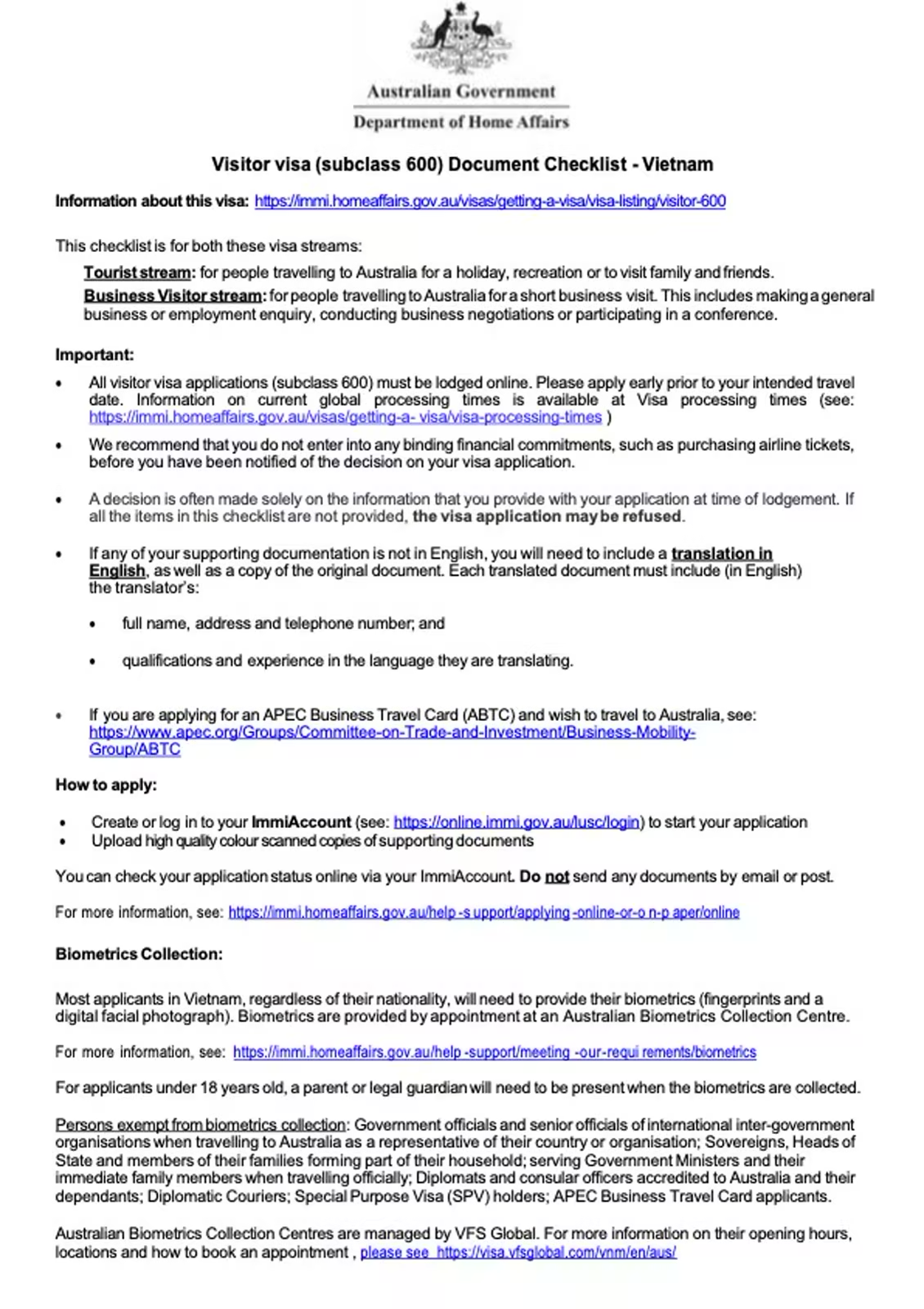
If Australia is your route, start with Vidicy’s Australia checklist and then the route-specific Australia visitor visa checklist guide.
How to prove funds, itinerary, and return-home ties
Most refusals happen because the documents do not tell one believable story together.
| Evidence set | What officers compare | What strong files do |
|---|---|---|
| Bank statements | Salary, sponsor claims, trip cost, timing | Show a normal money pattern, not a last-minute balance spike |
| Employment or study letter | Travel dates, leave dates, return-home story | Match the same dates and explain why you must return |
| Itinerary and accommodation | Stay length, budget, purpose of trip | Keep the plan realistic instead of overloading the file with weak bookings |
| Sponsor evidence | Relationship, support amount, sponsor’s legal status or income | Use sponsor proof only where the route actually values it |
Three practical rules help almost every tourist route:
- Do not let one document do all the work. A host letter cannot replace your own finances and return-home proof.
- Match the dates everywhere. Flight window, hotel dates, leave dates, event registration, and cover letter should all describe the same trip.
- Explain unusual money. If the funds came from a gift, sale, or transfer, add the bridge document now instead of hoping the officer will infer it.
If you want the end-to-end process for assembling the pack, read how to prepare visa application documents. If you want Vidicy to compare your PDFs against each other before submission, see how it works or start your workspace.
Documents that often carry less weight than applicants expect
Applicants often try to compensate for a weak file with more paper. That usually makes the case noisier, not stronger.
The clearest official warning comes from UKVI. Its current visitor guidance says these are less useful in visit applications:
- bank statements or letters issued more than 1 year before the application
- credit card statements
- driving licences
- personal photographs
- hotel bookings
- flight bookings, unless you are transiting
- sponsor utility bills or council tax bills
- travel insurance
That does not mean those items are never relevant. It means they are poor substitutes for better proof. A hotel reservation is weaker than a clear itinerary plus stable finances, and a vague sponsor promise is weaker than recent sponsor bank statements plus a clear relationship trail.
Related guides
If you're building the rest of the application pack, these companion guides help:
- US Visa Checklist for 2026
- Canada Visitor Visa Checklist for 2026
- Documents Required for UK Visitor Visa (2026 Checklist)
- Schengen Visa Checklist: Documents You Need in 2026
- Australia Visitor Visa Checklist
Official sources
- UK Standard Visitor application page
- UK visitor supporting-documents guide
- UK visa fees from 8 April 2026
- UK visitor visa video page
- European Commission: applying for a Schengen visa
- European Commission: short-stay calculator
- Canada visitor visa page
- Canada: how to apply for a visitor visa
- Canada biometrics overview
- Canada biometrics: who needs to give fingerprints and photo
- Canada biometrics video page
- U.S. tourism and visit overview
- U.S. visitor visa page
- U.S. visa fees page
- U.S. visa photo requirements
- Australia: applying for a visitor visa
- Australia: applying online in ImmiAccount
FAQ
What documents are required for tourist visa applications in almost every country?
The common core is a valid passport, the correct visa form, photo or biometrics compliance, itinerary or accommodation proof, financial evidence, and documents showing why you will return home after the trip. The country-specific rules change, but those six buckets appear again and again.
How many months of bank statements do tourist visa applications usually need?
It depends on the route, but official pages are often more specific than applicants expect. Canada currently asks tourist applicants for at least 6 months of account details. UKVI focuses less on a fixed number and more on whether the statements show the origin of the funds held.
Are hotel and flight bookings mandatory for a tourist visa?
Not always. Canada accepts them as itinerary proof, but the UK specifically says hotel bookings and flight bookings are often less useful evidence in visit applications. Use them only when they genuinely strengthen the route story instead of replacing stronger financial or return-home proof.
Do I always need an invitation letter for a tourist visa?
No. The U.S. State Department says a letter of invitation or Affidavit of Support is not needed for a normal visitor visa decision. Canada and Australia treat host letters as useful when you are staying with family or friends. The UK wants sponsor evidence only if someone else is funding travel, maintenance, or accommodation.
When should I apply for a tourist visa?
Use the official route page, not a generic blog rule. The UK says 3 months before travel is the earliest point for a Standard Visitor visa. Schengen says apply at least 15 days before travel and no earlier than 6 months before the trip. Canada and Australia tell applicants to apply early because processing varies by case and country.
Conclusion
The safest way to handle documents required for tourist visa searches is to stop thinking in terms of “how many PDFs do I need?” and start thinking in terms of “what must this file prove?” The official systems are stricter than most blogs: identity, trip purpose, financial credibility, and return-home intent have to line up. Then the country-specific checklist gets easier.
If you already know your destination, move from this cross-country guide to the route-level checklist: UK, Schengen, Canada, US, or Australia. If you want Vidicy to review the whole evidence pack before you submit, create your workspace and run the documents through the full pre-submission check.