


If you’re applying for a Canada tourist visa (a visitor visa / Temporary Resident Visa (TRV)), IRCC mainly wants proof of who you are, why you’re visiting, how you’ll pay for the trip, and why you’ll leave Canada at the end of your stay.
In 2026, the fastest way to avoid delays is to submit a “tight” evidence pack: a clear passport scan, a realistic itinerary, and at least 6 months of bank statements that match your story (income, savings, and trip costs). IRCC explicitly lists bank statements, itinerary evidence, and identity document copies as the core items for tourists.
Source: IRCC “How to apply for a visitor visa” (Tourist checklist) https://www.canada.ca/en/immigration-refugees-citizenship/services/visit-canada/apply-visitor-visa.html
At a glance
- IRCC tourist files are judged on whether identity, itinerary, funds, and return-home proof match each other.
- Treat the “recommended” tourist evidence as functionally required unless it truly does not apply to your case.
- Six months of statements should show pattern, origin of funds, and trip affordability, not just a high closing balance.
- Use this page when you want the document-by-document proof logic, not just a scannable checklist.
Table of Contents
- What IRCC is checking (and why documents matter)
- Required documents for a Canada tourist visa (TRV)
- Financial proof: what “6 months of statements” should show
- Travel plan proof: itinerary, accommodation, event registrations
- Home-ties proof: how to show you’ll return
- Forms and common add-ons (IMM forms, minors, representatives)
- Fees, biometrics, and timing (numbers you should know)
- Common document mistakes that trigger delays or refusal
- Official sources (IRCC links used for this guide)
- FAQ
- Conclusion
What IRCC is checking (and why documents matter)
Think of your tourist visa file like a short, evidence-backed argument:
- Identity: you are the same person as your passport and prior travel records.
- Purpose: your trip makes sense (tourism, specific dates, realistic plan).
- Funds: you can pay without working illegally in Canada.
- Return: you have strong reasons to leave when your visit ends.
IRCC’s own tourist document list is explicit that you should only submit documents that prove eligibility—and that even a full set doesn’t guarantee approval (they can request more).
Source: https://www.canada.ca/en/immigration-refugees-citizenship/services/visit-canada/apply-visitor-visa.html
Required documents for a Canada tourist visa (TRV)
IRCC calls this the “Tourist” document set. Some items are required, some are “recommended,” but functionally you should treat the recommended set as required unless it truly doesn’t apply.
Core checklist (IRCC-backed)
| Category | What to include | Why it matters |
|---|---|---|
| Identity | Colour copy of valid passport/travel document: bio page + pages with stamps/visas/markings | Confirms identity + travel history |
| Travel history | Copies of previous passports/visas, entry/exit stamps, permits (last ~10 years if available) | Shows compliant travel behavior |
| Itinerary | Flight details, proof of accommodation, event registration (as applicable) | Makes your purpose + dates believable |
| Funds | Bank statement with bank contact info + your name/address + at least 6 months of account activity and balances | Shows ability to pay and financial stability |
All four rows are directly called out in IRCC’s tourist section.
Source: https://www.canada.ca/en/immigration-refugees-citizenship/services/visit-canada/apply-visitor-visa.html
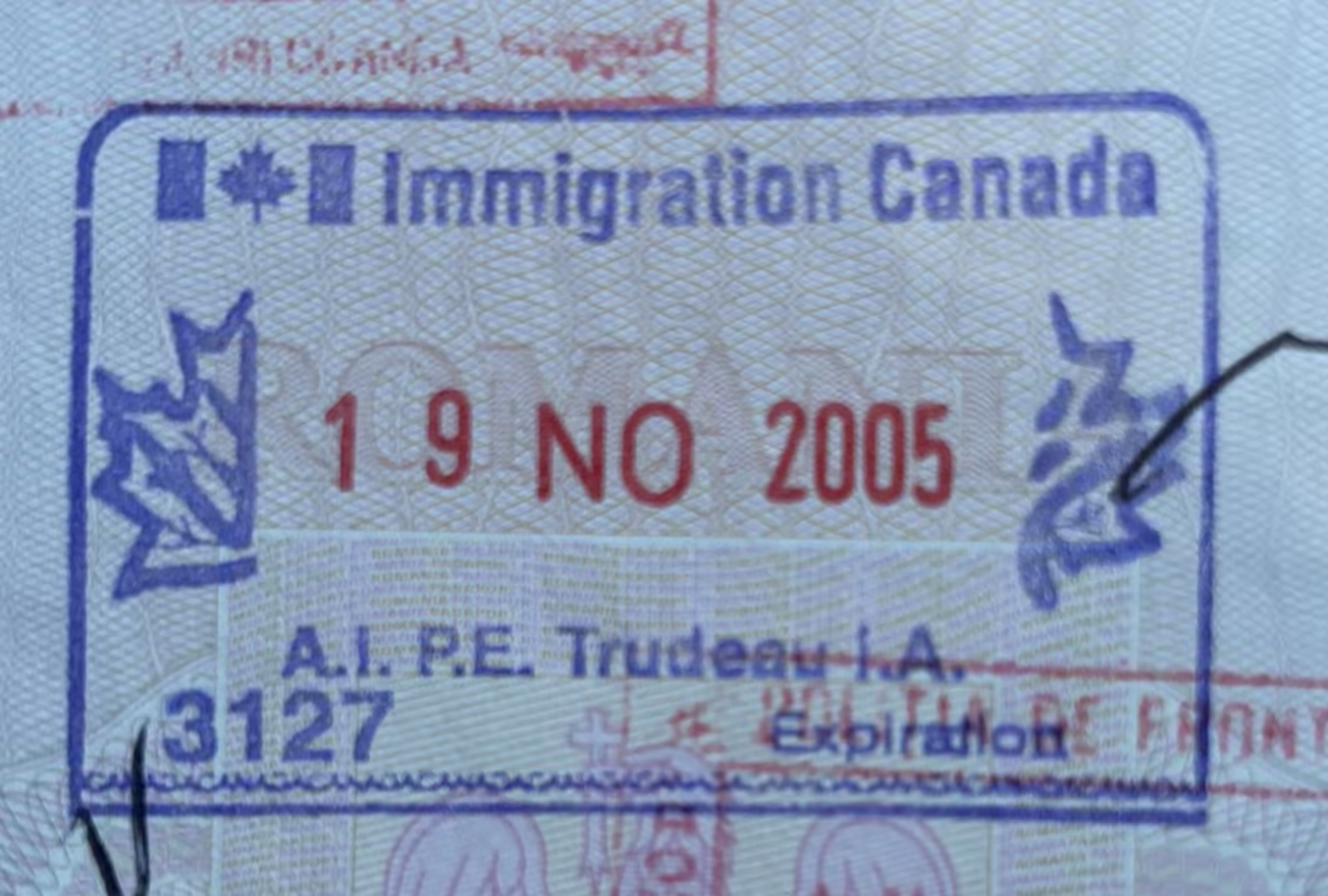
What to upload vs what to carry
IRCC’s tourist list includes items you submit with your application and some you should also be ready to show when you arrive (for example, supporting documents for minors traveling).
Source: https://www.canada.ca/en/immigration-refugees-citizenship/services/visit-canada/apply-visitor-visa.html
If you want a faster way to sanity-check whether your evidence set is coherent (and whether key PDFs contradict each other), use the Canada visa document requirements hub and then run a full application review inside Vidicy: start here.
Financial proof: what “6 months of statements” should show
IRCC is unusually specific here: tourist applicants should include bank statements with at least 6 months of account details (including balances), plus bank contact information and proof the account is yours.
Source: https://www.canada.ca/en/immigration-refugees-citizenship/services/visit-canada/apply-visitor-visa.html
That “6 months” requirement creates a practical standard your documents should meet:
- Consistency: your income deposits and spending pattern shouldn’t suddenly spike right before you apply.
- Traceability: if funds came from a sale, a gift, or a transfer, include the proof so the story closes cleanly.
- Trip affordability: your planned trip cost should be plausible vs your balances.
If you’re unsure what IRCC officers look for in financial evidence, this guide helps you structure it: proof of funds for visa applications. If the specific weak spot is the statement set itself, use the companion bank statement for visa guide before you upload.
Travel plan proof: itinerary, accommodation, event registrations
IRCC’s checklist accepts multiple ways to prove your trip plan:
- Flight details
- Proof of accommodation
- Event registration (if applicable)
Source: https://www.canada.ca/en/immigration-refugees-citizenship/services/visit-canada/apply-visitor-visa.html
The goal isn’t to “pre-buy everything.” It’s to show a plan that matches your situation:
- Short trips: a simple city-by-city itinerary, hotel bookings, and return flight details are often enough.
- Longer trips: add a brief schedule (dates, locations, what you’ll do) so your accommodation choices make sense.
- Multi-city trips: include transport between cities (train/flight reservations or a written plan).
Home-ties proof: how to show you’ll return
IRCC’s tourist checklist focuses on identity, itinerary, and bank statements. But in real visa decisioning, “ties to home country” is one of the biggest differentiators between a clean approval and a refusal for travel purpose / return-risk concerns.
Practical “ties” documents (choose what’s true for you):
- Employment: letter confirming role, salary, leave dates, and expected return
- Business ownership: registration + tax filings + business bank statements
- Study: enrollment letter + term schedule + tuition receipts
- Family responsibilities: dependent proof where applicable
- Assets and obligations: lease/mortgage, property proof, ongoing loan payments
If you’re preparing multiple supporting PDFs, use a single organizing approach (consistent name, consistent dates, consistent currency). Vidicy’s workflow is built for that: see how it works.
Forms and common add-ons (IMM forms, minors, representatives)
Depending on your profile, IRCC may require extra forms that many “generic checklists” forget. The official tourist section links to:
- Use of a representative (IMM 5476) (if someone applies on your behalf)
Source:https://www.canada.ca/en/immigration-refugees-citizenship/services/visit-canada/apply-visitor-visa.html - Family information (IMM 5645) (each applicant 18+ completes it)
Source:https://www.canada.ca/en/immigration-refugees-citizenship/services/visit-canada/apply-visitor-visa.html
If a minor child is traveling (alone, with one parent, or with a relative/friend), IRCC notes you may need:
- An authorization letter for the minor to travel to Canada
- Additional documents such as adoption papers or custody decree (depending on circumstances)
Source: https://www.canada.ca/en/immigration-refugees-citizenship/services/visit-canada/apply-visitor-visa.html
Fees, biometrics, and timing (numbers you should know)
These are the “hard numbers” that should be consistent across your plan and expectations.
Visitor visa fee (TRV)
IRCC’s visitor visa page states fees start from CAN $100.
Source: https://www.canada.ca/en/immigration-refugees-citizenship/services/visit-canada/visitor-visa.html
The official fee list also shows Visitor visa – per person: 100.00.
Source: https://ircc.canada.ca/english/information/fees/fees.asp
Biometrics fee + deadline + validity
If you receive a biometrics instruction letter, IRCC states:
- You must pay the biometrics fee (CAD $85) when submitting your application.
- You have up to 30 days from the letter date to give biometrics.
- If you already provided biometrics for a previous visitor visa / study / work permit, they’re valid for 10 years.
Source: https://www.canada.ca/en/immigration-refugees-citizenship/news/notices/biometrics-collection-in-canada.html
Here’s an official explainer from IRCC’s YouTube channel (why biometrics exist + what happens at the appointment):
And here’s a second official IRCC video about avoiding delays by submitting a complete application:
Common document mistakes that trigger delays or refusal
Even when your documents are “technically included,” these patterns cause problems:
- Bank statements that don’t match the story: sudden deposits with no source proof.
- Itinerary that looks copied: generic plan with no clear dates, no coherence, or no budget alignment.
- Mismatch across PDFs: employer letter says one salary, statements imply another.
- Unreadable scans: cropped passport pages or missing stamps/visas pages.
- Overloading with irrelevant docs: IRCC explicitly says the list isn’t exhaustive and you should submit what proves eligibility—more pages can create more contradictions.
If you want to reduce “hidden mismatch” risk, start with a structured upload checklist and then run a consistency scan:
- Canada visa document requirements hub
- Avoid visa rejection document mistakes
- Create your Vidicy workspace
Related guides
If you're building the rest of the application pack, these companion guides help:
- Canada Tourist Visa Checklist (TRV): Documents for 2026
- Canada Visitor Visa Checklist for 2026
- Proof of Funds Canada Visitor Visa: What to Show
- Bank Statement for Canada Visa: Visitor vs Study
- Canada Visa Photo Requirements: Size, Rules, Mistakes
Official sources
- How to apply for a visitor visa (Tourist document list) —
https://www.canada.ca/en/immigration-refugees-citizenship/services/visit-canada/apply-visitor-visa.html - Visitor visa (TRV) overview + fees starting from CAN $100 —
https://www.canada.ca/en/immigration-refugees-citizenship/services/visit-canada/visitor-visa.html - IRCC fee list (Visitor visa – per person 100.00) —
https://ircc.canada.ca/english/information/fees/fees.asp - Biometrics collection notice (CAD $85, 30 days, 10-year validity) —
https://www.canada.ca/en/immigration-refugees-citizenship/news/notices/biometrics-collection-in-canada.html
FAQ
What documents are required for a Canada tourist visa in 2026?
At minimum, IRCC expects a colour copy of your valid passport (bio page + stamps/visas), a realistic itinerary (flight/accommodation/event proof), and bank statements showing at least 6 months of account activity and balances. Add travel history evidence if you have it. Source: https://www.canada.ca/en/immigration-refugees-citizenship/services/visit-canada/apply-visitor-visa.html
How much is the Canada visitor visa (TRV) fee?
IRCC lists the visitor visa fee as CAN $100 per person for a single or multiple entry temporary resident visa. Source: https://ircc.canada.ca/english/information/fees/fees.asp and https://www.canada.ca/en/immigration-refugees-citizenship/services/visit-canada/visitor-visa.html
Do I need biometrics for a Canada tourist visa?
Many applicants need biometrics; if you receive a biometrics instruction letter, you typically have up to 30 days to give fingerprints and a photo. If you gave biometrics for a prior visitor/study/work application, they can be valid for 10 years. Source: https://www.canada.ca/en/immigration-refugees-citizenship/news/notices/biometrics-collection-in-canada.html
What should my bank statement include?
IRCC’s tourist checklist calls for bank contact info, proof it’s your account (your name/address), and at least 6 months of account details (including balances). The statement should clearly support the cost of your trip and your normal financial pattern. Source: https://www.canada.ca/en/immigration-refugees-citizenship/services/visit-canada/apply-visitor-visa.html
Do I need a full flight booking to apply?
IRCC asks for itinerary evidence such as flight details, accommodation proof, or event registration. The practical goal is a credible plan—not an expensive non-refundable purchase. Use whichever evidence best matches your itinerary. Source: https://www.canada.ca/en/immigration-refugees-citizenship/services/visit-canada/apply-visitor-visa.html
Conclusion
The documents required for a Canada tourist visa in 2026 are straightforward—but the reason applications fail is usually inconsistency, not missing PDFs. Build your TRV pack around IRCC’s core list (passport copy, itinerary proof, and 6-month bank statements) and then add only the extra evidence that strengthens your return story.
When you’re ready, use the Canada visa requirements hub and create your workspace to validate everything end-to-end: sign up here.