

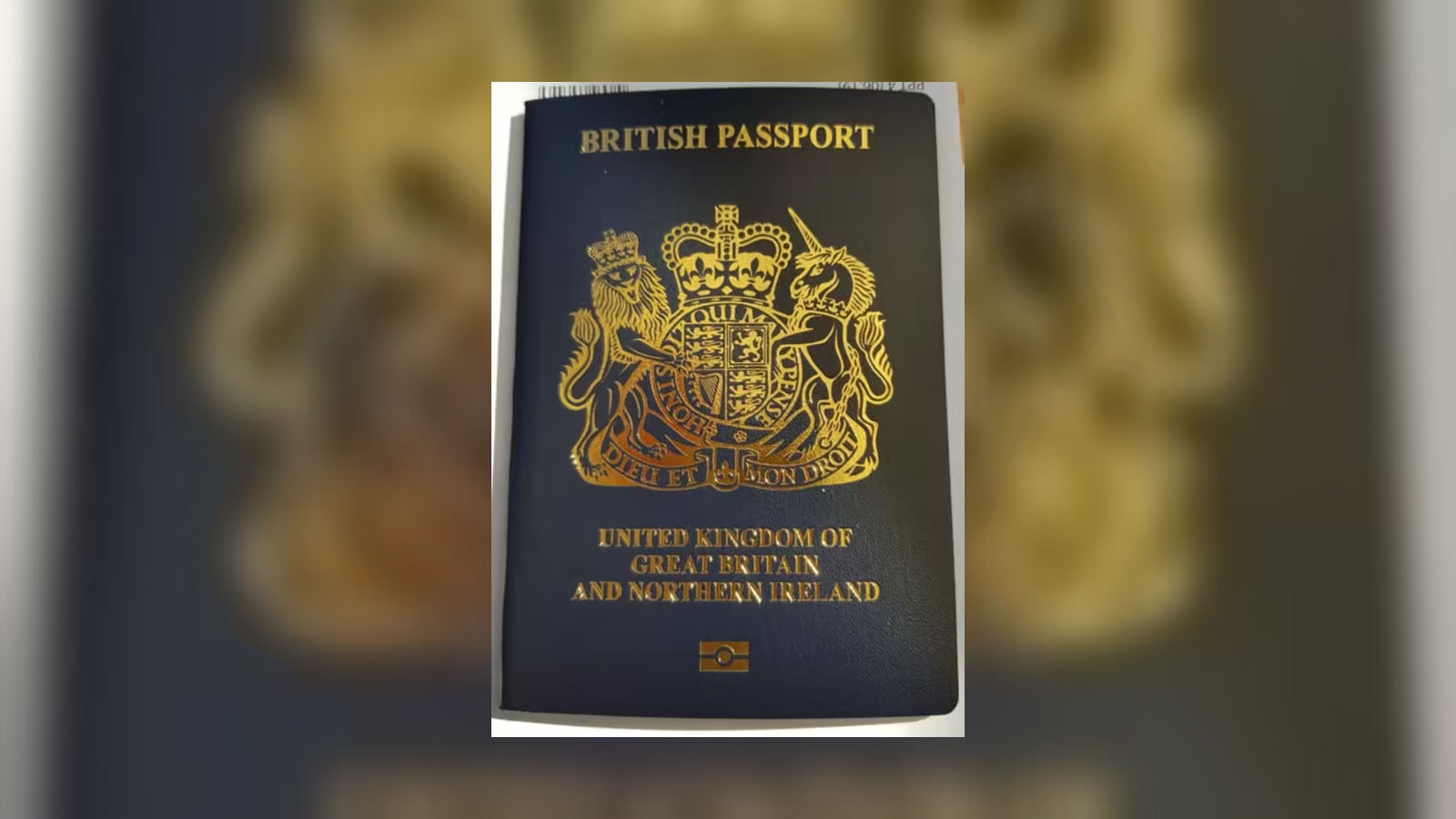

If you are searching for a UK tourist visa document checklist, the official answer is that tourism to the UK uses the Standard Visitor route. According to the live GOV.UK Standard Visitor pages and the current UKVI processing-times guidance, a tourist applicant who needs a visa will usually need a valid passport, a clear trip plan, proof of funds, proof of ties outside the UK, and sponsor evidence only if someone else is paying. As of April 16, 2026, the official fee for a 6-month Standard Visitor visa is GBP 135, you can apply 3 months before travel, a tourist stay is usually capped at 6 months, and the published processing time for a Standard Visitor application made outside the UK is 3 weeks.
That matters because UKVI's own supporting-documents guide says some of the files applicants obsess over, such as hotel bookings, flight bookings, and travel insurance, are generally less useful on their own. According to UKVI, the real decision test is whether you are a genuine visitor who will leave the UK at the end of the trip, can pay for the visit, and is travelling for a permitted tourist purpose. If you want a route-level pre-check first, start with Vidicy's UK visa document checklist and then come back to this article for the document-by-document tourist version.
| UKVI question | Best evidence for a tourist case | What often gets overweighted |
|---|---|---|
| Who are you? | Valid passport, prior passports if relevant, legal-residence proof if applying outside your nationality country | Extra ID files that do not explain the trip |
| Why are you coming? | Short itinerary, accommodation plan, realistic travel dates, concise cover explanation if needed | Generic hotel and flight bookings with no financial context |
| How will you pay? | Bank statements showing the origin of funds, income proof, sponsor proof if applicable | Credit-card statements by themselves |
| Why will you leave? | Employer letter, study letter, business proof, family or property obligations | Personal photos or unsupported claims |
| Is the file technically usable? | Readable scans of originals, certified translations where needed | Low-quality screenshots and partial uploads |
Table of Contents
- What UKVI actually checks for a tourist trip
- UK tourist visa document checklist: core upload pack
- If someone is paying for the trip or a child is travelling
- Documents UKVI says are less useful
- Fees, timing, and official UKVI videos
- Official sources
- FAQ
- Conclusion
What UKVI actually checks for a tourist trip
The cleanest official rule is in Immigration Rules Appendix V: Visitor. The Home Office says a visitor must satisfy the decision maker that they are a genuine visitor, which means they will leave the UK at the end of the visit, are travelling for a permitted purpose, and have sufficient funds without working or using public funds. Appendix V also says third-party funding counts only if the sponsor has a genuine personal or professional relationship with the applicant and can and will support them for the intended stay.
For a normal holiday trip, that means your checklist should be built around four tests:
- Identity: your passport and identity story are clean.
- Tourist purpose: your dates, destinations, and accommodation plan look real.
- Money: your funds or sponsor support are believable and traceable.
- Return plan: your life outside the UK gives you a reason to go back.
According to GOV.UK's Standard Visitor overview, tourist travel sits inside the same route as family visits, short study, and some business activities. That is why many search results are confusing: they mix sponsor-heavy or business-heavy evidence into what should be a straightforward tourism file. If your trip is pure tourism, keep the evidence focused on tourism. If you are actually staying with family or friends, use the companion documents required for UK visitor visa guide because that scenario adds invitation or sponsor logic.
One more important limit from the official pages: depending on nationality, some travellers may not need a visa at all and may instead need an ETA or no pre-clearance. But even then, GOV.UK says they still have to meet the Standard Visitor eligibility rules and may be questioned at the border. So the checklist below is useful even when the route is technically visa-free.
UK tourist visa document checklist: core upload pack
For most tourism cases, this is the highest-signal upload pack.
1. Passport and identity history
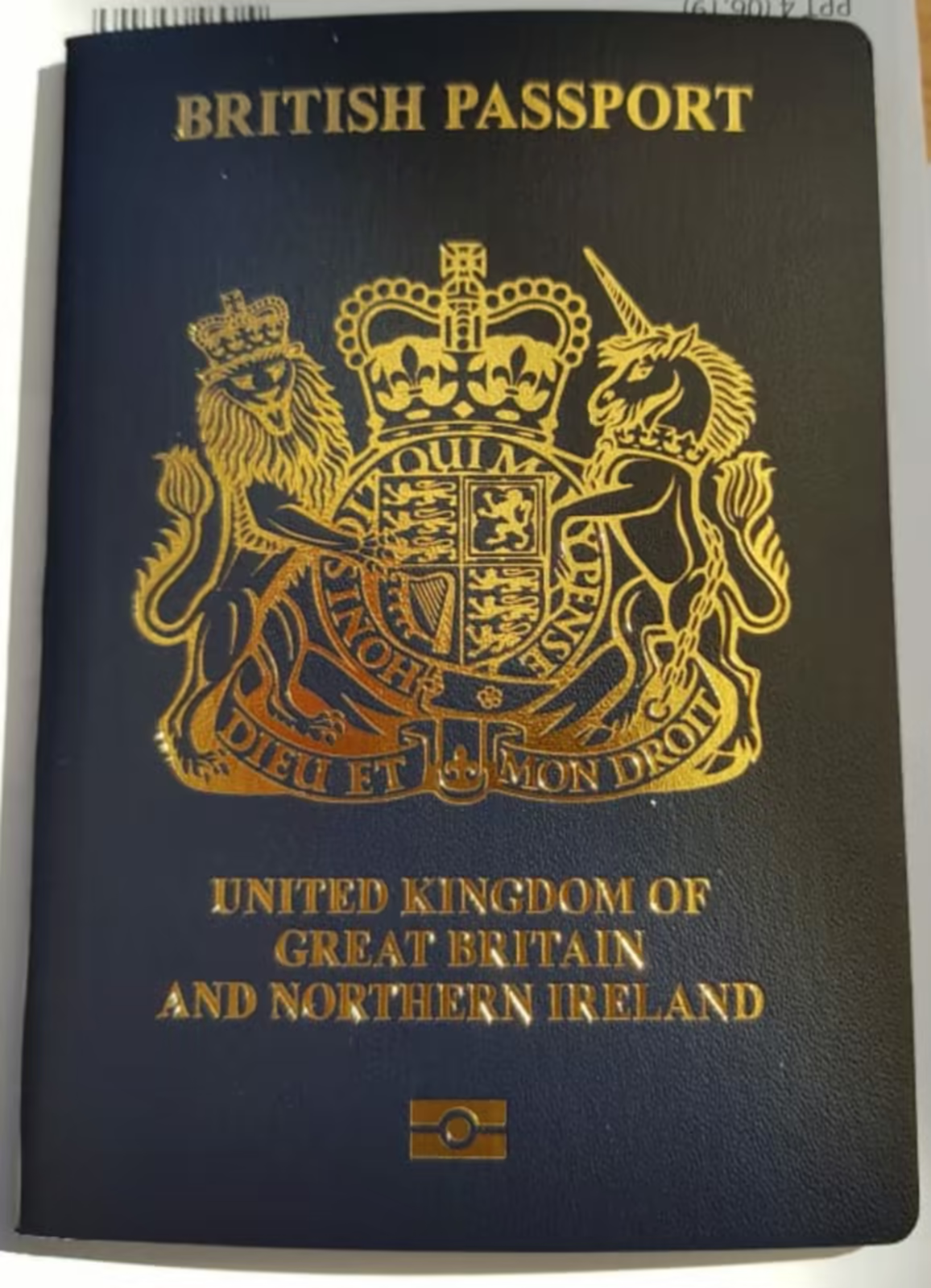
According to the GOV.UK application page, you must have a passport or travel document valid for the whole of your stay. Depending on your circumstances, the form may also ask for 10 years of travel history and details of legal residence if you are applying outside your nationality country.
Use this passport checklist:
- current passport bio page
- older passports if they help explain travel history
- legal-residence proof if you are applying from a country that is not your nationality country
- name-change evidence if your records do not match
2. Tourist itinerary and accommodation plan
The official application asks for the dates you are planning to travel, where you will be staying, and how much you think your trip will cost. That means a tourism file should make those three answers easy to verify.
A strong tourism itinerary is usually simple:
- arrival date and departure date
- cities you plan to visit
- where you expect to stay
- a short summary of the trip purpose, for example holiday, sightseeing, or short family-linked tourism
You do not need to overproduce. According to the official processing-times guidance, you are not required to book any travel before you apply or before a decision is made. That is one of the biggest gaps between official guidance and agency blogs.
3. Funds that show the origin of money
UKVI's supporting-documents guide says financial documents must clearly show you have access to the funds, and gives examples such as:
- bank statements that detail the origin of the funds held
- building society books that detail the origin of the funds held
- proof of earnings, such as an employer letter confirming employment details
For most tourists, the practical pack is:
- recent bank statements showing normal inflows and balances
- payslips or employer confirmation if you are employed
- business registration, invoices, or tax records if you are self-employed
- a short budget note if the trip cost is not obvious from the statements
Inference from the official wording: UKVI is not only checking whether you can show money on one day. It is checking whether the money story makes sense over time. If you need help tightening that section, use the broader proof of funds guide before you upload.
4. Proof you will return home
The Standard Visitor overview says you must be able to show you will leave the UK at the end of your visit. The supporting-documents guide suggests evidence about your home-country circumstances, such as:
- an employer letter on headed paper with your role, salary, and length of employment
- an education-provider letter confirming enrolment and leave of absence
- self-employment evidence such as registration documents or recent invoices
For tourism cases, this is the part applicants often underbuild. A holiday trip is easier to believe when the caseworker can see what you are returning to. If your work evidence is the weakest part of the file, the dedicated employment letter guide is the better companion read than another generic checklist post.
5. A clean proof map
This is the simplest way to think about the full pack:
If your file follows that structure, you are already closer to the official decision test than most ranking checklist pages.
If someone is paying for the trip or a child is travelling
Tourism files become more specific in two situations: when a third party is funding the trip and when the traveller is under 18.
Sponsor-funded tourist trips
UKVI's supporting-documents guide says that if someone else is providing your travel, maintenance, or accommodation, you should provide evidence showing:
- what support is being provided
- how the support is being provided
- that the sponsor has enough funds to support themselves and their dependants
- the relationship between you and the sponsor
- that the sponsor is legally in the UK, if applicable
Appendix V adds the same logic in rules language: a sponsor must have a genuine relationship and must can and will provide support.
For a tourist case, that usually means:
- sponsor letter
- sponsor bank or income proof
- relationship evidence
- sponsor passport or residence proof if the sponsor is in the UK
If the trip is actually a host-based family visit rather than self-funded tourism, the invitation letter for UK visa guide is a better match than forcing a tourism-only checklist to do two jobs.
Tourist applications for children
The supporting-documents guide also says a child should show a legal document proving the relationship to at least one parent or guardian, plus a copy of the photo page of at least one parent's or guardian's passport if that adult is not applying too. If the child is not travelling with a parent or guardian, the guide says the application may be refused if there is no signed permission letter covering:
- consent to travel
- who is travelling with the child
- who will look after the child in the UK
- how the child will travel
That is a real difference between an adult tourist checklist and a child tourist checklist. Do not ignore it if a family holiday file includes minors.
Documents UKVI says are less useful
One of the most useful parts of the official UKVI guide is the list of documents that are generally less useful in visit applications. The page explicitly includes:
- bank statements or letters issued more than 1 year before the application
- credit card statements
- personal photographs
- hotel bookings
- flight bookings unless you are transiting
- travel insurance
- sponsor utility bills
- sponsor council tax bills
That does not mean these documents are banned. It means they are not strong proof of the things UKVI actually has to decide.
The practical takeaway:
- hotel and flight bookings can support a travel plan, but they do not prove you can afford the trip
- travel insurance may be useful for your own planning, but it does not prove you are a genuine visitor
- personal photos can support relationship context, but they do not outweigh formal sponsor or identity proof
This is where many refusals start. Applicants upload a bulky folder of weak context documents and underbuild the three things that matter more: funds, return ties, and consistency. If you want the refusal-focused version of that review, use avoid visa rejection: document mistakes before your final submission pass.
Fees, timing, and official UKVI videos
According to the live GOV.UK Standard Visitor route pages and current outside-the-UK processing guidance, the numbers to plan around today are:
| Item | Current official figure |
|---|---|
| Standard Visitor fee | GBP 135 |
| Earliest point to apply | 3 months before travel |
| Standard maximum stay | Up to 6 months |
| Standard processing time outside the UK | 3 weeks |
| Travel history the form may ask for | 10 years |
Two practical notes from the official pages matter just as much as the numbers:
- every family member needs their own application and must pay the fee
- you are not required to book travel before you apply or before a decision is made
UKVI links this official visitor-visa walkthrough from its GOV.UK support-video collection:
UKVI links this second official explainer from the same collection for applicants timing their submission and biometrics:
If your file is almost ready and you want a second set of eyes before biometrics, use how Vidicy works and then move to sign up once the evidence pack is complete.
Related guides
If you're building the rest of the application pack, these companion guides help:
- Documents Required for Tourist Visa (2026 Guide)
- Sponsor Letter for Visitor Visa UK
- Bank Statement for Visa: What Officers Check
- Travel Visa Checker: What to Verify Before You Submit
Official sources
- Visit the UK as a Standard Visitor: overview
- Apply for a Standard Visitor visa
- Immigration Rules Appendix V: Visitor
- Visiting the UK: guide to supporting documents
- Visa processing times: applications outside the UK
- UKVI support videos collection
- Apply for a UK visitor visa: official UKVI video page
- Visa processing times: official UKVI video page
FAQ
What documents are required for a UK tourist visa?
At minimum, a tourist applicant who needs a visa should have a valid passport. UKVI then looks for a believable tourism plan, proof of funds or sponsor support, and proof that you will leave the UK at the end of the trip. The strongest checklist is identity, itinerary, funds, and return ties.
How many months of bank statements should I show for a UK tourist visa?
UKVI does not publish one universal number of months for every tourist case. What the official guide does say is that statements should show the origin of funds held and prove you have access to the money. In practice, use enough history to make income, balances, and any large deposits make sense together.
Do I need confirmed flight and hotel bookings before I apply?
No. GOV.UK's current processing-times guidance says you are not required to book any travel before you apply or before a decision is made. UKVI's supporting-documents guide also lists hotel and flight bookings as generally less useful for visit applications unless you are in transit.
What if someone else is paying for my UK holiday?
Then your file should include sponsor evidence. UKVI says you should show what the sponsor is covering, how they will cover it, your relationship to them, and that they have enough funds themselves. Appendix V adds that the sponsor must have a genuine relationship and genuinely be able to support you.
Can a tourist applicant use the same checklist if they are under 18?
Not entirely. UKVI says child applicants should also show proof of the parent or guardian relationship, a parent or guardian passport page if that adult is not applying too, and signed consent if the child is travelling without a parent or guardian.
How long does a UK tourist visa take in 2026?
On April 16, 2026, GOV.UK's current outside-the-UK processing page lists Standard Visitor applications at 3 weeks under standard service. That timing starts after you verify your identity or attend the visa application centre for biometrics.
Conclusion
The strongest UK tourist visa document checklist is not the biggest folder. It is the cleanest one: passport, tourism plan, traceable funds, and credible proof you will go home after the trip.
If you want a stronger submission before you book biometrics, run your files through Vidicy's UK visa document checklist and use the guided workflow to catch the quiet inconsistencies that generic checklists usually miss.