


If your Canada visa was refused, IRCC’s current official guidance is direct: there is no formal appeal process for temporary residence decisions, and you should reapply only if your situation changed significantly or you have new information that addresses the refusal reason. If you believe the decision was unreasonable or unfair, the official challenge path is an application for leave and judicial review in the Federal Court of Canada.
That is the short answer to the Canada visa refused query. The more useful answer is that most second attempts fail for a predictable reason: applicants file again with the same bank statements, the same vague trip story, or the same weak proof of ties. According to IRCC’s visitor-visa application page, officers still test the same basics every time: whether you have ties that will take you back home, whether you will leave Canada at the end of the visit, and whether you have enough money for your stay.
At a glance
| Official question after refusal | Current IRCC answer | Why it matters before you pay again |
|---|---|---|
| Can I appeal? | No formal appeal process for temporary residence decisions | The first real choice is usually reapply vs judicial review, not “appeal vs wait.” |
| When should I reapply? | Only if your situation changed significantly or you have new information | A faster second filing with the same evidence usually wastes time and fees. |
| What does a new visitor-visa application cost? | CAN$100 per person, or CAN$500 max for a family of 5 or more applying together | Reapplying resets the main visa fee. |
| What about biometrics? | Temporary residents usually give biometrics once every 10 years and must act within 30 days if IRCC issues a new biometric instruction letter | A second application may not need new biometrics if they are still valid, but you must follow the letter if IRCC asks again. |
| If I’m approved later, how long can I stay? | A border officer will normally allow a visitor to stay up to six months | A visa is permission to travel to Canada, not a guarantee of a long stay. |
Table of Contents
- Canada visa refused: what IRCC says to do next
- Why visitor visa refused Canada cases usually fail
- What to fix before you reapply
- Reapply or ask for judicial review?
- Costs and deadlines you reset after a refusal
- Official sources
- FAQ
- Conclusion
Canada visa refused: what IRCC says to do next
The safest next-step rule comes from IRCC’s own Help Centre.
According to the official page How do I get help if my temporary residence application is refused?, there is no formal process to appeal temporary residence refusals. The same page says you should reapply only if:
- your situation has changed significantly, or
- you have new information that addresses the reason you were refused
That matters because many applicants mix up three different outcomes:
- Returned incomplete application: IRCC sends the file back because documents, signatures, or answers are missing.
- Refused application: IRCC reviewed the case and decided you did not prove the route requirements.
- Reviewable court issue: you believe the refusal was unreasonable or procedurally unfair.
IRCC’s visitor-visa application page also says that if your application is refused, IRCC sends you a letter that tells you why. Start there, not with another upload session.
If you want the broader multi-country decision tree first, read If My Visa Is Rejected, Can I Apply Again?. If your case is definitely a Canada visitor route, keep reading here and compare the refusal against Vidicy’s Canada visitor visa checklist before you rebuild anything.
Why visitor visa refused Canada cases usually fail
From current SERP review, most ranking pages cluster around the same refusal themes: weak ties, weak funds, unclear purpose, and inconsistent paperwork. IRCC’s own visitor-visa page tests the same ideas more formally.
On the official application page, IRCC says you must convince an officer that you:
- have ties such as a job, home, financial assets, or family that will take you back to your home country
- will leave Canada at the end of your visit
- have enough money for your stay
That gives you a practical refusal framework.
| What IRCC is testing | What a weak file looks like | What stronger evidence looks like |
|---|---|---|
| Ties to home country | No current job proof, no study enrolment, no lease or family dependency evidence | Fresh employer letter, approved leave, business records, enrolment proof, or home-country obligations |
| Financial capacity | Thin balances, unexplained deposits, sponsor story that does not match the application | Six months of statements, stable income pattern, sponsor proof that matches the trip plan |
| Purpose of visit | Generic tourism statement, unclear host relationship, itinerary that does not line up | Clear itinerary, host letter, relationship proof, event or travel bookings that match the dates |
| Overall credibility | Dates, names, job details, and forms do not match across the file | One consistent story across the application, bank record, leave letter, invitation letter, and bookings |
That is why a refusal is rarely fixed by adding “more documents” at random. It is usually fixed by replacing weak evidence with better-targeted evidence.
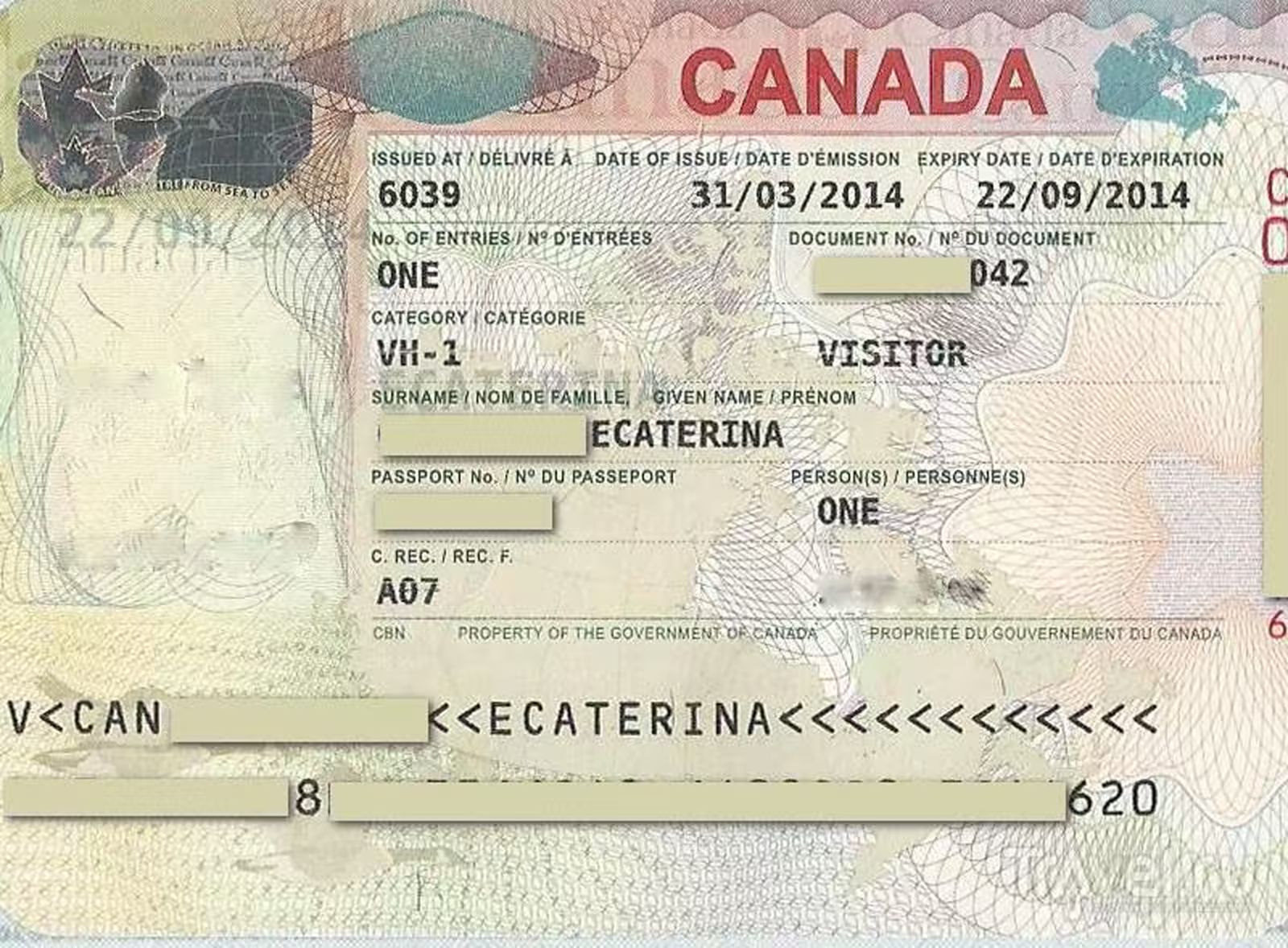
The official Guide 5256 reinforces the same pattern. It says you must show the officer that you will be in Canada for a temporary stay, have enough money to maintain yourself and return home, and can provide any additional document requested to establish admissibility.
What to fix before you reapply
If your Canada visa was refused, rebuild the case around the exact refusal language instead of trying to make the file “look bigger.”
1. Start with the refusal letter
Create a short refusal worksheet with three columns:
- the exact refusal reason or officer concern
- the document you used to support that point the first time
- the document or explanation that would actually answer the concern now
If the refusal letter talks about ties, do not start by polishing your passport scans. If it talks about finances, do not waste a day rewriting the invitation letter first.
2. Repair the financial story
For visitor routes, IRCC does not publish one universal balance threshold. It says the money you need depends on how long you will stay and whether you stay in a hotel or with friends or relatives. That means officers are reading the money story in context.
Fix the financial section by checking:
- whether the statements cover a full 6 months
- whether salary credits match the job letter
- whether large recent deposits are explained
- whether sponsor support is backed by the sponsor’s own income and status documents
If money trail quality is the weak point, use Proof of Funds Canada Visitor Visa: What to Show before you submit again.
3. Tighten the purpose-of-visit evidence
A weak Canada visitor file often says “tourism” but proves almost nothing about the trip. Rebuild this part by matching:
- travel dates in the form
- leave dates in the employer letter
- hotel or host dates
- flight or itinerary dates
- invitation-letter details, if someone in Canada is hosting you
If you need the route-level checklist first, use Canada visitor visa checklist. If the problem is broader document quality, run the final pack against Why Visa Applications Get Rejected: 7 Document Mistakes before you pay again.
4. Make the second file cleaner, not just larger
IRCC’s official “Save Time: Send a Complete Application” video is useful here because it shows how incomplete or unclear applications lose time before the officer even gets to the deeper story. IRCC links this video from its own Canada.ca video page:
That tutorial is not refusal-specific, but it reinforces a crucial rule for second attempts: do not substitute vague extra paperwork for the exact document IRCC actually needs.
When the corrected file is ready, run it through a structured pre-submission pass with Vidicy’s How It Works flow or go straight to sign up for a case review.
Reapply or ask for judicial review?
IRCC’s Help Centre gives you the basic rule:
- Reapply if your situation changed significantly or you have new information that addresses the refusal reason.
- Judicial review if you think the refusal was unreasonable or there was an error in law or procedural fairness.
That does not mean every disappointing refusal should go to court. It means you should separate two very different problems:
- Evidence problem: your first file did not prove what IRCC wanted.
- Decision problem: the officer misread the file or applied the rules unfairly.
Most applicants searching “visitor visa refused Canada” are in bucket one, not bucket two. They need a stronger file, not a faster legal filing.
The practical question is simple: What is materially different in the second application? If your answer is “I added a cover letter but nothing else changed,” you probably do not have a real reapplication yet.

Costs and deadlines you reset after a refusal
The fee and timing side matters because a refusal is not free to fix.
| Item | Current official number | Why it matters after refusal |
|---|---|---|
| Visitor visa fee | CAN$100 per person | A fresh application resets the main filing fee. |
| Family visitor-visa fee cap | CAN$500 for a family of 5 or more applying together at the same time and place | Family reapplications can still be expensive if the pack is not rebuilt properly. |
| Biometrics fee | CAD $85 for one person, CAD $170 family maximum | Pay it when you apply if IRCC requires biometrics for the new case. |
| Biometrics deadline | 30 days from the date on the instruction letter | Missing this step can delay or stall the new application. |
| Biometrics validity for temporary residents | 10 years | Many repeat applicants do not need to give biometrics again if theirs are still valid. |
| Usual stay if admitted later | Up to six months | Approval still does not guarantee a longer stay than the border officer authorizes. |
On the official fees page, IRCC lists the visitor-visa fee at CAN$100 per person and CAN$500 max for a family of five or more applying together. On the separate refund page, IRCC says that once processing has started, only a limited set of fees can be refunded, and visitor-visa fees are not on that list.
Biometrics are more nuanced. IRCC’s current visitor-visa application page says temporary residents usually give biometrics once every 10 years, and you have 30 days to do so when IRCC issues the instruction letter. So the safe rule is: do not assume you must repay biometrics, but do not assume you are exempt either. Check the letter and your biometrics validity.
IRCC links this official biometrics walkthrough from Canada.ca, and it is the clearest short explainer for what happens after you submit a new application:
Related guides
If you're preparing a stronger reapplication, these companion guides help you fix refusal risk and weak supporting evidence:
- If My Visa Is Rejected, Can I Apply Again? (2026)
- Visa Rejected? What to Do Next After Refusal
- Why Visa Applications Get Rejected: 7 Document Mistakes
- Proof of Funds Canada Visitor Visa: What to Show
- Travel Visa Checker: What to Verify Before You Submit
Official sources
- IRCC Help Centre: refused temporary residence applications — https://ircc.canada.ca/english/helpcentre/answer.asp?qnum=1675&top=4
- IRCC visitor-visa application page — https://ircc.canada.ca/english/information/applications/visa.asp
- IRCC visitor-visa and biometrics fees — https://ircc.canada.ca/english/information/fees/fees.asp
- IRCC Help Centre: refunds after processing starts — https://ircc.canada.ca/english/helpcentre/answer.asp?qnum=613
- Canada.ca: Guide 5256 visitor-visa guide — https://www.canada.ca/en/immigration-refugees-citizenship/services/application/application-forms-guides/guide-5256-applying-visitor-visa-temporary-resident-visa.html
- Canada.ca video page: Save Time: Send a Complete Application — https://www.canada.ca/en/immigration-refugees-citizenship/news/video/save-time-send-complete-application.html
- Canada.ca video page: A step-by-step look at biometrics — https://www.canada.ca/en/immigration-refugees-citizenship/news/video/step-by-step-look-biometrics.html
FAQ
Can I appeal a Canada visitor visa refusal?
Not through a formal temporary-residence appeal process. IRCC says there is no formal appeal process for temporary residence refusals. If you think the refusal was unreasonable or unfair, the official challenge path is an application for leave and judicial review in the Federal Court.
How soon can I reapply after a Canada visa refusal?
There is no fixed cooling-off period on the official IRCC refusal-help page. The real test is whether your situation changed significantly or you now have new information that addresses the refusal reason. If nothing material changed, reapplying quickly usually does not help.
Do I pay the Canada visa fee again after refusal?
Yes, a fresh visitor-visa application resets the main fee. IRCC’s current fee page lists CAN$100 per person, or CAN$500 max for a family of five or more applying together at the same time and place.
Do I need new biometrics if I reapply after refusal?
Not always. IRCC says temporary residents usually give biometrics once every 10 years. But if IRCC issues a new biometric instruction letter for your case, follow it and act within 30 days.
What are the most common visitor visa refused Canada reasons?
The official visitor-visa page does not publish a top-10 refusal list, but it clearly shows what officers are testing: ties that will take you home, intention to leave Canada at the end of the visit, enough money for the stay, and a coherent set of supporting documents. Most refusals come from failing one or more of those tests.
Conclusion
If your Canada visa was refused, the best next step is not speed. It is diagnosis. IRCC’s own guidance says reapply only when something important changed or when you have new information that directly answers the refusal reason. If you cannot point to that difference yet, you probably do not have a real second application.
Start with the route-level Canada visitor visa checklist, rebuild the evidence that actually failed, and then use Vidicy’s case-review workflow to pressure-test the full file before you pay IRCC again.