

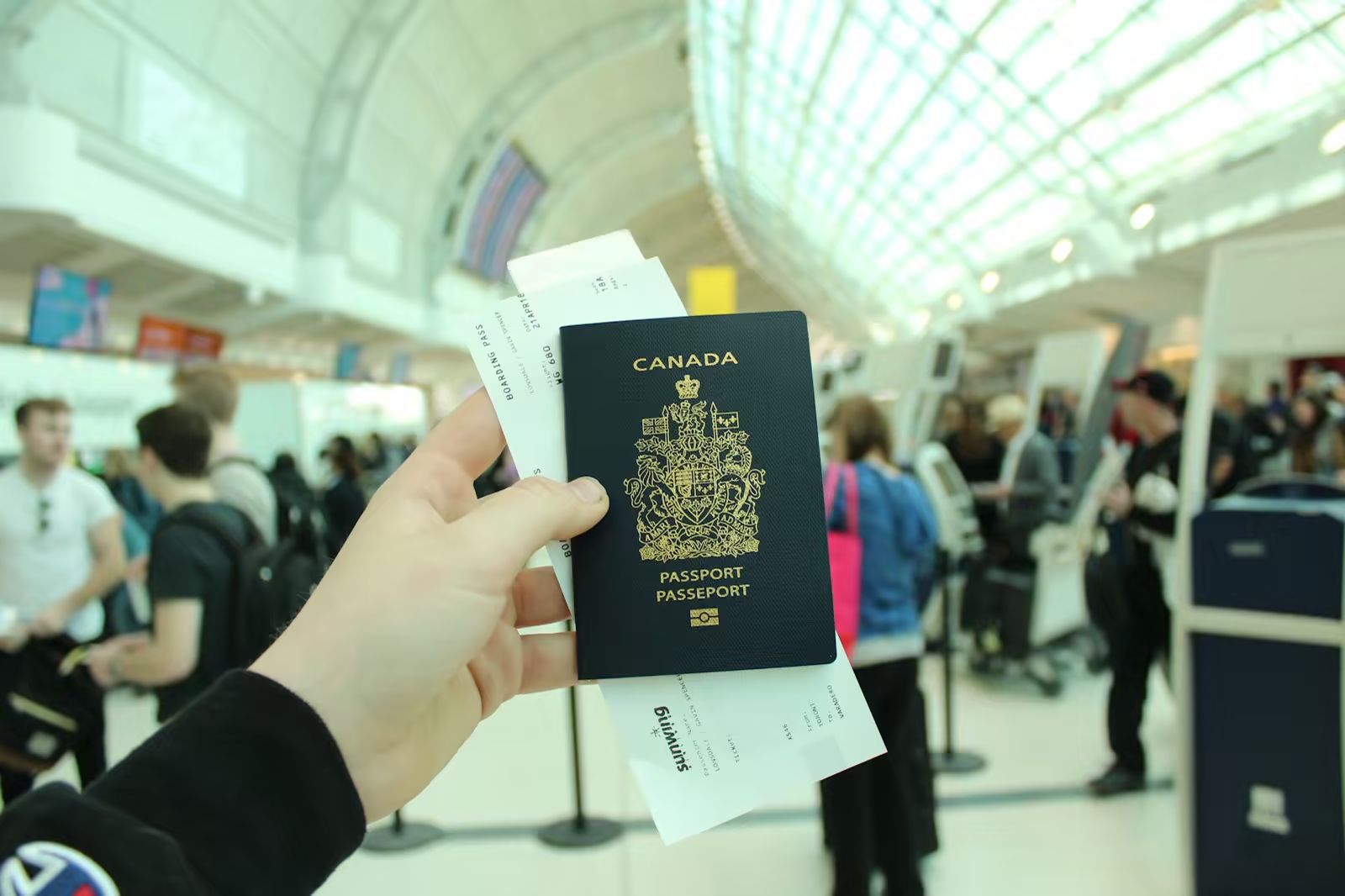

If you are preparing a Canada family visitor visa application, the file should prove three things at once: who you are visiting, why the visit is temporary, and how the trip will be paid for. IRCC's visitor visa workflow separates family visits from normal tourism because family files often need extra evidence: a family invitation letter, proof of relationship, host details, travel history, bank statements, and minor-child documents where relevant.
This guide is for applicants visiting a spouse, partner, parent, child, sibling, grandparent, aunt, uncle, cousin, or other relative in Canada for a temporary stay. It is not a Super Visa guide for parents or grandparents staying more than 6 months, and it is not a permanent residence sponsorship guide.
| Canada family visitor visa document | Who usually needs it | What it proves |
|---|---|---|
| Passport or travel document | Everyone | Identity, nationality, and travel history pages |
| Family Information form IMM 5645 | Most applicants 18 or older | Family composition and consistency with the application |
| Proof of relationship | Family-visit applicants | How the visitor is related to the person in Canada |
| Letter of invitation | Family-visit applicants | Purpose, dates, host identity, stay address, and support plan |
| Bank statements | Most applicants | Whether the visitor can support the trip |
| Employer or school proof | Applicants with work or study ties | Reason to return after the visit |
| Minor child authorization | Children under 18 in relevant cases | Permission and custody/adoption context |
| Biometrics | Most non-exempt applicants aged 14 to 79 | Identity check through fingerprints and photo |
Table of Contents
- Canada family visitor visa documents: the short checklist
- Family visit vs tourist visit vs Super Visa
- Proof of relationship for a Canada family visit
- Invitation letter from your family member in Canada
- Financial documents, employment proof, and travel history
- Minor children, biometrics, fees, and arrival documents
- Common mistakes that weaken family visitor applications
- Official sources
- FAQ
- Conclusion
Canada family visitor visa documents: the short checklist
For a family visit, IRCC says the reason you travel affects the way you apply and the documents you submit. In the visitor visa apply flow, family visits are separated from tourist trips, business visits, compassionate visits, and Super Visa cases. That matters because your documents should not read like a generic vacation file if the real purpose is to visit a relative.
Start with these core documents:
- Clear colour passport copy: include the identity page and any passport pages with stamps, visas, or markings.
- Family Information form IMM 5645: IRCC says each applicant 18 years or older must complete it in the visitor visa workflow.
- Proof of relationship: marriage certificate, birth certificate, Statutory Declaration of Common-Law Union IMM 5409, or another official document that connects you to the relative in Canada.
- Letter of invitation: written by the family member in Canada, addressed to you, and consistent with the rest of the file.
- Travel history: copies of previous visas, entry and exit stamps, study or work permits, or used passports from the last 10 years where relevant.
- Itinerary and accommodation proof: documents showing how long you will stay and what you will do in Canada.
- Bank statements: IRCC asks for bank name/contact, proof the account is yours, and at least 6 months of account details including balances.
- Employer or school evidence: if you work or study, include proof that makes your return plan believable.
- Minor child documents: if a child under 18 is travelling alone, with one parent, or with someone who is not a parent/legal guardian, add authorization and custody/adoption documents as needed.
- Biometrics: many visitor visa applicants must give fingerprints and a photo unless exempt.
That list is not a guarantee of approval. IRCC states that not every listed document applies to every case, that the listed proof is not exhaustive, and that officers can ask for more information. A strong family visitor file is not just complete; it is consistent.
If you are still building the broader route file, start with Vidicy's Canada visa checklist. If the money section is the part you are most worried about, use the proof of funds for visa application guide before you upload bank records.
Family visit vs tourist visit vs Super Visa
A Canada family visitor visa is usually a regular visitor visa application where the purpose is to visit a relative temporarily. The family relationship changes the evidence, but it does not turn the application into permanent residence sponsorship.
Here is the practical split:
| Route | Typical purpose | Document difference |
|---|---|---|
| Tourist visitor visa | Vacation, sightseeing, personal trip | Itinerary, funds, travel history, accommodation |
| Family visitor visa | Temporary visit to relatives in Canada | Proof of relationship and family invitation letter become central |
| Super Visa | Parent or grandparent visiting a child or grandchild for longer stays | Extra financial-support and medical-insurance rules |
| Spousal PR visitor visa | Visiting a spouse or partner during sponsorship | Relationship proof plus PR-sponsorship context may matter |
IRCC's apply page says a Super Visa can let eligible parents and grandparents visit their children or grandchildren for 5 years at a time, with multiple entries for up to 10 years. If the planned stay is more than 6 months with a child or grandchild, do not force the file into a normal family visitor checklist.
For a standard visitor visa, Canada's public visitor visa page lists the fee as starting from CAN$100. Most visitors can stay for up to 6 months, but the final allowed stay is determined at the port of entry. A border services officer can allow less or more time and may issue a visitor record.
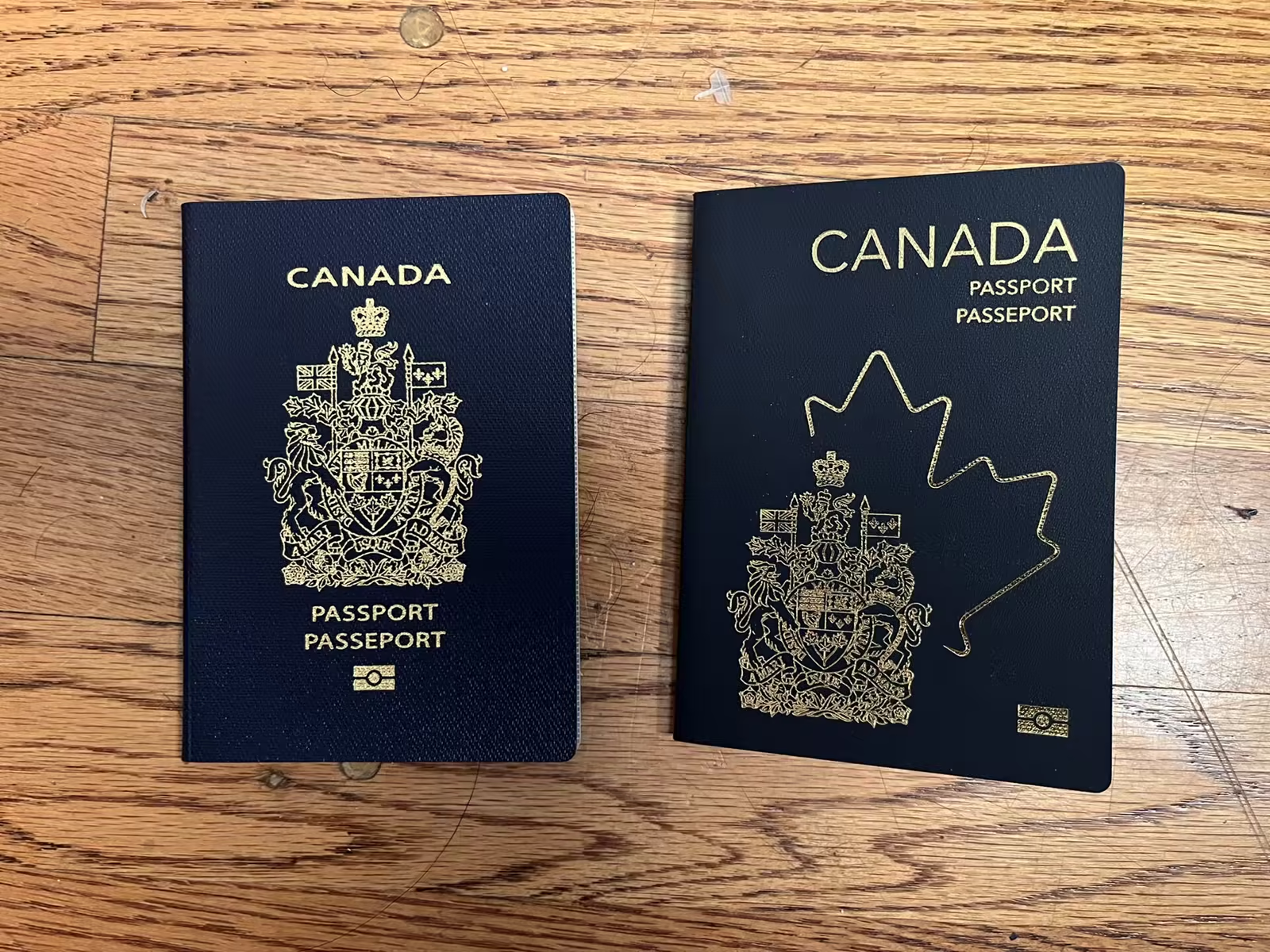
Image source: Wikimedia Commons, Jusfiq, CC BY-SA 4.0.
Proof of relationship for a Canada family visit
Proof of relationship is the document group that makes a family visitor visa different from an ordinary tourist trip. IRCC's visitor visa workflow lists examples such as a marriage certificate, birth certificate, IMM 5409 for common-law partners, or an official document naming the applicant as a parent.
Use the document that proves the exact relationship you are claiming:
| Relationship | Strong proof examples | What to check before upload |
|---|---|---|
| Spouse | Marriage certificate, shared civil records | Names and dates match passport/application details |
| Common-law partner | IMM 5409 plus proof of shared household or finances | Timeline is consistent across forms and evidence |
| Parent or child | Birth certificate or official parent document | Parent names match the applicant and host records |
| Sibling | Birth certificates showing shared parentage | Transliteration and parent-name spelling match |
| Grandparent | Birth certificates across two generations | The chain is complete, not assumed |
| Other relative | Civil records proving the link | Explain the relationship clearly in the cover letter |
If the document is not in English or French, check the translation requirements for your specific application and visa office. Do not upload a family record that the officer cannot read and then expect the invitation letter to fill the gap.
This is also where families make quiet mistakes. One document may use a maiden name, another may use a nickname, and another may transliterate a parent name differently. Vidicy is built for that kind of cross-document review because it checks whether the evidence tells one coherent story before you submit.
Invitation letter from your family member in Canada
For a family visit, the invitation letter should explain who is inviting you, how they are related to you, why you are visiting, where you will stay, how long you will stay, and who pays for which costs. IRCC says a letter of invitation can help, but it does not guarantee that a visa will be issued.
The host's letter should cover:
- visitor full name, date of birth, address, and phone number
- relationship between visitor and host
- purpose of the trip
- planned arrival and departure dates
- where the visitor will stay in Canada
- how the visitor will pay for the trip, or what the host will cover
- host full name, date of birth, Canadian address, and phone number
- host job title and status in Canada
- copy of host status proof, such as Canadian citizenship, permanent residence, or another accepted status document
- family details in the host's household, especially if the host is supporting the visit
Use plain language. The letter does not need to sound legal. It needs to be specific and consistent.
Weak version:
My cousin will visit me in Canada and I will support the trip.
Stronger version:
My cousin will visit me in Toronto from June 8 to June 28, 2026. I will provide accommodation at my home, while she will pay for her flights and personal expenses from her own savings.
The stronger version is not better because it is longer. It is better because the dates, address, support plan, and family relationship can be checked against the rest of the file.
For the full letter structure, use the invitation letter for visitor visa Canada guide. If the applicant also needs to explain the full trip in one place, pair it with the cover letter for Canada visitor visa guide.
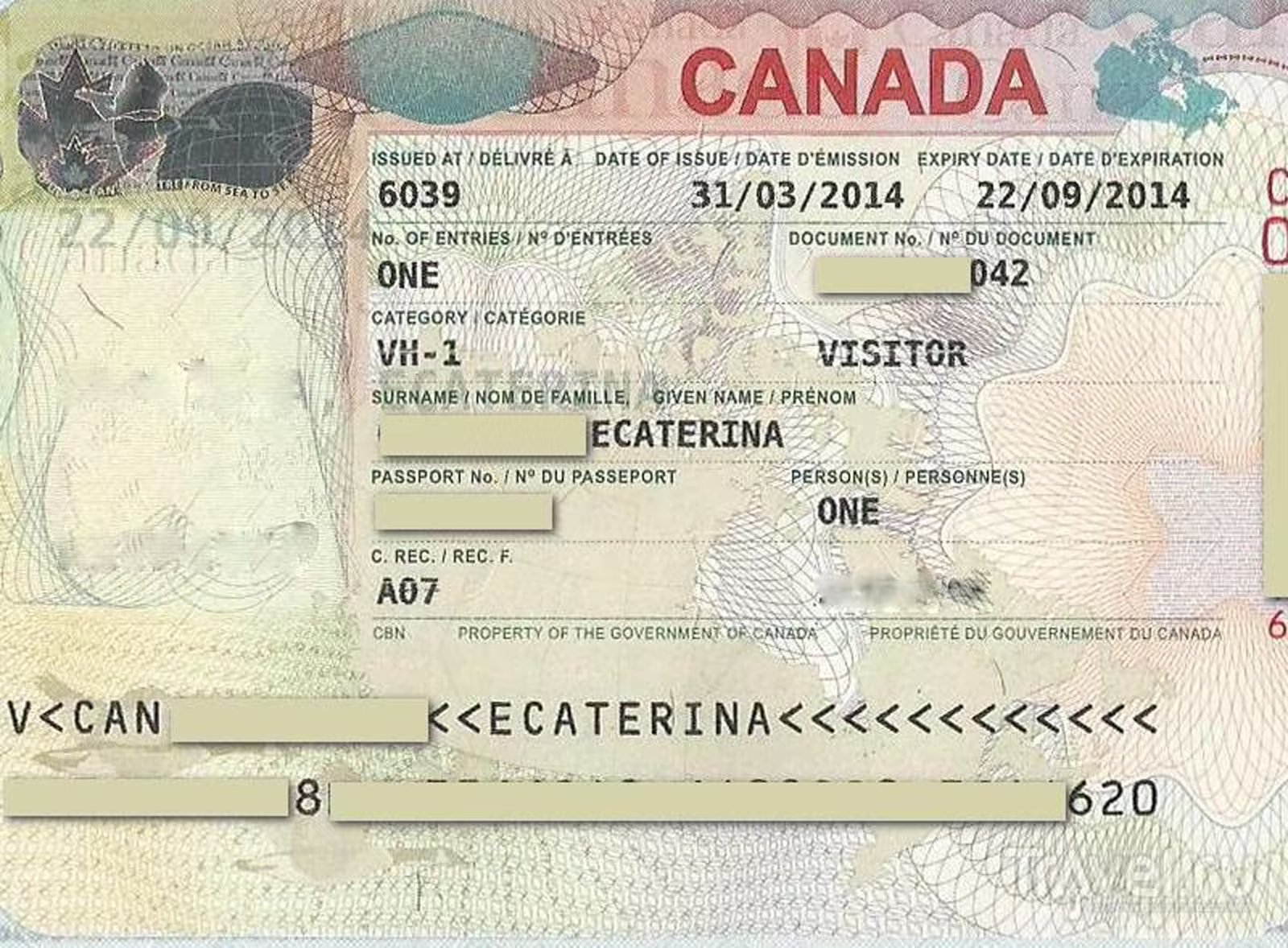
Image source: Wikimedia Commons, Visa to Canada.jpg, public-domain status indicated on the source page.
Financial documents, employment proof, and travel history
Family visitor visa applicants often assume the host's invitation letter solves the money question. It does not. Officers still need to understand whether the applicant can support the stay, whether the host can cover the promised costs, and whether the trip length is believable.
Bank statements
IRCC's apply page says bank statements help show whether you have enough money for your stay. The details should include the bank name and contact, proof the account is yours, and at least 6 months of account details with balances.
Do not treat this as a final-balance exercise. A large deposit right before applying may raise more questions than a smaller but stable balance. If a family member in Canada is paying for accommodation, the applicant still needs a clear explanation of who pays for flights, daily expenses, insurance, gifts, local transport, and emergencies.
Employer or school proof
If you work, an employer letter can help prove stable ties and a reason to return. IRCC's visitor visa workflow says an employer letter should be on official letterhead and dated no earlier than 3 months before you apply. It should identify the job, salary, start date, manager contact, company address, and signature from the manager or HR contact.
If you study, use enrolment proof, approved break dates, exam schedule, or return-to-school evidence. The point is not to dump every document you own. The point is to show why the visit is temporary.
Travel history
IRCC lists previous passports, visas, entry and exit stamps, and study or work permits as examples of travel-history evidence. The official workflow specifically refers to travel outside your country in the last 10 years.
Travel history is not mandatory proof of approval, and no one should invent trips they did not take. But if you have compliant travel records, include clear pages. They help officers see whether past travel behavior supports the current temporary-visit story.
Minor children, biometrics, fees, and arrival documents
Family applications often involve children, grandparents, or relatives travelling together. That adds operational details that a normal tourist checklist may miss.
Minor children under 18
Canada treats children under 18 as minors. IRCC says the documents depend on whether the child travels alone, with one parent, with a relative or friend, or with someone else. Depending on the case, the child may need a passport, birth certificate copy, authorization letter, custody documents, adoption papers, or proof from the non-travelling parent.
The practical rule is simple: if a child is travelling without both legal parents or guardians, do not leave permission evidence until the airport. Prepare it with the visa file and carry it when travelling.
Biometrics
IRCC says biometrics are fingerprints and a photo used to confirm identity and assess applications. The biometrics page lists the fee as CAN$85 for an individual applicant and CAN$170 maximum for families applying at the same time. It also lists exemptions, including children under 14 and applicants over 79 for most application types.
IRCC also publishes an official biometrics video. It is useful for understanding what happens after you receive a biometric instruction letter.
This video is published by Immigration, Refugees and Citizenship Canada and linked from the official Canada.ca biometrics video page.
Arrival documents
Approval does not end the document story. IRCC's arrival guidance says a valid visa and travel document do not guarantee entry. A border services officer still checks identity and entry requirements. If you received an invitation letter, bring it with you because an officer may ask to see it.
Most visitors can stay for up to 6 months, but the officer can allow a different period. If your family visit has fixed dates, keep your return plan, invitation letter, and itinerary aligned.
Common mistakes that weaken family visitor applications
The most common family visitor visa problems are not dramatic. They are quiet mismatches.
Watch for these before submission:
- Invitation dates do not match itinerary dates. The host says three weeks, but the flight reservation shows five.
- Relationship proof is incomplete. The applicant claims a family relationship, but the civil records do not prove the full chain.
- Host support is vague. The letter says "I will sponsor everything" without bank/employment proof or a realistic budget.
- Applicant funds are unexplained. The bank statement has recent deposits with no context.
- Employment proof is stale. The letter is old, missing salary, or not signed by HR/manager.
- Minor child permission is missing. The child is travelling with one parent or a relative, but authorization and custody evidence are not ready.
- The Super Visa question is ignored. A parent or grandparent plans a long stay but uses a normal short-visit checklist.
A family visitor visa Canada file should read like one package, not a folder of unrelated PDFs. Before you submit, compare names, dates, addresses, funding claims, host details, and relationship evidence across every document.
If you want a product-led review instead of manually checking the package line by line, see how Vidicy works or start a free checklist. Vidicy's evaluation flow is designed to catch the gaps and contradictions that are easy to miss when each document is reviewed alone.
Official sources
Use these official pages before submitting, because IRCC requirements and fees can change:
- IRCC: How to apply for a visitor visa
- IRCC: Document Checklist IMM 5484
- IRCC: Visitor visa overview and fees
- IRCC: Visitor visa about the document
- IRCC: Letter of invitation for visitors to Canada
- IRCC: Minor children travelling to Canada
- IRCC: Biometrics
- IRCC: A step-by-step look at biometrics
FAQ
What documents are required for a Canada family visitor visa?
Most applicants need a passport copy, IMM 5645 if 18 or older, proof of relationship, an invitation letter, travel history, itinerary, bank statements, and employment or school proof. Minor children may need authorization and custody/adoption documents depending on who travels with them.
Is an invitation letter mandatory for a family visitor visa Canada application?
IRCC says a family member in Canada may provide a letter of invitation, and the visitor visa workflow lists it for family visits. The letter can support the file, but it does not guarantee approval and does not replace funds, relationship proof, travel history, or return ties.
What counts as proof of relationship for visiting family in Canada?
Useful proof can include a marriage certificate, birth certificate, IMM 5409 for common-law partners, or another official record showing the family link. For grandparents, siblings, aunts, uncles, or cousins, you may need multiple documents to prove the full relationship chain.
How much money do I need for a Canada family visitor visa?
IRCC does not publish one fixed amount for every family visit. The money needed depends on trip length, accommodation, who pays, and whether the visitor stays with relatives or in a hotel. Bank statements should show account ownership and at least 6 months of account details.
Do children need extra documents for a Canada visitor visa?
Children under 18 may need extra documents if they travel alone, with one parent, with a relative or friend, or with someone who is not their legal guardian. Depending on the case, this can include a birth certificate, authorization letter, custody papers, or adoption papers.
Is a family visitor visa the same as a Super Visa?
No. A normal family visitor visa is usually for a temporary short visit. A Super Visa is specifically for eligible parents or grandparents visiting children or grandchildren in Canada and can allow much longer stays, with extra insurance and financial-support requirements.
Conclusion
The strongest Canada family visitor visa documents are the ones that make the family story easy to verify. The invitation letter explains the visit, the relationship proof shows why the visit is real, the financial records show how the trip works, and the home-tie evidence explains why the applicant will leave Canada on time.
Do not wait until the end to check consistency. Names, dates, addresses, account ownership, host promises, and return plans should match across the full package.
If you want a structured review before submission, create your Canada visa checklist, then start free with Vidicy to evaluate the documents before a visa officer sees them.