

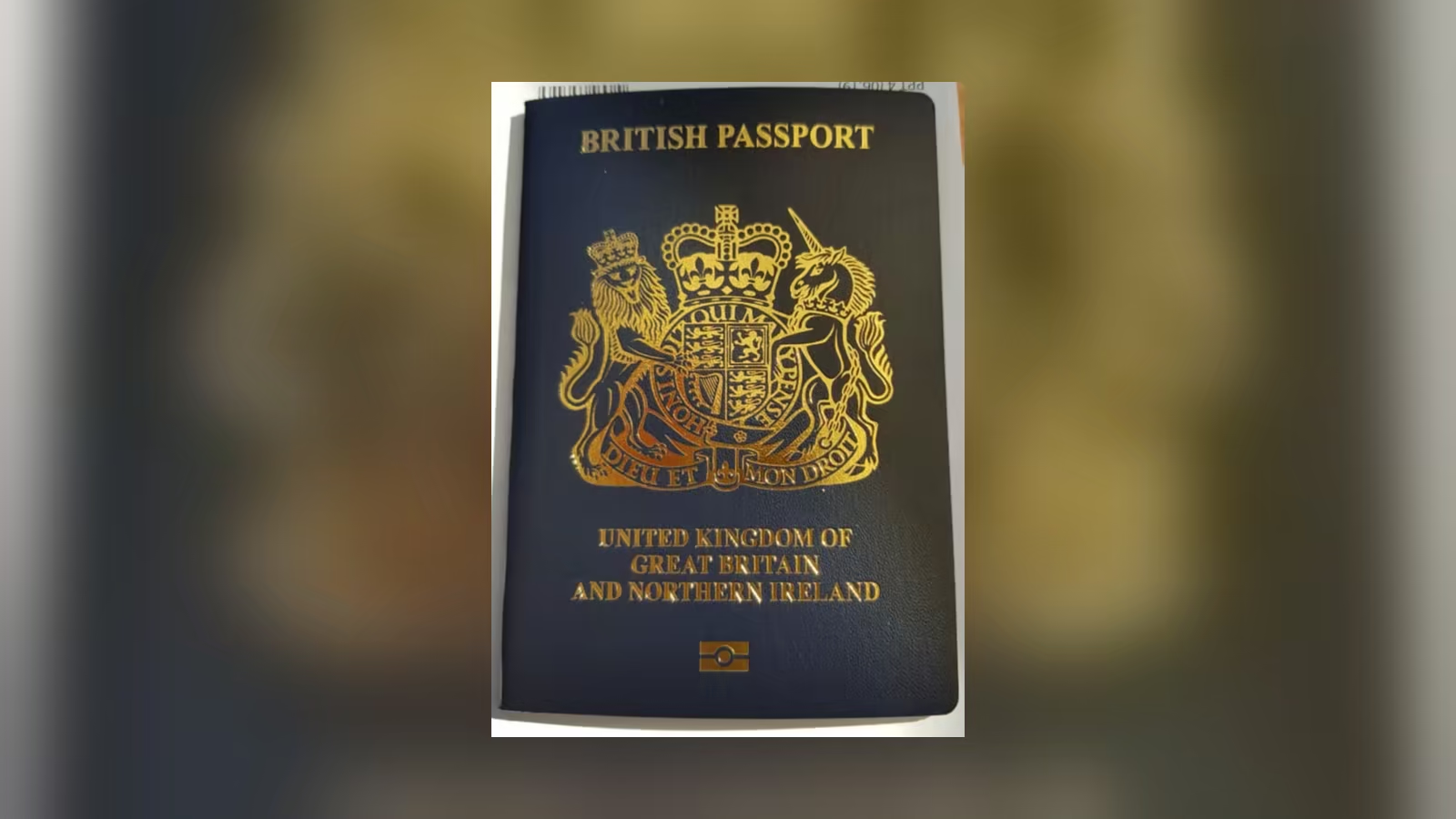

A working UK visa checklist for a Standard Visitor application in 2026 starts with a valid passport, your trip dates, accommodation details, proof that you can pay for the visit, and evidence that you will leave the UK at the end of the trip. UK Visas and Immigration (UKVI) updated its supporting-documents guide on 25 February 2026 and says visitors should show a permitted purpose, return plans, maintenance, and onward travel. The current GOV.UK apply page says a Standard Visitor visa costs GBP 135, can be filed up to 3 months before travel, and usually takes 3 weeks after you apply online, prove your identity, and provide documents.
That matters because most ranking pages still treat the checklist like a generic upload pile. UKVI does not. The official pages ask for a coherent visitor story, and the caseworker guidance says applications become more complex when no additional evidence is provided beyond the form or when evidence is missing or irregular. This guide keeps the checklist focused on the route most searchers actually mean: the UK Standard Visitor route. If you are applying to study, attend a paid engagement, get married, or stay longer for academic or medical reasons, treat those as route-specific exceptions instead of forcing them into a tourist checklist.
| Item | Current UKVI position | Why it matters |
|---|---|---|
| Standard Visitor fee | GBP 135 | This is the base fee per applicant. |
| Standard stay | Up to 6 months | Your itinerary and support documents should fit a short visit, not a relocation pattern. |
| Earliest application point | 3 months before travel | Applying too early creates stale evidence. |
| Standard decision time | Usually 3 weeks | Use this for planning, not for buying non-refundable travel too early. |
| Priority service | GBP 500 extra | Usually 5 working days if eligible. |
| Super priority service | GBP 1,000 extra | Usually by the end of the next working day if eligible. |
| Long-term visitor visas | 2, 5, or 10 years | Each visit is still capped at 6 months. |
Table of Contents
- UK visa checklist at a glance
- Documents UKVI actually wants to see
- Sponsor documents for a UK visit
- Documents that look helpful but carry less weight
- Upload, translation, and appointment rules
- Route exceptions that change the checklist
- Official sources
- FAQ
- Conclusion
UK visa checklist at a glance
If you want the shortest useful UK visa checklist, use this order:
- Passport or travel document valid for the whole UK stay.
- Application details: travel dates, accommodation, trip budget, home address, annual income, and any required travel-history details.
- Financial evidence that shows you really have access to the money you claim.
- Employment, study, business, or family-tie evidence that supports the return-home story.
- Sponsor evidence if someone in the UK is paying for accommodation, maintenance, or travel.
- Certified translations for anything not in English or Welsh.
- Upload-ready files with every full page visible and matched to the correct evidence slot.
According to UKVI’s supporting-documents guide, the application is strongest when it proves four basics clearly: your visit is for a permitted activity, you will leave at the end of the visit, you can support yourself and any dependants, and you can pay for your return or onward journey. That is the real checklist logic behind the form.
If you want the route page first, Vidicy’s UK visa document checklist gives the product-led version. This article stays focused on the underlying official UKVI evidence rules.
Documents UKVI actually wants to see
The official checklist is not a single PDF that covers every visitor. UKVI’s apply page says the online form will ask for evidence based on your answers, but the visitor guidance shows the core categories most Standard Visitor applicants should be ready to prove.
1. Passport and core application details
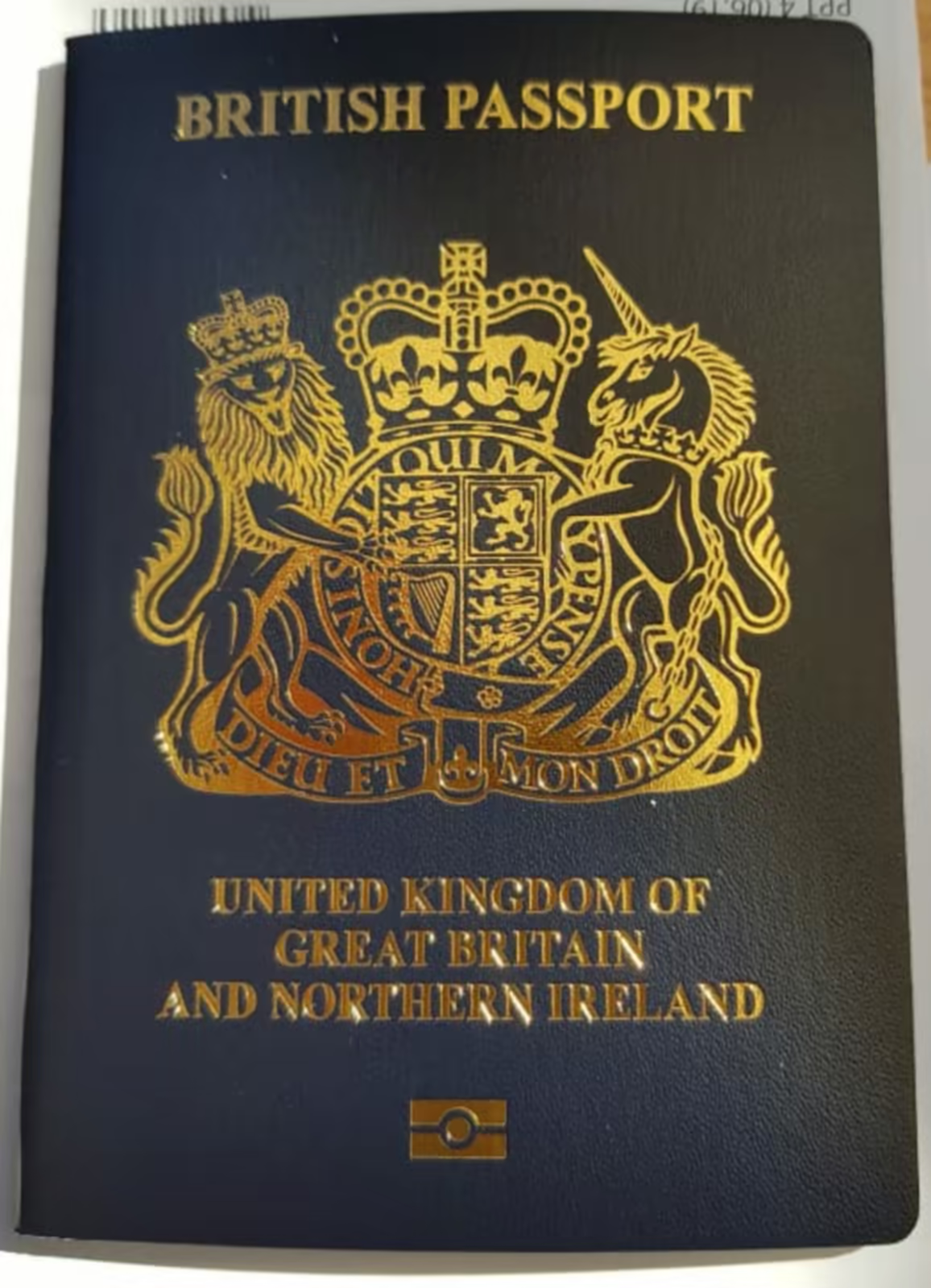
The apply page says you must have a passport or travel document valid for the whole of your stay in the UK. It also says the online form will ask for:
- the dates you plan to travel
- where you will stay
- how much you think the trip will cost
- your current home address and how long you have lived there
- your parents’ names and dates of birth, if known
- your yearly income, if you have one
- any criminal, civil, or immigration offences
Depending on your case, UKVI may also ask for:
- travel history for the last 10 years
- your employer’s address and telephone number
- the details of anyone paying for your trip
- family-member details if you have relatives in the UK
2. Money, work, and home-country ties
The supporting-documents guide is more useful than most blog posts because it explains the kind of proof UKVI expects, not just the category labels. It recommends information about your circumstances in your home country and documents that support the activity you will do in the UK.
For most visitor cases, that means:
- Bank statements that show the origin of the funds held
- Proof of earnings, such as an employer letter confirming your start date, salary, role, and company contact details
- Employment evidence on company letterhead if you work for someone else
- Student evidence if you are enrolled and returning to classes
- Business registration or recent invoices if you are self-employed
- Previous passports or travel evidence where relevant
- Legal residence evidence if you are applying from a country where you are not a national
The detail most applicants miss is that UKVI is not only asking whether you have money. It is asking whether the funds, job story, and travel purpose fit together. If your HR letter is weak, use the employment letter for a visa application to request a version that actually supports a UK visitor file. If your full package still feels fragile, review how to avoid visa rejection due to document mistakes before you upload anything.
3. A practical document stack for most Standard Visitor cases
For most tourist, family-visit, or friend-visit applications, this is the most practical working stack:
| Document | Why UKVI asks for it | Common mistake |
|---|---|---|
| Passport / travel document | Identity and nationality | Passport valid for travel, but the rest of the file uses different spelling or old passport details |
| Bank statements | Funds and access to money | Statements show a balance but not the source of funds |
| Employer letter or business proof | Ongoing work and return ties | Generic HR letter with no salary, start date, or approved leave |
| Trip plan and accommodation details | Purpose of travel | Vague itinerary that does not match who is hosting you |
| Sponsor letter and sponsor evidence | Maintenance or accommodation support | Letter says “I will support them” but shows no legal status or finances |
| Translation certificates | Readable evidence | Translations missing signature, date, or contact details |
If the host is in the UK and the visit depends on that relationship, pair this article with the more specific Invitation Letter for UK Visa: Sponsor Checklist.
Sponsor documents for a UK visit
If someone else is paying for your travel, accommodation, or maintenance, UKVI’s sponsor section says the evidence should show:
- what support is being provided
- how that support is being provided
- that the sponsor has enough funds
- the relationship between you and the sponsor
- that the sponsor is legally in the UK, where relevant
That is why a sponsor checklist is more than just one letter. A strong sponsor package usually includes:
- the sponsor’s signed invitation or support letter
- the sponsor’s passport or UK residence evidence
- financial records if the sponsor is paying costs
- relationship evidence if the sponsor is family or a personal contact
- a clear statement about where you will stay
If you are hosted by family or friends, the UK invitation letter guide breaks down the sponsor side in full. If your host is not paying for the whole trip, say that clearly rather than making the support look broader than it is.

Documents that look helpful but carry less weight
One of the strongest parts of the official UKVI guide is the section on evidence that is often less useful. That section is missing from most competitor articles, even though it explains why applicants feel “fully documented” and still get refused.
UKVI specifically lists these as weaker evidence items in visit applications:
- bank statements or bank letters issued more than 1 year before you apply
- credit card statements
- driving licences
- educational certificates not required for your visa
- evidence of car ownership
- personal photographs
- notarial certificates
- business cards
- hotel bookings
- flight bookings, unless you are transiting
- photocopies of bank cards
- travel insurance
- sponsor utility bills
- sponsor council tax bills
That does not mean you can never include one of these items. It means you should not build the application around them. A hotel booking is not proof of funds. A notarial certificate is not proof of a genuine sponsor relationship. A personal photograph is not stronger than a proper birth certificate or employer letter.
According to the same UKVI guide, digital images should be taken of original documents, not copies wherever possible. That is another small but important quality signal.
Upload, translation, and appointment rules
Once your UK visa checklist is assembled, the technical side matters almost as much as the documents themselves.
The Standard Visitor apply page says you must:
- apply online before travel
- attend an appointment at a visa application centre
- prove your identity with your passport or travel document
- give fingerprints and a photo
- provide the required documents that show you are eligible
UKVI’s evidence-upload guidance adds three practical rules that are easy to overlook:
- the full document must be visible on the scan or photo
- document photos should be taken in a well-lit area and kept in focus
- photo uploads for document evidence should be saved as PNG, JPG, or JPEG, while scans can be PDF, PNG, JPG, or JPEG
That same upload page also says applicants who prove identity at a visa application centre cannot use the self-upload service tied to the UK Immigration: ID Check app. Instead, they use commercial partner websites or paid submission help linked to the appointment flow. For most outside-the-UK visitor cases, that is the practical reality.
Translation rule
The Standard Visitor apply page and supporting-documents guide both say any document not in English or Welsh must have a certified translation. The supporting-documents guide says each translation must include:
- confirmation that it is an accurate translation
- the date of translation
- the translator’s full name and signature
- the translator’s contact details
Official UKVI walkthroughs
UKVI now publishes three official video explainers that fit directly into this checklist workflow:
The visitor-visa application walkthrough below is linked from GOV.UK’s official publication page for Apply for a UK visitor visa: video.
The photo walkthrough below is linked from GOV.UK’s official publication page for How to take a photo for a visa application or permission: video.
And the processing-times explainer below is linked from GOV.UK’s official Processing times video publication.
If you want the product workflow that checks the full pack before submission, see how Vidicy works and then start a review once the checklist is assembled.
Route exceptions that change the checklist
This article targets the common Standard Visitor route, but the official pages make clear that some reasons for travel trigger extra evidence.
Children under 18
UKVI says children should show the relationship to at least one parent or guardian, usually with a birth certificate or adoption papers. If the child is not travelling with a parent or guardian, UKVI says you should provide a signed letter confirming consent, who is travelling with the child, who will look after them in the UK, and how they will travel.
Business visitors and event attendees
If you are coming for business activities or a conference, the supporting-documents guide says you should provide an invitation letter from the organiser or evidence from your employer that explains the business purpose.
Medical, academic, or longer-stay cases
The apply page says you may need a tuberculosis certificate if you are visiting for more than 6 months. It also separates extra-document routes for:
- study
- academics
- permitted paid engagements
- medical reasons
Do not use a normal tourist checklist if you actually fall into one of those sub-routes.
Official sources
- Visit the UK as a Standard Visitor: apply for a Standard Visitor visa
- Visiting the UK: guide to supporting documents
- Visit caseworker guidance (accessible)
- Get a faster decision on your visa or settlement application
- Uploading evidence as part of your visa application
- How to apply for a UK visitor visa: video
- How to take a photo for a visa application or permission: video
- Processing times video
FAQ
What documents are required for a UK visitor visa in 2026?
For most Standard Visitor cases, you need a valid passport, your travel and accommodation details, evidence of funds, and documents that explain your work, studies, business, or family ties at home. If someone in the UK is supporting you, add sponsor evidence that shows what support they give, how they give it, and that they are legally in the UK.
How much money should I show for a UK visitor visa?
UKVI does not publish one fixed minimum amount for Standard Visitors on the main apply page. Instead, the evidence must show you can support yourself and cover return or onward travel. That usually means recent bank statements, proof of earnings, and a trip budget that matches the length and purpose of the visit.
Is a flight booking mandatory for a UK visa application?
Not as core evidence. UKVI’s supporting-documents guide lists flight bookings among the items that are often less useful evidence unless you are transiting. A better file prioritizes funds, employment or sponsor proof, and documents that show why the visit makes sense and why you will return home after it.
Do hotel bookings prove accommodation for a UK visitor visa?
They can show planning, but UKVI says hotel bookings are often less useful evidence than stronger proof. If you are staying with a host, a sponsor letter plus the host’s status and address evidence is usually more useful. If you are paying for your own stay, hotel details should still match the trip dates and budget story.
How long does a UK Standard Visitor visa take in 2026?
The current GOV.UK apply page says you will usually get a decision within 3 weeks once you have applied online, proved your identity, and provided your documents. If you are eligible for faster service, GOV.UK says priority is usually 5 working days and super priority is usually by the end of the next working day.
Can I use scans or phone photos for my UK visa documents?
Yes, but the official upload guidance says the full document must be visible and readable. Document photos should be well lit and in focus. File types for document photos are PNG, JPG, or JPEG, and scans can also be uploaded as PDF. For many visitor applications handled at a visa application centre, uploads happen through the partner website tied to your appointment.
Conclusion
The best UK visa checklist is not a long pile of paperwork. It is a short, coherent set of documents that proves your identity, funding, travel purpose, return plan, and sponsor support where relevant. In 2026, the official anchors are clear: GBP 135 for the standard fee, 3 months as the earliest application point, and 3 weeks as the usual published decision time for a normal Standard Visitor case.
If you already have route-specific pieces like a sponsor letter or a photo sorted, connect them back to the full checklist before you submit. Start with the UK visa route page, use the UK invitation letter guide and UK visa photo guide where relevant, and then run the final file through Vidicy so the checklist turns into a stronger submission-ready package.