


If you’re applying for a UK Standard Visitor visa, your “UK visitor visa checklist” should focus on evidence UK Visas and Immigration (UKVI) uses to decide whether you’re a genuine visitor: who you are, what you’ll do in the UK, how you’ll pay, and why you’ll leave at the end of your trip. This guide gives you a practical document checklist (with common mistakes) and links to the official UKVI pages that explain each requirement.
Below is the checklist you can follow today, plus a way to double-check your evidence before you submit with Vidicy’s AI document review workflow.
| Checklist category | What UKVI is looking for | Example evidence (pick what fits you) | Common mistakes that weaken an application |
|---|---|---|---|
| Identity + travel document | A valid travel document and identity consistency | Current passport (and prior passports if relevant) | Expired passport, missing identity details, inconsistent names without explanation |
| Visit purpose | A permitted activity and a credible plan | Event invite, family visit details, tourism itinerary summary | Overly vague plans, “generic” letters with no dates/relationship |
| Finances | You can fund the trip (or a sponsor can) | Bank statements, proof of earnings, sponsor evidence | Large unexplained deposits, statements with no origin of funds |
| Ties to home country | You’ll leave the UK at the end | Employment/study evidence, property/lease, family obligations | No proof of employment/education, no explanation for long leave |
| Sponsor (if any) | What support is provided and by whom | Sponsor letter + sponsor funds + relationship proof | Sponsor letter with no financial evidence, unclear relationship |
| Translations | Non‑English/Welsh docs are verifiable | Certified translation with required elements | Uncertified translations or missing translator details |
Table of Contents
- UK visitor visa checklist: what matters most
- Required documents for a UK Standard Visitor visa
- Proof of funds (and “where the money came from”)
- If someone is sponsoring your trip
- Translations and document format rules
- Fees, timelines, and when to apply
- Official sources (UKVI / GOV.UK)
- FAQ
- Conclusion
UK visitor visa checklist: what matters most
UKVI’s official “supporting documents” guidance is explicit: to visit the UK you need to show you’re a genuine visitor, which includes evidence that:
- you’re coming to do a permitted activity
- you’ll leave at the end of your visit
- you can support yourself (and dependants) during the trip
- you can pay for your return or onward journey
If you want a fast, high-signal checklist, treat those four bullets as your structure. Everything you upload should map clearly to one of them.
If you’re unsure whether your evidence “tells a coherent story”, you can upload your PDFs into the UK visa document checklist workflow and use Vidicy to spot inconsistencies before you submit.
Required documents for a UK Standard Visitor visa
1) Passport (travel document)
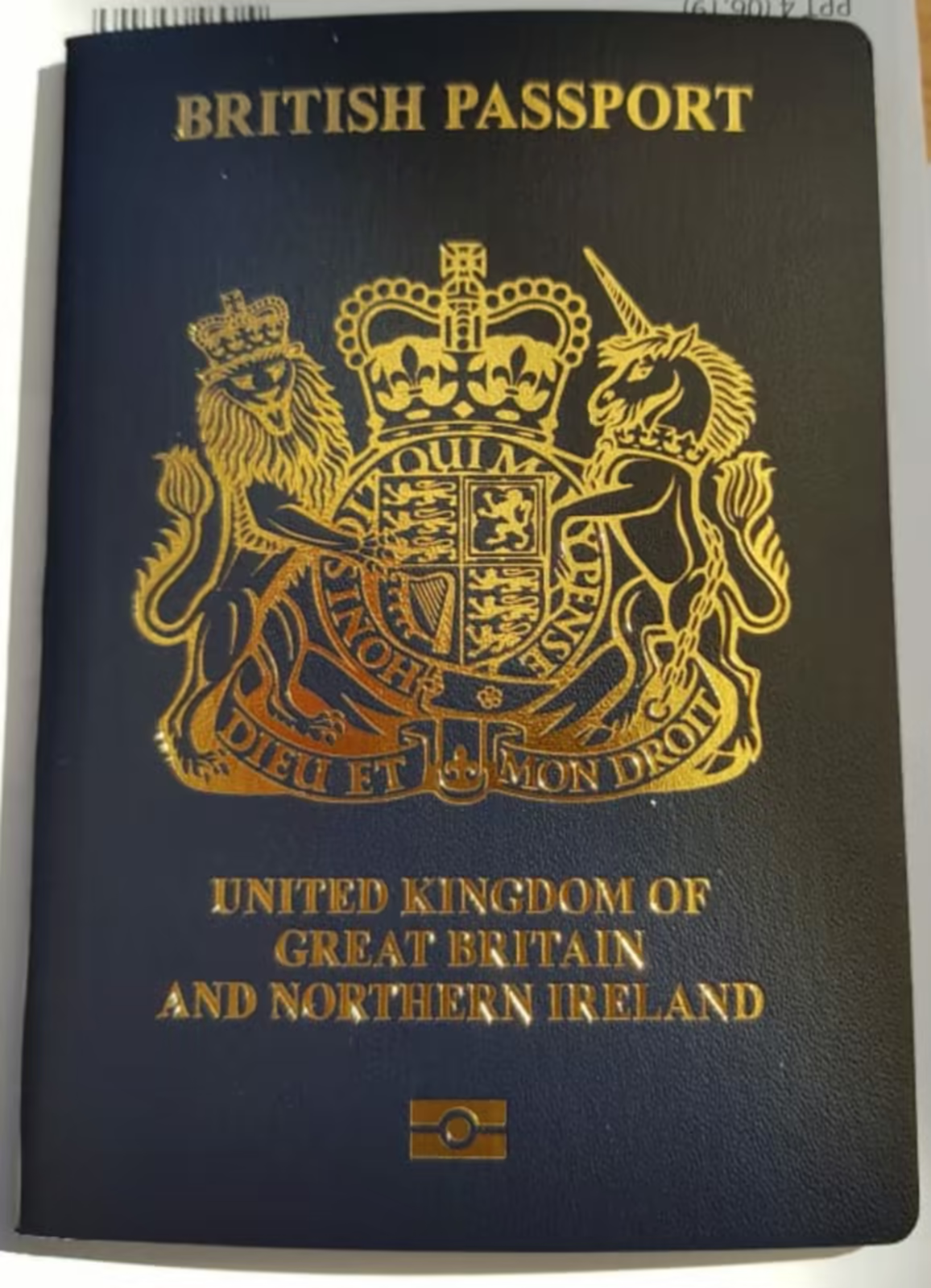
UKVI’s supporting-documents guide states you must provide a valid passport or other travel document with all applications and when travelling to the UK.
Practical checklist:
- Current passport bio page (clear scan)
- Any relevant previous passports (useful for travel history consistency)
- Name-change evidence if your documents don’t match (for example, a marriage certificate)
2) Your “visit purpose” evidence
Your supporting evidence should make the purpose of your trip easy to understand. UKVI calls this “coming to do a permitted activity”.
Examples of useful supporting documents (choose what fits):
- Tourism: short itinerary summary + accommodation plan (you do not need to pre-book travel before a decision)
- Visiting friends/family: invitation details + relationship proof (photos are usually weak evidence compared to official records)
- Business: meeting/event invite + employer confirmation of your role and approved leave
If you’re writing an invitation letter, you can use a template as a starting point, but make sure it’s matched to your scenario. See: invitation letter for UK visa.
3) Evidence of your circumstances at home (ties)
UKVI’s guidance recommends evidence about your circumstances in your home country, and gives examples such as:
- employer letter on headed paper (role, salary, length of employment)
- education provider letter (enrolment + leave of absence)
- self-employment evidence (business registration documents, recent invoices)
This isn’t about “adding more documents”. It’s about showing that your visit fits into a stable life pattern.
If you want a deeper checklist of what tends to get applications refused, use avoid visa rejection: document mistakes.
Proof of funds (and “where the money came from”)
“Proof of funds” for a UK visitor visa is not just about the ending balance. UKVI’s official guidance says financial documents must clearly show you have access to the funds, and gives examples such as:
- bank statements that detail the origin of funds held
- building society books that detail the origin of funds held
- proof of earnings (for example, employer letter confirming employment details)
Practical checklist (choose what fits):
- 3–6 months of bank statements (consistent with your income story)
- payslips + employer letter (if employed)
- tax returns / invoices (if self-employed)
- explanation letter for any unusual transactions (large deposits, sudden transfers)
If you’re using a sponsor, do not “replace” your own story with theirs unless that is truly your situation. UKVI still wants a coherent narrative about you as the visitor.
If someone is sponsoring your trip
UKVI’s guidance says if a sponsor is providing your travel, maintenance, or accommodation, you should provide evidence showing:
- what support is being provided (and for whom)
- how the support is provided
- the sponsor has enough funds to support themselves and their dependants
- your relationship to the sponsor
- the sponsor is legally in the UK (if applicable)
Checklist bundle (typical):
- sponsor letter (specific: dates, relationship, what’s covered)
- sponsor bank statements / proof of earnings
- relationship proof (for example, birth certificate if parent/child)
- sponsor status evidence (if applicable)
If you’re missing a key sponsor proof, that’s one of the easiest ways to get refused for “insufficient evidence”.
Translations and document format rules
Two common “administrative” failure points are low-quality scans and incomplete translations.
UKVI’s supporting-documents guide says:
- wherever possible, provide digital images of original documents
- if a document is not in English or Welsh, it must be accompanied by a full translation that can be independently verified by the Home Office
- each translation must include confirmation it’s accurate, the date, the translator’s full name and signature, and the translator’s contact details
Practical checklist:
- scan originals (not photocopies) where possible
- export as PDFs with legible text (avoid low-res photos of screens)
- translations include all required translation metadata
Fees, timelines, and when to apply
From the official GOV.UK Standard Visitor application page:
- Earliest you can apply: 3 months before you travel
- Standard Visitor visa fee: £135
- Maximum length of stay: 6 months (standard visitor visa)
- Long-term visitor visas exist (2/5/10 years), but still allow 6 months per visit
From the official UKVI processing-times guidance for applications outside the UK:
- Visit visas are processed in 3 weeks (standard service; check the live tool for your country/visa type)
If you’re planning a tight trip date, the safest approach is:
- build your evidence pack first
- then submit and book biometrics early
- avoid non-refundable bookings until you have a decision
Official UKVI support videos (YouTube)
Each of these official YouTube videos is linked from GOV.UK’s UKVI support-video pages:
Related guides
If you're building the rest of the application pack, these companion guides help:
- Documents Required for UK Visitor Visa (2026 Checklist)
- Invitation Letter for UK Visa: Sponsor Checklist
- Cover Letter for UK Visa: Sample + What UKVI Checks
Official sources (UKVI / GOV.UK)
- Visiting the UK: guide to supporting documents (UKVI)
- Apply for a Standard Visitor visa (fees + when you can apply)
- Visa processing times: applications outside the UK (visit visas)
- Immigration Rules (Appendix V / Visitor) entry point
- UKVI support videos collection
FAQ
What documents are required for a UK visitor visa?
At minimum you need a valid passport. UKVI also expects evidence you’re a genuine visitor: your visit purpose, proof you can pay for the trip (or sponsor evidence), and proof you’ll leave the UK at the end (ties like work/study/home-country obligations).
How many months of bank statements for a UK visitor visa?
UKVI does not prescribe a universal number of months on the supporting-documents page, but it does say financial documents should show you have access to funds and the origin of funds held. In practice, submit enough statements to make income/expenses consistent and explain any unusual deposits.
Do I need flight and hotel bookings for a UK Standard Visitor visa?
UKVI’s processing-times guidance states you are not required to book travel before you apply or before a decision is made. If you include bookings, make sure they are refundable or clearly optional and do not contradict your stated finances or itinerary.
Do I need certified translations for UK visa documents?
Yes, if your document is not in English or Welsh. UKVI’s guidance says the translation must be independently verifiable and must include accuracy confirmation, translation date, translator name/signature, and contact details.
If someone is sponsoring my UK trip, what do I submit?
UKVI’s guidance says you should show what support is being provided, how it’s provided, the sponsor’s ability to fund it, your relationship to the sponsor, and (if applicable) proof the sponsor is lawfully in the UK.
How long does a UK visitor visa take to process?
For applications outside the UK, GOV.UK lists visit visas at 3 weeks (standard service). Use the official processing-time tool to confirm for your location and visa route.
Conclusion
A strong UK visitor visa checklist is not “more PDFs” — it’s a clean evidence pack that proves you’re a genuine visitor: purpose, funding, ties, and return plan, supported by readable originals (plus proper translations).
If you want a second set of eyes before you submit, create your application in Vidicy and run an AI pre-check on your uploads, then follow the remediation checklist before you book biometrics. Start here: sign up.