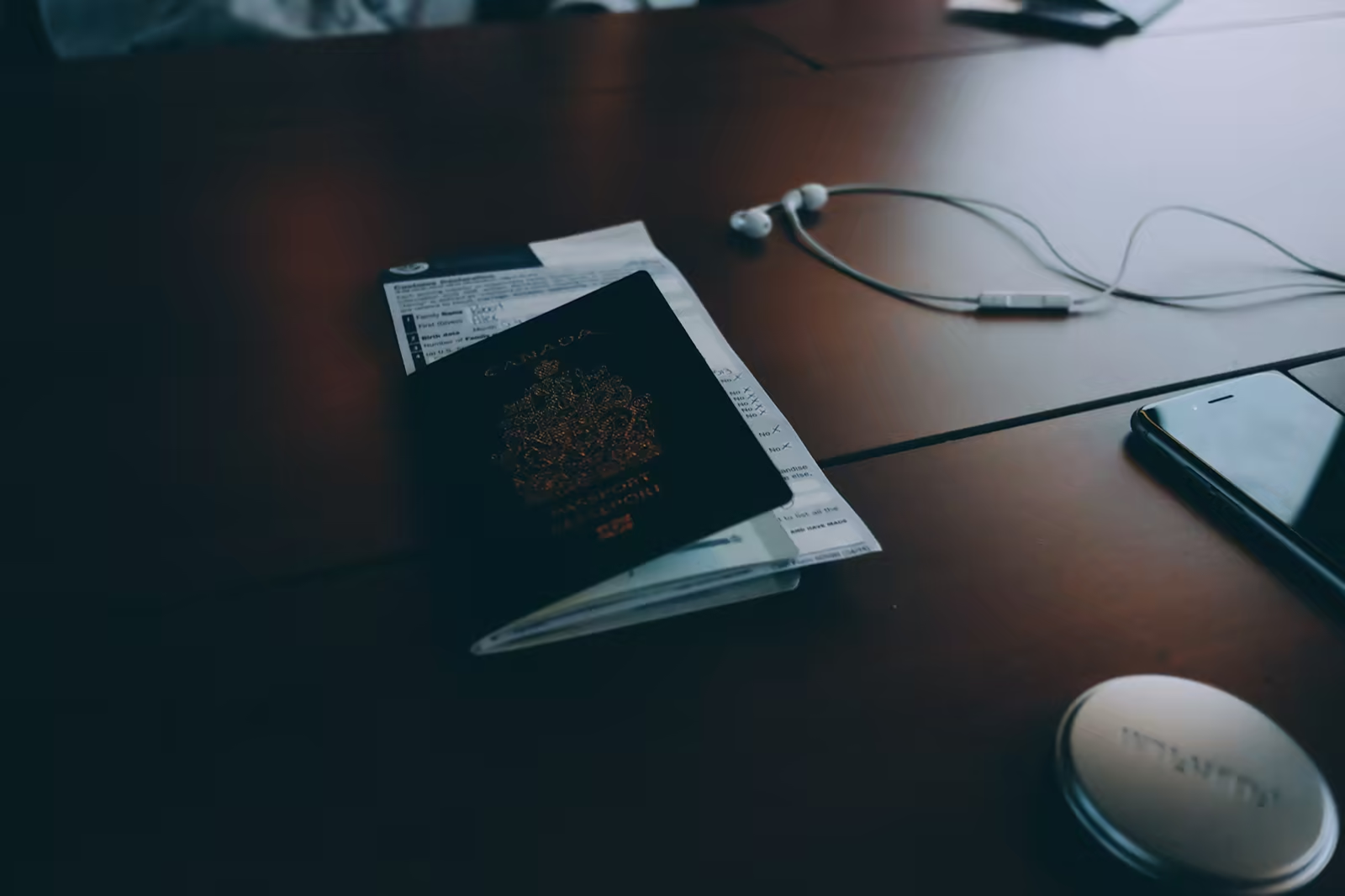


A visa application does not always get rejected because you are unqualified. Sometimes it gets rejected because your bank statement says "John Michael Davies" and your passport says "John M. Davies," and nobody caught it before submission.
That kind of mistake is hard to catch in a self-review because each document looks fine on its own. The problem only becomes obvious when someone reads the whole file across documents, the same way a consular officer does.
This is the category of error that causes many preventable refusals: not missing documents, but documents that are present, formatted correctly in isolation, and inconsistent in relation to each other.
Why "I checked everything myself" is structurally limited
Manual self-review is not careless. It just has built-in failure modes.
The first is confirmation bias. Once you have assembled a document package over several days or weeks, you already know what you expect to see. When you review the file again, your brain tends to fill in the intended meaning instead of noticing what is actually on the page.
The second is the basic problem of checking your own work. Research on manual document handling consistently shows higher error rates when people rely on repeated human review rather than systematic cross-checking. For a visa applicant, the challenge is even harder because the review is being done without specialized training and under time pressure.
The third is scope. A single application can include a passport, bank statements, payslips, an employment letter, hotel bookings, insurance, and a cover letter. Holding all of those details in working memory while cross-referencing names, dates, balances, and travel periods is not something one careful read reliably solves.
That is why a checklist alone is not enough. A checklist confirms presence. It does not confirm consistency.
What hidden errors actually look like
The errors that slip through manual review are usually not obvious typos. They are cross-document inconsistencies that only appear when the full package is compared side by side.
Name mismatches
This is one of the most common problems. Transliteration differences, shortened middle names, and inconsistent spelling across institutions can all create a red flag.
Your passport may say one thing. Your bank account, opened years earlier or under a different transliteration, may say another. Both can look normal in isolation. Together, they raise an avoidable credibility issue.
Date inconsistencies
Date formats cause trouble fast. A US-issued document may use MM/DD/YYYY, while a UK or EU document uses DD/MM/YYYY. Most of the time the meaning is still clear, but dates like 03/04/2025 become ambiguous the moment they appear across multiple documents.
There are also more subtle issues:
- hotel bookings that do not match the dates in the application form
- leave approval periods that do not line up with the intended travel window
- insurance dates that start after arrival or end before departure
Financial figures that do not reconcile
A bank statement can be present and still create problems.
Common examples include:
- a salary figure in the employment letter that does not match the actual deposits
- sudden unexplained large transfers before submission
- statement periods that do not cover the time window the embassy expects
- balances that look inconsistent month to month without explanation
Those are not missing-document errors. They are scrutiny errors.
Embassy-specific format issues
Another hidden category is route-specific compliance. A generic checklist may tell you to include accommodation proof or a translation, but it often will not capture the embassy-specific detail that makes the document acceptable.
For example, a booking may be technically present but still be weak if the consulate expects a refundable reservation, a clearer itinerary, or a certified translation tied to your country combination and route.
Why embassy requirements make manual checking harder
Generic visa guides usually describe document categories. They tell you to bring a bank statement, hotel booking, proof of employment, and travel insurance.
What they often miss is the exact threshold, format, or preference that a specific embassy treats as acceptable.
That gap matters because visa review happens at the package level and often at the consulate level. Even within the same broad visa framework, different offices may care about different supporting details.
If you are applying for a Schengen route, for example, the checklist logic for one consulate is not always the same as another. If you need a route-specific starting point, our Schengen visa requirements guide is a better baseline than a generic travel blog.
This is where manual review starts to break down. Staying current with route-specific requirements while also checking an applicant's actual documents is a research problem, not just a reading problem.
If you want to cross-check your file against the government source before you submit, start with the official guidance for your route:
- European Commission: applying for a Schengen visa
- U.S. Department of State: visitor visa requirements and supporting documentation
- UK Visas and Immigration: guide to supporting documents for a visitor visa
- Canada.ca: visitor visa supporting documents
- Australian Department of Home Affairs: applying for a visitor visa
What automated verification catches that manual review often misses
Automated verification works differently from a simple checklist because it reads across documents, not just within them.
When a document set is uploaded into a structured review system, the platform can extract key fields such as names, dates, addresses, balances, and employer details, then compare those fields across the full package.
That means it is not only checking whether a bank statement exists. It is checking whether:
- the name on the bank statement matches the passport
- the employment details align with payslips and deposits
- the travel dates match the bookings and insurance
- the package fits the route-specific document logic
That cross-document pass is the part people usually cannot do consistently by hand.
At Vidicy, that is the job of the evaluation workflow and Atlas. The platform reviews the actual files in the application, flags mismatches, scores risk, and helps the applicant understand what to fix before submission. If you want to see how that workflow is set up, How it works covers the full review flow.
What your pre-submission review workflow should look like
The process is simpler than most people think, but the order matters.
1. Confirm completeness first
Before looking for hidden errors, make sure all required documents are present for your route. Start with the route-specific checklist so you are not cross-checking an incomplete file.
If you need the broader document assembly process, How to prepare visa application documents is the best companion read.
2. Run a cross-document consistency review
Once the file is complete, compare the package as a whole:
- names
- addresses
- employer details
- travel dates
- insurance dates
- salary and bank deposits
- sponsor details
This is where hidden issues usually show up.
3. Fix what gets flagged
Do not stop at identifying issues. Replace weak documents, correct mismatches, and tighten supporting evidence until the package tells one clear, consistent story.
4. Re-evaluate after every correction
This part matters. A single correction can affect multiple documents. Updating an employment letter may require a bank-statement explanation. Changing travel dates may require updated insurance and hotel reservations.
Re-running the full check is how you confirm the correction actually resolved the problem.
Useful YouTube walkthroughs
If you prefer to sanity-check the process visually before submission, these YouTube walkthroughs are useful companions to the official pages above:
- Official Australian Department of Home Affairs overview of the Visitor (subclass 600) visa
- Schengen visa application form walkthrough on YouTube
- B1/B2 visa interview simulation on YouTube
The trap most applicants fall into
The most common mistake is not skipping review entirely. It is treating the checklist as the finish line.
Once every box is checked, it feels like the application is ready. But a checklist only confirms that something is present. It does not confirm that the file is internally consistent.
A bank statement can be recent, formatted correctly, and still create a refusal because the name, address, or financial story does not line up with the rest of the package.
Passing a checklist and passing a consistency review are two different things. Many avoidable refusals happen because applicants treat them as the same step.
Final takeaway
Before you submit, run your file through a cross-document review, not as a replacement for your own read-through, but as the part of the process your own review is least equipped to handle.
If your application involves documents from multiple institutions, multiple countries, or multiple naming conventions, that extra pass matters even more. Hidden errors are rarely dramatic. They are usually small inconsistencies that look harmless until a consular officer sees the whole package.
If you want a route-specific checklist and a document-aware second pass before submission, Vidicy is built for exactly that stage of the process.
Requirements and consular practices change over time. Check the official embassy or consulate website for the latest rules before you submit.