

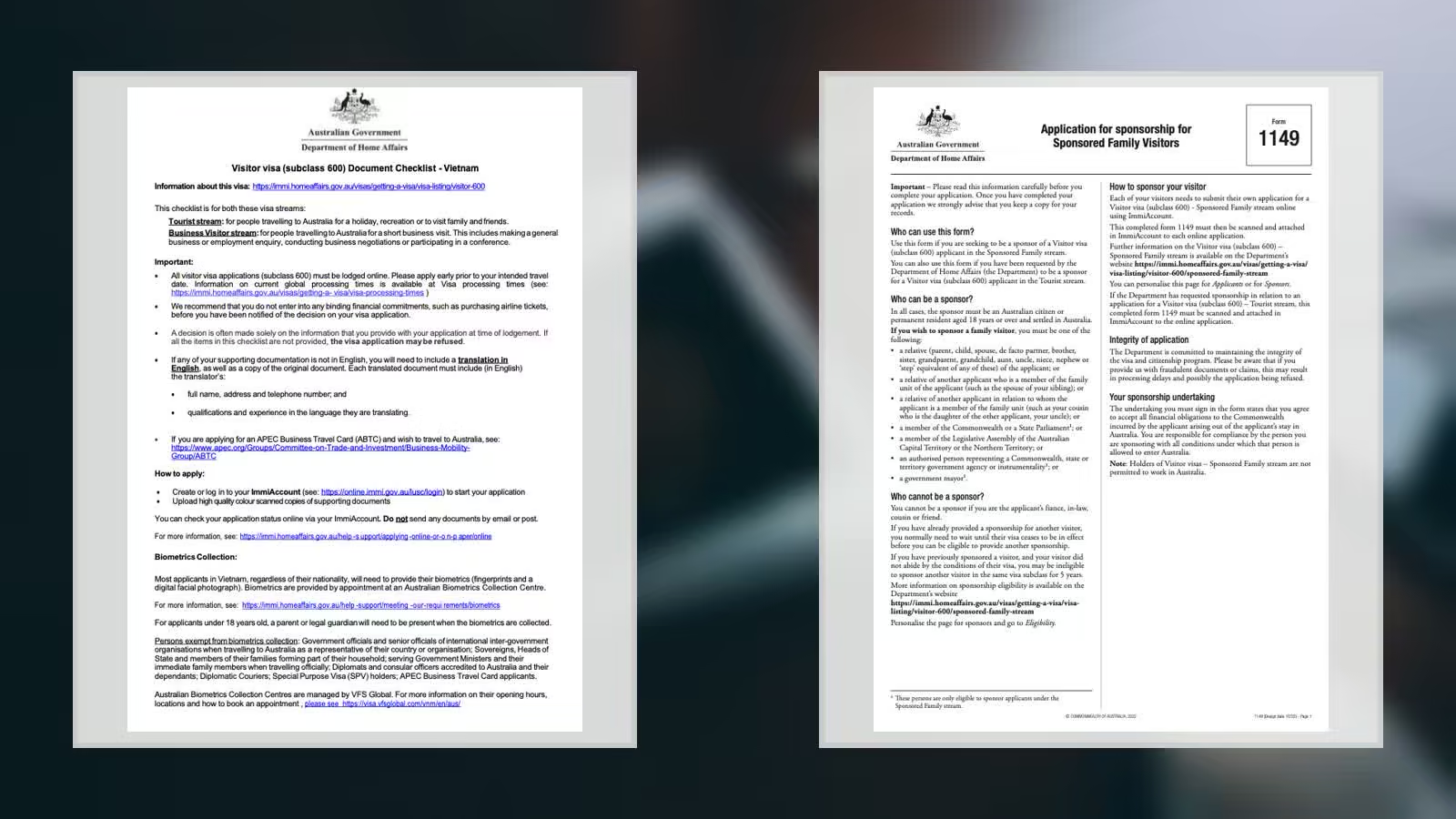

If you need an invitation letter for Australian visa applications, the first thing to know is that there is no single universal invitation-letter form for every Australia route. For a normal Visitor visa (subclass 600) case where you are staying with family or friends, the Australian Consulate-General in Ho Chi Minh City says applicants should include a letter of invitation, relationship evidence, the host's ID, and the host's funds and income if the host is paying. If the case belongs in the Sponsored Family stream, or the Department specifically asks for sponsorship in a Tourist stream case, the official document changes to Form 1149. For partner migration, an invitation letter is not the main evidence pack at all.
That distinction matters because the official route signals are very different. The Home Affairs Visitor Visa Program Report dated 30 June 2025 says subclass 600 has five streams, and 1,822,770 Tourist Visitor applications were lodged in 2024-25 to 30 June 2025. The same report says the grant rate was 79.4% for Tourist Visitor decisions from 1 April 2025 to 30 June 2025. Form 1149 adds the sponsor-side thresholds: the sponsor must be an Australian citizen or permanent resident, 18 or older, and settled in Australia, and a requested security bond is generally AUD 5,000 to AUD 15,000 per person. If you want the route-level upload order first, start with Vidicy's Australia visa checklist before you decide which invitation document actually fits the file.
| Situation | Invitation document that fits | Current official rule | Common mistake |
|---|---|---|---|
| Visiting family or friends on a normal subclass 600 Tourist stream case | A normal host invitation letter plus relationship, ID, and funds evidence where relevant | The Ho Chi Minh City checklist asks for a host letter, relationship proof, and host ID/funds if the host is paying | Treating the host letter as if it replaces bank statements or return-home proof |
| Sponsored Family stream, or a Tourist stream case where Home Affairs asks for sponsorship | Form 1149 | Sponsor must be 18+, an Australian citizen or permanent resident, and settled in Australia; a bond may be AUD 5,000 to AUD 15,000 | Using a casual invitation letter when Home Affairs expects formal sponsorship |
| Hotel-based holiday with no host | Often no invitation letter is needed | Home Affairs mainly wants identity, travel plans, return-home proof, and recent bank statements | Writing a fake host letter for a trip that is really just tourism |
| Partner or family migration | An invitation letter can be supportive, but it is not the main document | Family and partner applications are lodged through ImmiAccount and follow the route-specific document list | Trying to use a visitor-style invitation letter instead of relationship and sponsorship evidence |
Key takeaways
Use this guide to verify the route, evidence, and next action before you finalize the file. An Australian visa invitation letter should support the visitor story with host identity, relationship, address, visit dates, and sponsor support if offered.
Table of Contents
- Invitation letter for Australian visa: choose the route first
- When a normal host invitation letter works
- When you need Form 1149 instead
- When an invitation letter is not the main document
- What to include in an invitation letter for Australian visa cases
- How to upload the letter and related documents
- Official sources
- FAQ
- Conclusion
Invitation letter for Australian visa: choose the route first
The broad keyword is messy because "Australian visa" can mean several different workflows. The invitation letter only makes sense once the route is clear.
For most readers, the useful split is:
- Normal Visitor visa (subclass 600) trip with a host: you are visiting a relative, partner, or friend and need a host letter plus supporting evidence.
- Sponsored Family stream: Home Affairs expects formal sponsorship through Form 1149 rather than a casual note.
- Hotel-based tourist trip: you may not need an invitation letter at all.
- Partner or family migration: the real work is in relationship and sponsorship documents, not a visitor-style host letter.
The official Visitor Visa Program Report is helpful here because it shows how broad subclass 600 actually is. It says the subclass contains Tourist, Sponsored Family, Business Visitor, Approved Destination Status, and Frequent Traveller streams. That is why one article about "invitation letters" becomes misleading so quickly unless it separates normal host-backed visitor cases from formal sponsored-family cases.
Another route rule matters if your real plan is study rather than a short visit. Home Affairs says visitors can study or train for up to 3 months on a Visitor visa, and that if your main reason for travelling is to study for longer than 3 months, a Student visa is more appropriate. In other words, a nice host letter does not turn the wrong visa route into the right one.
If your actual question is the whole subclass 600 document set, use Australia Visitor Visa Checklist first. If the file is really about sponsor-side obligations, keep Sponsor Letter for Australian Visa open beside this route map.
When a normal host invitation letter works
For a standard host-based Visitor visa case, the clearest current evidence list is the Australian Consulate-General Ho Chi Minh City checklist.
According to that checklist, a tourist-stream applicant visiting a relative, partner, or friend in Australia should include:
- evidence of the relationship to the person they intend to visit
- a letter of invitation from that person
- evidence of the host's personal funds and income if the host is paying
- a copy of the host's passport identity page or other identification, such as a driver's licence
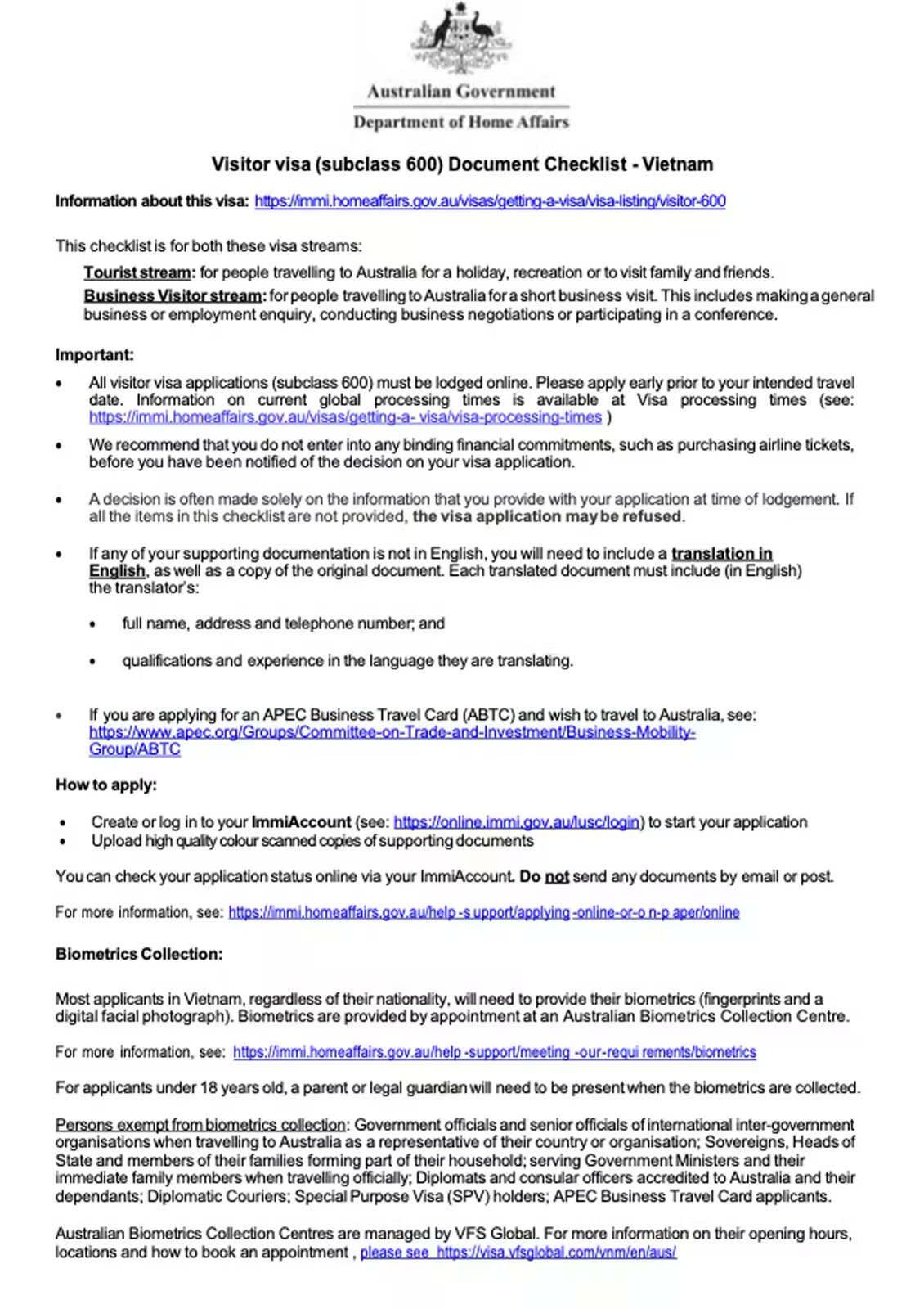
That list tells you what the invitation letter is really doing. It is not meant to carry the whole visa on its own. It is one part of a larger story that still has to prove:
- who the applicant is
- why the trip is happening now
- where the applicant will stay
- who pays for what
- why the applicant will leave Australia on time
Inference from the official checklist: the letter works best when it states the invitee's full name, the host's full name and address, the visit dates, the relationship, whether the visitor will stay at the host's address, and whether the host will pay any part of the trip. Those details are not a separate legal checklist item by themselves, but they are the practical facts Home Affairs will compare against the passport, bank statements, itinerary, and host ID.
This is also where many weak files drift into the wrong stream. A host letter is normal for a family-or-friends visit, but it does not automatically make the case a Sponsored Family stream application. If the trip is really just a normal tourist visit with accommodation or support from a host, the stronger move is usually a clean ordinary invitation letter plus matching evidence, not a mislabeled sponsorship package.
If you need the tourist-only sample and host-document order, the narrower Invitation Letter for Australian Tourist Visa guide is the better companion.
When you need Form 1149 instead
This is where the generic query stops being a writing question and becomes a rule question.
The official Application for sponsorship for sponsored family visitors form, Form 1149, says it is used to sponsor a Visitor visa (subclass 600) applicant in the Sponsored Family stream. It also says the Department can request sponsorship in a Tourist stream case. That is the key line that separates a casual host invitation from formal sponsorship.
Form 1149 also sets the sponsor rules out directly:
- the sponsor must be an Australian citizen or permanent resident
- the sponsor must be 18 years of age or over
- the sponsor must be settled in Australia
- the sponsor cannot be a friend, cousin, in-law, or fiance(e) under this formal family-sponsorship route
The same form says a security bond may be requested and is generally between AUD 5,000 and AUD 15,000 per person.
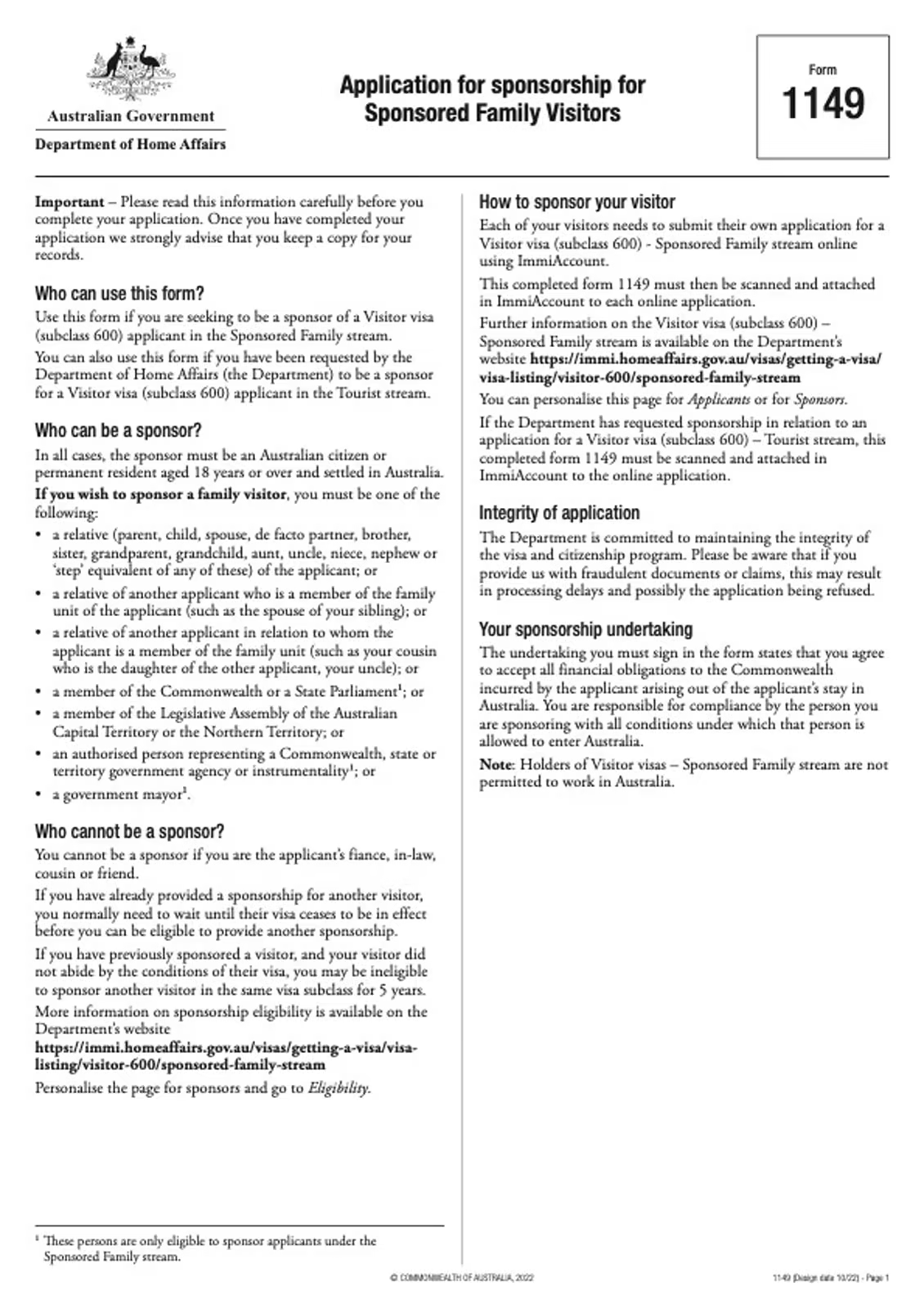
That is why the phrase invitation letter for Australian visa can lead applicants in the wrong direction. If your actual case needs Form 1149, then a normal host letter by itself is incomplete. If your case is only a standard hosted tourist visit, then Form 1149 may be the wrong document.
The queue data explains why this distinction matters. The same 30 June 2025 Visitor Visa Program Report says there were 95,299 visitor-visa applications on hand overall at that date, including 78,752 Tourist Visitor and 6,720 Sponsored Tourist cases. In a large queue, unclear sponsor paperwork is not a small formatting issue. It is one of the fastest ways to slow the case down.
If you are already sure the issue is sponsor-side support rather than a simple invitation, move next to Sponsor Letter for Australian Visa. It goes deeper on what the sponsor should and should not promise.
When an invitation letter is not the main document
A lot of Australian visa problems happen because applicants keep polishing the invitation letter when the real problem is the route.
Hotel-based tourist trip
If no host is involved, Home Affairs mainly wants identity, travel plans, return-home proof, and recent bank statements. In that kind of file, writing an invitation letter is often unnecessary and can even make the story look less coherent.
Partner or family migration
Home Affairs' Bringing a partner or family page says Australians and visa holders need to identify whether the family member is coming temporarily or permanently and then choose the right visa option based on that intention. The Applying for a family visa page adds that partner and sponsored-parent applications run through ImmiAccount, where applicants track the case and add documents. In other words, a visitor-style host letter is not the main document pack for family migration. The main document pack is the route-specific evidence list.
Study longer than three months
Home Affairs says a Visitor visa may allow study or training for up to 3 months. If the main reason for travelling is study for longer than 3 months, the department says a Student visa is more appropriate. That is another case where a host letter can be supportive but does not solve the core route problem.
This is the practical test:
- if the trip is a short host-backed visit, use a normal invitation letter
- if Home Affairs expects formal sponsored-family support, use Form 1149
- if the main reason is migration or long-term study, stop treating the file like a visitor case
What to include in an invitation letter for Australian visa cases
Home Affairs does not publish one universal subclass 600 invitation-letter template, so the safest structure is the one that mirrors the official checklist.
Inference from the official sources: a strong invitation letter usually includes:
- the host's full name, address, phone number, and email
- the applicant's full name and passport-identifying details
- the relationship between host and applicant
- the purpose of the visit
- the intended arrival and departure dates
- where the visitor will stay
- whether the host will provide accommodation, daily support, airport pickup, or other help
- the host's signature and date
The letter should match the rest of the upload set exactly. If the host says the visitor will stay at one address, the supporting ID or address evidence should point to the same address. If the host says they will cover some costs, the host's bank or income records should make that plausible.
Use this sample shape:
[Host full name]
[Australian address]
[Phone]
[Email]
[Date]

To the Department of Home Affairs,

I am inviting [applicant full name], passport number [number], to visit me in Australia from [start date] to [end date].

[Applicant name] is my [relationship]. During this period, [he/she/they] will stay with me at [full address].

The purpose of the visit is [family visit / tourism / personal visit]. I will [describe support provided, if any].

I confirm that the details in this letter are true. Supporting identification and, where relevant, financial documents are attached.

Sincerely,
[Host name]
If the supporting records are not in English, the Ho Chi Minh City checklist says to include the original document and the English translation. The translation should include the translator's identifying details and qualifications.
If your weak point is still the applicant-side explanation rather than the host-side letter, switch to Cover Letter for Australian Tourist Visa before you upload anything.
How to upload the letter and related documents
The Ho Chi Minh City checklist says all Visitor visa (subclass 600) applications must be lodged online. The Australian Embassy in Timor-Leste's visas-and-migration page explains why Home Affairs pushes applicants into ImmiAccount: it lets you attach documents, track progress, generate alerts, and view current and previous correspondence in one place.
That page also links to the official ImmiAccount video:
Use the video for the upload workflow, not as a substitute for route rules. The written official pages are the source for whether your file needs a normal host letter, Form 1149, or a different visa route entirely.
Before you lodge, make sure the invitation package answers three practical questions:
- Does the host letter match the travel dates, address, and relationship evidence?
- If the host is paying, do the host funds actually support that claim?
- Does the rest of the file still prove temporary intent, funds, and return-home logic without leaning on the letter too heavily?
If you want a second pass before you submit, use how Vidicy works and then move to sign up when the host-side and applicant-side documents finally say the same thing.
Official sources
- Australian Consulate-General Ho Chi Minh City: Visitor visa (subclass 600) Document Checklist - Vietnam PDF
- Department of Home Affairs: Form 1149 PDF
- Department of Home Affairs: Visitor Visa Program Report 30 June 2025 PDF
- Department of Home Affairs: Bringing a partner or family
- Department of Home Affairs: Applying for a family visa
- Department of Home Affairs: Travel while your visa is being processed
- Australian Embassy Timor-Leste: Visas and migration
FAQ
Is an invitation letter mandatory for an Australian visa?
Not for every case. A normal host-backed Visitor visa file often uses one, but a hotel-based tourist case may not need it. What matters is whether the trip is actually built around a host, and whether Home Affairs expects a normal host letter or a formal sponsored-family document.
What is the difference between an invitation letter and Form 1149?
An invitation letter is a normal host document used in standard family-or-friends visit cases. Form 1149 is the official sponsorship form for Sponsored Family stream cases, or for Tourist stream cases where Home Affairs has specifically requested sponsorship. They are not interchangeable.
Can a friend sponsor me under Form 1149?
No. Form 1149 says a friend, cousin, in-law, or fiance(e) cannot act as the formal sponsor under that route. A friend can still write a normal host letter in a regular hosted-visit case, but that is different from formal sponsorship.
Do I need the host's bank statements for an Australian visitor visa?
Usually only if the host is paying for part of the visit. The Ho Chi Minh City checklist says you should include evidence of the host's personal funds and income if the host is paying. If the applicant is self-funding, the host letter matters more for accommodation and relationship context than for finances.
What if my real plan is partner migration or study?
Then the invitation letter is not the main document. Home Affairs says visitors can study for up to 3 months only, and partner or family cases follow their own ImmiAccount-based document lists. A host letter does not convert a visitor file into the right migration or student route.
Conclusion
The safest way to answer invitation letter for Australian visa searches is to stop asking for one universal template and start with the route. A normal host-backed Visitor visa file uses an ordinary invitation letter plus matching ID, relationship, and funding evidence. A Sponsored Family stream file may need Form 1149. Migration or longer-study cases need a different document stack entirely.
The official numbers worth remembering are concrete: subclass 600 has five streams, 1,822,770 Tourist Visitor applications were lodged in 2024-25 to 30 June 2025, the latest reported Tourist Visitor grant rate was 79.4%, and a requested Form 1149 security bond is generally AUD 5,000 to AUD 15,000 per person. Use those rules to choose the right invitation document, then move to sign up when you want the whole file checked before you lodge.